-
Glass Fused To Steel Tanks (596)
-
Stainless Steel Tanks (434)
-
Fusion Bonded Epoxy Tanks (592)
-
Galvanized Steel Tanks (321)
-
Aluminum Dome Roofs (1316)
-
Wastewater Storage Tanks (231)
-
Welded Steel Tanks (457)
-
Pressure Vessels (295)
-
Anaerobic Digester (201)
-
Industrial Water Tanks (349)
-
Glass Lined Steel Tanks (180)
-
Bolted Steel Tanks (390)
-
Sludge Storage Tank (115)
-
Biogas Storage Tank (173)
-
Leachate Storage Tanks (133)
-
Agricultural Water Storage Tanks (179)
-
Fire Water Tank (166)
-
Grain Storage Silos (146)
-
Biogas Projects (425)
-
Wastewater Treatment Projects (788)
-
Double Membrane Roof (223)

|
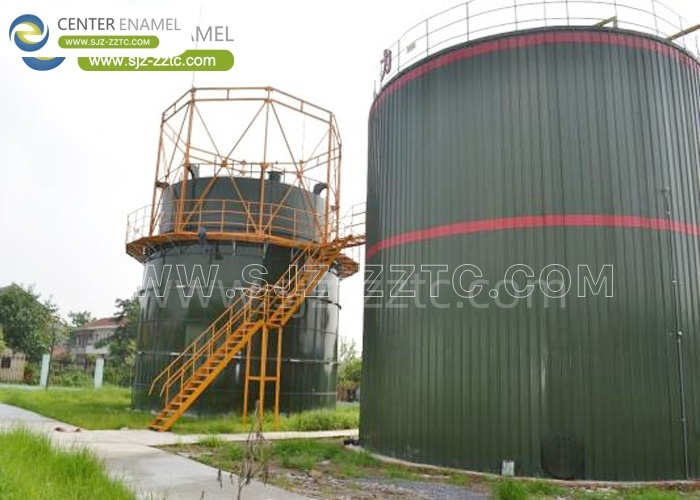
Advanced Anaerobic Solutions and EPC Contractor for Wastewater Treatment in Indonesia
| Place of Origin: | China |
| Brand Name: | CEC TANKS |
| Certification: | ISO 9001:2008, AWWA D103 , OSHA , BSCI |
| Model Number: | W |
| Minimum Order Quantity: | 1set |
| Price: | $5000~$20000 one set |
| Packaging Details: | PE poly-foam between each two steel plates ; wooden pallet and wooden |
| Delivery Time: | 10-30 days after deposit received |
| Payment Terms: | L/C, T/T |
| Supply Ability: | 60 sets per month |
|
Detail Information |
|||
| Place of Origin | China | Brand Name | CEC TANKS |
|---|---|---|---|
| Certification | ISO 9001:2008, AWWA D103 , OSHA , BSCI | Model Number | W |
| Tank Body Color: | Dark Green / Can Be Customized | Corrosion Integrity: | Excellent |
| Steel Plates Thickness: | 3mm To 12mm , Depends On The Tank Structure | Chemical Resistance: | Excellent |
| Size Of Panel: | 2.4M * 1.2M | Easy To Clean: | Smooth, Glossy, Inert, Anti-adhesion |
| Highlight: | anaerobic wastewater treatment solutions,EPC contractor for wastewater projects,wastewater treatment solutions in Indonesia |
||
Product Description
Advanced Anaerobic Solutions and EPC Contractor for Wastewater Treatment in Indonesia
As Indonesia accelerates its industrialization and urbanization, the demand for sustainable environmental infrastructure has reached a critical turning point. Center Enamel, a premier global EPC contractor, provides cutting-edge anaerobic solutions and the high-performance CSTR process to help Indonesian enterprises meet stringent environmental standards while recovering valuable bioenergy.
The Landscape of Wastewater Challenges in Indonesia
Indonesia faces significant environmental pressure due to its burgeoning industrial and agricultural sectors. Rapid economic growth has led to a substantial increase in wastewater volume, which often outpaces existing treatment infrastructure.
Primary Sources: Major contributors to organic wastewater include the livestock industry (specifically pig, poultry, and cattle farms), food and beverage processing, and the massive palm oil (POME) and rubber production sectors.
Environmental Risks: Untreated discharge poses a severe threat to Indonesia's vital water bodies and coastal ecosystems. High Chemical Oxygen Demand (COD) and nutrient loading from agricultural effluent lead to water eutrophication, destroying local aquatic life and contaminating groundwater used for drinking.
Regulatory Policy: In response, the Indonesian government has tightened environmental protection laws, mandating that industrial zones and large-scale farms implement standardized treatment systems. There is also a strong push toward a circular economy, encouraging the conversion of organic waste into biogas to achieve sustainability and net-zero targets.
Integrated Wastewater Treatment Process
A standard high-efficiency treatment plant designed by Center Enamel involves several critical stages to ensure the final effluent meets national discharge limits:
Pre-treatment: Utilizing solid-liquid separators to remove grit and large fibers, which protects downstream reactors from clogging.
Anaerobic Digestion: The core stage where organic matter is broken down by microorganisms in the absence of oxygen, producing biogas for energy.
Post-treatment (Aerobic): Further polishing of the water to remove residual nitrogen and phosphorus before discharge.
Resource Recovery: Purifying the generated biogas for decentralized power generation or heating.
Core Anaerobic Technologies: CSTR, UASB, USR, and IC
Center Enamel specializes in selecting the most effective reactor technology based on the specific characteristics of the wastewater produced by Indonesian industries:
CSTR Process (Continuous Stirred Tank Reactor): Ideal for feedstocks with high solids content, such as animal manure or mixed organic waste. The CSTR process uses mechanical stirring to maintain a homogeneous environment, preventing sedimentation and maximizing biogas yield.
UASB (Upflow Anaerobic Sludge Blanket): A high-rate solution for liquid-phase wastewater. It utilizes a granular sludge blanket to filter and digest pollutants as the water flows upward, offering high efficiency within a compact footprint.
USR (Upflow Solids Reactor): Specifically designed for high-concentration organic wastewater with high suspended solids. It ensures long solids retention time, making it highly effective for large-scale livestock operations.
IC (Internal Circulation) Reactor: Representing the next generation of anaerobic treatment, the IC reactor is used for high-strength industrial wastewater like brewery or paper mill effluent. It features high loading rates and excellent stability through internal circulation.
The Foundation of Excellence: GFS Tanks
As a world-class manufacturer, Center Enamel utilizes Glass-Fused-to-Steel (GFS) tanks as the primary vessel for these anaerobic processes.
Unrivaled Corrosion Resistance: The fusion of glass and steel at high temperatures creates an inert barrier that withstands $H_2S$, ammonia, and organic acids common in biogas production.
Rapid Deployment: The modular bolted design allows for much faster installation compared to traditional concrete tanks, significantly shortening construction cycles for Indonesian projects.
Long-Term Durability: Engineered for a service life exceeding 30 years with minimal maintenance, these tanks perform reliably even in Indonesia's tropical, high-humidity environments.
Why Choose Center Enamel for Indonesia Projects?
As a comprehensive EPC contractor, Center Enamel offers end-to-end project excellence, from design to commissioning.
Tailored Engineering: Every system is precision-engineered to meet the specific climate and feedstock conditions of Indonesia.
Global Expertise: With successful projects in over 100 countries, we bring international standards to the local Indonesian market.
Full-System Integration: We provide complete solutions, including GFS tanks, double-membrane gas holders, and desulfurization systems for a turnkey experience.
Proven Success: Global Project Highlights
1.Shanxi Breeding Wastewater Treatment Project
Location: Shanxi Province, China.
Installation : 2017
Treatment Process: Pre-process +USR+AOAO+ Advanced treatment
Processing treatment capacity: 600m³/ day
2.Xinjiang Breeding Wastewater Treatment Project
Location: Changji Hui Autonomous Prefecture
Installation Time: 2014
Process: CSTR process
Capacity: 400 dairy cows
For Indonesian industries looking to balance economic growth with environmental stewardship, Center Enamel’s anaerobic solutions offer a path toward energy independence and regulatory compliance. By leveraging the CSTR process and the durability of GFS tanks, we help transform wastewater into a strategic energy asset.