-
Glass Fused To Steel Tanks (596)
-
Stainless Steel Tanks (434)
-
Fusion Bonded Epoxy Tanks (592)
-
Galvanized Steel Tanks (321)
-
Aluminum Dome Roofs (1316)
-
Wastewater Storage Tanks (231)
-
Welded Steel Tanks (457)
-
Pressure Vessels (295)
-
Anaerobic Digester (201)
-
Industrial Water Tanks (349)
-
Glass Lined Steel Tanks (180)
-
Bolted Steel Tanks (390)
-
Sludge Storage Tank (115)
-
Biogas Storage Tank (173)
-
Leachate Storage Tanks (133)
-
Agricultural Water Storage Tanks (179)
-
Fire Water Tank (166)
-
Grain Storage Silos (146)
-
Biogas Projects (425)
-
Wastewater Treatment Projects (788)
-
Double Membrane Roof (223)

|
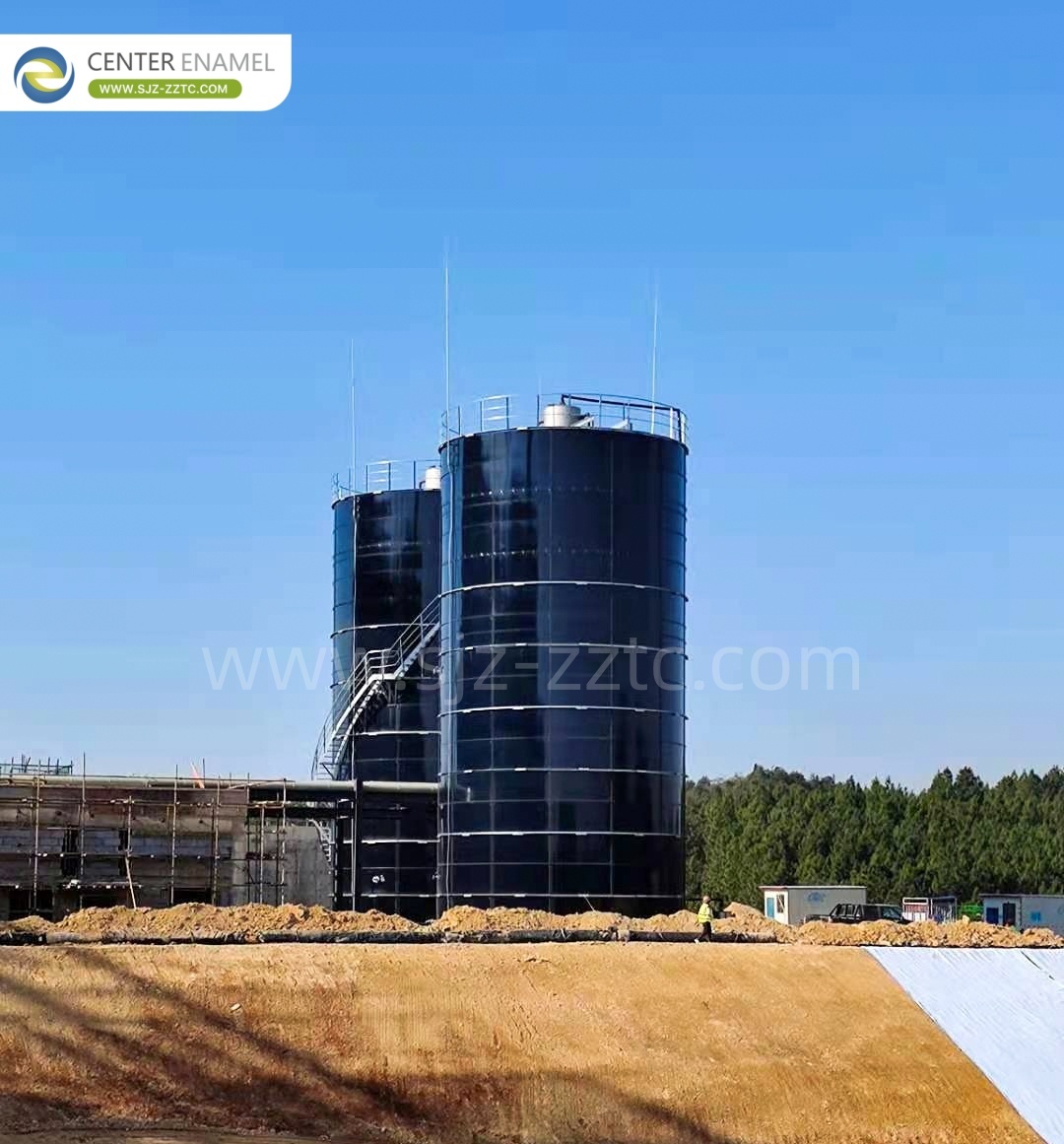
Leading Livestock Wastewater Treatment Project EPC Contractor for Cambodia
| Place of Origin: | China |
| Brand Name: | CEC TANKS |
| Certification: | ISO 9001:2008, AWWA D103 , OSHA , BSCI |
| Model Number: | W |
| Minimum Order Quantity: | 1set |
| Price: | $5000~$20000 one set |
| Packaging Details: | PE poly-foam between each two steel plates ; wooden pallet and wooden |
| Delivery Time: | 10-30 days after deposit received |
| Payment Terms: | L/C, T/T |
| Supply Ability: | 60 sets per month |
|
Detail Information |
|||
| Place of Origin | China | Brand Name | CEC TANKS |
|---|---|---|---|
| Certification | ISO 9001:2008, AWWA D103 , OSHA , BSCI | Model Number | W |
| Tank Body Color: | Dark Green / Can Be Customized | Corrosion Integrity: | Excellent |
| Steel Plates Thickness: | 3mm To 12mm , Depends On The Tank Structure | Chemical Resistance: | Excellent |
| Size Of Panel: | 2.4M * 1.2M | Easy To Clean: | Smooth, Glossy, Inert, Anti-adhesion |
| Highlight: | livestock wastewater treatment contractor Cambodia,EPC wastewater treatment project Cambodia,livestock wastewater EPC contractor |
||
Product Description
Leading Livestock Wastewater Treatment Project EPC Contractor for Cambodia
As Cambodia continues to modernize its agricultural sector to meet both domestic demand and export goals, the livestock industry—particularly swine and poultry farming—has become a vital driver of rural economic development. However, this growth brings a significant environmental responsibility: the management of organic effluent. For progressive agricultural enterprises in Cambodia, partnering with an experienced Livestock Wastewater Treatment Project EPC Contractor is a strategic move to ensure sustainable operations and transform waste into valuable resources.
The Environmental Challenge in Cambodia’s Livestock Sector
Cambodia’s rich water networks, including the Tonle Sap lake and the Mekong River system, are highly sensitive to agricultural runoff. Raw livestock effluent from intensive farming poses several high-risk environmental factors:
Water Pollution: High levels of ammonia, nitrogen, and phosphorus in untreated waste can lead to the eutrophication of local water bodies, destroying aquatic ecosystems.
Pathogen Risks: Untreated manure carries bacteria and pathogens that threaten the health of local communities and increase biosecurity risks for neighboring farms.
Ecological Degradation: Improper discharge causes soil contamination, affecting the long-term fertility of agricultural land.
By implementing a professional Livestock Wastewater Treatment Project, Cambodian farms can unlock multiple advantages:
Renewable Energy Recovery: Utilizing anaerobic digestion to capture biogas for farm-scale electricity or heat, reducing reliance on the grid.
Nutrient Management: Producing high-quality organic fertilizer (digestate) to support Cambodia’s organic rice and fruit plantations.
Environmental Compliance: Meeting national discharge standards while protecting the country's natural heritage.
Advanced Anaerobic Processes: CSTR, UASB, and USR
Center Enamel, serving as a premier Livestock Wastewater Treatment Project EPC Contractor, provides diverse anaerobic technologies tailored to the specific organic loads of livestock waste.
1. The CSTR Process (Completely Stirred Tank Reactor)
The CSTR Process is the industry-leading solution for feedstocks with high solids content, such as concentrated pig or cattle manure.
Mechanism: It utilizes high-torque mechanical mixing to maintain a homogeneous environment.
Benefit: This ensures maximum contact between microorganisms and organic matter, providing a stable and high biogas yield even with complex materials.
2. UASB (Upflow Anaerobic Sludge Blanket)
Ideal for liquid-phase wastewater with lower suspended solids.
Mechanism: Wastewater flows upward through a dense sludge blanket where organic pollutants are rapidly degraded.
Benefit: It offers high treatment efficiency and a compact footprint, making it cost-effective for space-constrained facilities.
3. USR (Upflow Solids Reactor)
Specifically designed for high-concentration organic wastewater with high levels of suspended solids.
Mechanism: The USR system is engineered to ensure a long solids retention time (SRT).
Benefit: It allows for the thorough digestion of solids, which is essential for large-scale industrial livestock operations in tropical climates.
Durable Infrastructure: The GFS Tank Advantage
The success of any waste-to-energy project in Cambodia’s humid tropical climate depends on the durability of its reactors. Center Enamel’s Glass-Fused-to-Steel (GFS) tanks are the recognized industry standard:
Exceptional Corrosion Resistance: The glass-and-steel fusion creates an inert, non-porous barrier immune to high ammonia and hydrogen sulfide ($H_2S$) typical of livestock waste.
Rapid Installation: The bolted modular design eliminates the need for extensive on-site welding or long concrete curing times, significantly shortening construction cycles.
Extended Service Life: Engineered for durability, GFS tanks offer a service life of more than 30 years with minimal maintenance, even in harsh, high-humidity environments.
Why Choose Center Enamel for Your Project?
As a global Livestock Wastewater Treatment Project EPC Contractor, Center Enamel provides comprehensive, turnkey solutions. Our project advantages include:
Turnkey EPC Services: We handle everything from conceptual design and engineering to equipment manufacturing, installation, and commissioning.
Custom Engineering: Our systems are specifically designed to handle the local climate and specific manure characteristics of Cambodian farms.
Global Expertise: With over 30 years of experience and projects in over 100 countries, we bring world-class reliability to every site.
Global Success Stories in Livestock Waste Management
As a leading Livestock Wastewater Treatment Project EPC Contractor, Center Enamel has successfully delivered high-performance solutions globally.
1. Livestock Wastewater Treatment Project in Guangdong, China
Process: Pre-treatment + USR + AAO
Treatment Capacity: 300 m³/day (Flush-cleaning manure)
2. Livestock Wastewater Treatment Project in Singapore
Tank Dimensions: 1 unit — Ø9.17 × 9 m
1 unit — Ø13.76 × 10.8 m
1 unit — Ø6.11 × 8.4 m
1 unit — Ø3.82 × 6.6 m
1 unit — Ø29.04 × 9.6 m
Installation Date: 2016 (Phase I)
Conclusion
For livestock operators in Cambodia, transitioning to sustainable waste-to-energy technology is an essential investment in the future. By combining the unmatched resilience of GFS tanks with precision-engineered anaerobic processes like the CSTR Process, UASB, and USR, Center Enamel empowers agricultural enterprises to achieve energy independence while protecting the nation’s precious natural resources.