-
Glass Fused To Steel Tanks (596)
-
Stainless Steel Tanks (434)
-
Fusion Bonded Epoxy Tanks (592)
-
Galvanized Steel Tanks (321)
-
Aluminum Dome Roofs (1316)
-
Wastewater Storage Tanks (231)
-
Welded Steel Tanks (457)
-
Pressure Vessels (295)
-
Anaerobic Digester (201)
-
Industrial Water Tanks (349)
-
Glass Lined Steel Tanks (180)
-
Bolted Steel Tanks (390)
-
Sludge Storage Tank (115)
-
Biogas Storage Tank (173)
-
Leachate Storage Tanks (133)
-
Agricultural Water Storage Tanks (179)
-
Fire Water Tank (166)
-
Grain Storage Silos (146)
-
Biogas Projects (425)
-
Wastewater Treatment Projects (788)
-
Double Membrane Roof (223)

|
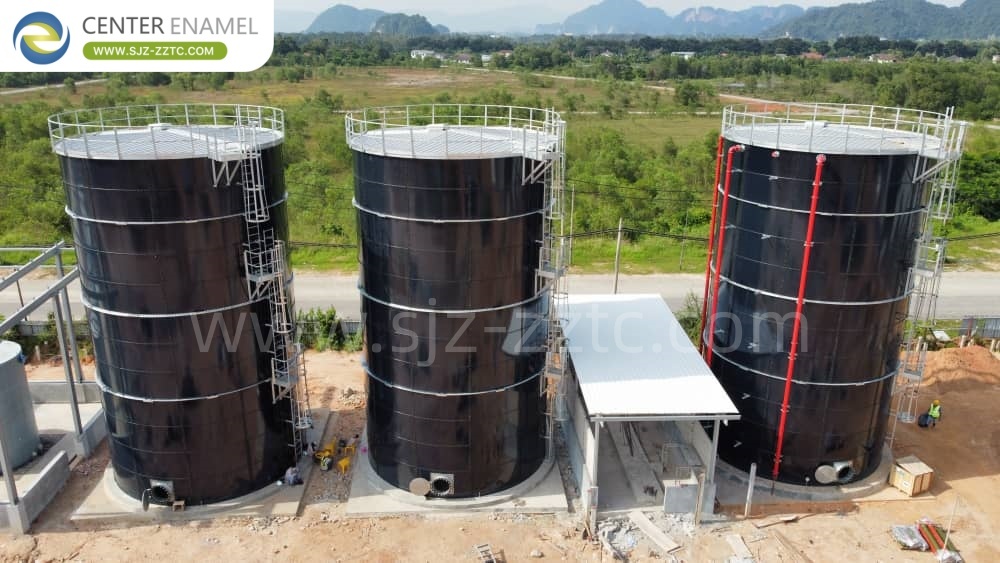
Sustainable Biogas Technology for Timor-Leste Pig Farm Wastewater Treatment Projects
| Place of Origin: | China |
| Brand Name: | CEC TANKS |
| Certification: | ISO 9001:2008, AWWA D103 , OSHA , BSCI |
| Model Number: | W201691123005 |
| Minimum Order Quantity: | 1set |
| Price: | $5000~$20000 one set |
| Packaging Details: | PE poly-foam between each two steel plates ; wooden pallet and wooden box |
| Delivery Time: | 0-60 days after deposit received |
| Payment Terms: | L/C, T/T |
| Supply Ability: | 60 sets per month |
|
Detail Information |
|||
| Place of Origin | China | Brand Name | CEC TANKS |
|---|---|---|---|
| Certification | ISO 9001:2008, AWWA D103 , OSHA , BSCI | Model Number | W201691123005 |
| Steel Plates Thickness: | 3mm To 12mm , Depends On The Tank Structure | Corrosion Integrity: | Excellent |
| Chemical Resistance: | Excellent | Capacity: | 20 M3 To 18,000 M3 |
| Service Life: | ≥30 Years | Permeability: | Gas / Liquid Impermeable |
| Highlight: | sustainable biogas wastewater treatment,pig farm wastewater treatment technology,Timor-Leste biogas wastewater projects |
||
Product Description
Sustainable Biogas Technology for Timor-Leste Pig Farm Wastewater Treatment Projects
As Timor-Leste continues to develop its agricultural sector and pursue sustainable rural development, the integration of advanced Biogas Technology has become a critical solution for livestock management. For a modern pig farm Wastewater Treatment Project, the ability to convert organic waste into renewable energy is a strategic move toward both environmental protection and energy security.
Center Enamel, a global leader in environmental engineering, leverages high-performance Glass-Fused-to-Steel (GFS) tanks and specialized anaerobic digestion processes to provide turnkey solutions for the East Timorese market.
The Landscape of Wastewater Management in Timor-Leste
In Timor-Leste, pig farming is a vital part of the local economy and cultural heritage. However, as farming practices transition from subsistence to more organized systems, the management of wastewater has become a pressing challenge.
The Hazards of Untreated Wastewater: Raw pig farm effluent is highly concentrated with organic pollutants, ammonia, and pathogens. In a tropical environment, improper discharge can lead to the rapid contamination of precious groundwater and local water bodies. This not only causes soil degradation but also poses a direct threat to public health and biodiversity.
The Strategic Advantage of Biogas Projects: Transitioning to biogas-centered treatment transforms these hazards into a "strategic economic advantage." By capturing methane, farms can generate clean electricity or gas for cooking and heating, reducing dependence on imported fuels. Furthermore, the process yields a nutrient-stabilized digestate that serves as high-quality organic fertilizer, supporting Timor-Leste's goal of improving agricultural productivity.
The Pig Farm Wastewater Treatment Flow and Equipment
A complete pig farm Wastewater Treatment Project involves a series of biological and mechanical stages designed to maximize resource recovery:
Pre-treatment & Separation: Raw waste is collected and passed through Solid-Liquid Separators to remove heavy fibers and grit. This protects the downstream reactors from clogging and sedimentation.
Anaerobic Digestion (The Core): The stabilized waste enters the GFS reactor tanks, where specialized microorganisms break down organic matter in an oxygen-free environment to produce methane.
Gas Storage & Safety: Produced biogas is captured in Double-Membrane Biogas Holders. Flare Systems are installed as a vital safety component to safely burn excess gas during maintenance or emergencies.
Gas Purification: Before utilization, the gas passes through a Desulfurization System to remove hydrogen sulfide ($H_2S$), protecting engines and boilers from corrosion.
Temperature Control: Heat Exchangers & Mixers maintain stable mesophilic or thermophilic temperatures, ensuring maximum microbial activity even during cooler periods.
Advanced Anaerobic Processes: CSTR, UASB, and USR
Center Enamel precision-engineers three core technologies to handle the specific characteristics of livestock waste:
CSTR (Completely Stirred Tank Reactor): The premier choice for feedstocks with high solids content, such as concentrated manure. High-torque mechanical mixing ensures a homogeneous environment, maximizing methane yield.
UASB (Upflow Anaerobic Sludge Blanket): A high-rate process ideal for liquid-phase wastewater. It uses a dense granular sludge blanket to degrade pollutants as water flows upward, offering high efficiency in a compact footprint.
USR (Upflow Solids Reactor): Specifically designed for wastewater with high concentrations of suspended solids. It ensures a long solids retention time (SRT), making it highly effective for the thorough digestion of complex manure fibers.
The GFS Tank Advantage: Durable Infrastructure
For projects in Timor-Leste, selecting infrastructure that can withstand high humidity and the corrosive nature of manure is vital. Glass-Fused-to-Steel (GFS) tanks are the industry standard for several reasons:
Exceptional Corrosion Resistance: The fusion of glass and steel creates an inert barrier immune to the aggressive organic acids and $H_2S$ generated during digestion.
Modular Efficiency: GFS tanks are bolted together on-site. This modularity allows for rapid installation in remote areas without the need for extensive welding or concrete curing, making it an economical choice.
Resilience and Longevity: Engineered for a service life of over 30 years, these tanks withstand intense UV radiation and tropical thermal fluctuations with minimal maintenance.
Global Success Stories: Proven Project Cases
1. Animal Waste Treatment Project in Henan, China
Installation Date: 2013
Handling Capacity: 650 tons/day of farm animal manure and cleaning wastewater.
Treatment Method: Mesophilic Anaerobic Digestion.
Reactor Type: CSTR (Completely Stirred Tank Reactor).
Overview: This decade-old project proves the long-term reliability of GFS-based CSTR systems in handling massive volumes of high-concentration livestock waste.
2.Beijing Swine Farm Wastewater Treatment Project
Installation Date: 2020
Daily Treatment Volume: 580 cubic meters/day
Treatment Process: UASB + AOAO
Conclusion
For farm operators in Timor-Leste, the integration of Biogas Technology and GFS Tanks is the key to balancing productivity with environmental stewardship. Center Enamel provides the engineering excellence and durable infrastructure required to turn agricultural waste into a sustainable energy future.