-
Glass Fused To Steel Tanks (596)
-
Stainless Steel Tanks (434)
-
Fusion Bonded Epoxy Tanks (592)
-
Galvanized Steel Tanks (321)
-
Aluminum Dome Roofs (1316)
-
Wastewater Storage Tanks (231)
-
Welded Steel Tanks (457)
-
Pressure Vessels (295)
-
Anaerobic Digester (201)
-
Industrial Water Tanks (349)
-
Glass Lined Steel Tanks (180)
-
Bolted Steel Tanks (390)
-
Sludge Storage Tank (115)
-
Biogas Storage Tank (173)
-
Leachate Storage Tanks (133)
-
Agricultural Water Storage Tanks (179)
-
Fire Water Tank (166)
-
Grain Storage Silos (146)
-
Biogas Projects (425)
-
Wastewater Treatment Projects (788)
-
Double Membrane Roof (223)

|
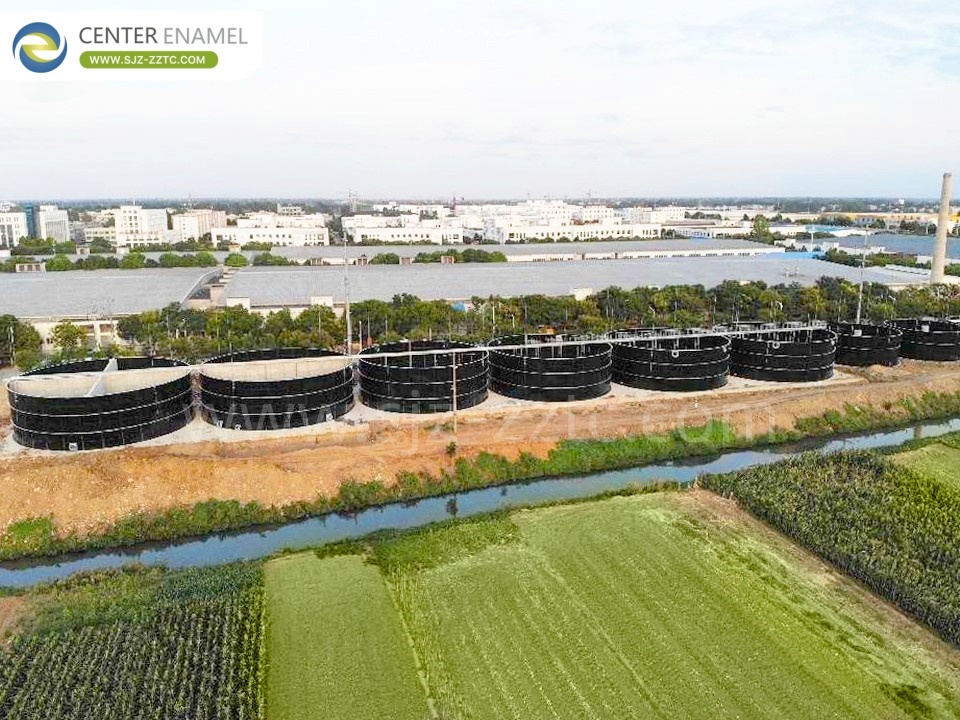
Sustainable Biogas Technology for Malaysia Pig Farm Wastewater Treatment Projects
| Place of Origin: | China |
| Brand Name: | CEC TANKS |
| Certification: | ISO 9001:2008, AWWA D103 , OSHA , BSCI |
| Model Number: | W201691123005 |
| Minimum Order Quantity: | 1set |
| Price: | $5000~$20000 one set |
| Packaging Details: | PE poly-foam between each two steel plates ; wooden pallet and wooden box |
| Delivery Time: | 0-60 days after deposit received |
| Payment Terms: | L/C, T/T |
| Supply Ability: | 60 sets per month |
|
Detail Information |
|||
| Place of Origin | China | Brand Name | CEC TANKS |
|---|---|---|---|
| Certification | ISO 9001:2008, AWWA D103 , OSHA , BSCI | Model Number | W201691123005 |
| Steel Plates Thickness: | 3mm To 12mm , Depends On The Tank Structure | Corrosion Integrity: | Excellent |
| Chemical Resistance: | Excellent | Capacity: | 20 M3 To 18,000 M3 |
| Service Life: | ≥30 Years | Permeability: | Gas / Liquid Impermeable |
| Highlight: | sustainable biogas wastewater treatment,pig farm biogas technology,Malaysia wastewater treatment projects |
||
Product Description
Sustainable Biogas Technology for Malaysia Pig Farm Wastewater Treatment Projects
As Malaysia continues to advance its commitment to environmental sustainability and renewable energy, the transformation of agricultural waste has become a pivotal focus. In the livestock sector, implementing a comprehensive pig farm Wastewater Treatment Project is no longer just a compliance measure—it is a strategic investment. By utilizing advanced Biogas Technology and high-durability GFS Tanks, Center Enamel is helping Malaysian farm operators turn environmental challenges into economic opportunities.
Wastewater Management in Malaysia’s Swine Industry
Malaysia's swine industry is a vital component of the national agricultural economy. However, the high density of farms, coupled with the country’s tropical climate and abundant rainfall, makes wastewater management a critical issue.
Hazards of Untreated Wastewater: Raw pig farm effluent is highly concentrated with organic pollutants, ammonia, and pathogens. If discharged directly, it causes severe soil degradation, destroys aquatic ecosystems through eutrophication, and risks contaminating groundwater—the primary water source for many rural communities.
The Strategic Advantage of Biogas Projects: Transitioning to biogas-centered treatment offers a "triple-win." First, it effectively neutralizes harmful pathogens and reduces Chemical Oxygen Demand (COD). Second, it captures methane—a potent greenhouse gas—to generate clean electricity or heat. Third, the resulting nutrient-rich digestate serves as an excellent organic fertilizer for local palm oil or rubber plantations.
The Biogas Production Process
Based on modern system integration, the biogas production flow transforms waste into energy through a series of biological and mechanical stages:
Pre-treatment: Waste enters the system where solid-liquid separators remove inorganic grit and heavy fibers to prevent reactor clogging.
Anaerobic Digestion (The Core): The stabilized waste is pumped into the reactor (such as a CSTR), where microorganisms break down organic matter in an oxygen-free environment.
Gas Collection & Storage: The produced methane is captured in double-membrane gas holders, often integrated atop the GFS tanks.
Purification & Utilization: The gas passes through desulfurization systems to remove $H_2S$, making it safe for use in biogas generators to produce electricity for farm operations.
High-Efficiency Anaerobic Processes: CSTR, UASB, and USR
To maximize methane yield and treatment efficiency, Center Enamel precision-engineers solutions based on three core technologies:
CSTR (Completely Stirred Tank Reactor): The premier choice for feedstocks with high solids content. By utilizing high-torque mechanical mixing, the CSTR ensures a homogeneous environment, preventing scum formation and maximizing microbial contact for high biogas yield.
UASB (Upflow Anaerobic Sludge Blanket): Ideal for liquid-phase wastewater with lower suspended solids. Effluent flows upward through a dense granular sludge blanket, allowing for rapid degradation of pollutants in a compact footprint.
USR (Upflow Solids Reactor): Specifically designed for high-concentration organic wastewater. It ensures a high solids retention time (SRT), making it highly effective for the thorough digestion of complex manure fibers.
Why Choose GFS Tanks for Biogas Projects?
The heart of any pig farm Wastewater Treatment Project is the reactor vessel. Glass-Fused-to-Steel (GFS) tanks are the global industry standard for several reasons:
Superior Corrosion Resistance: The fusion of glass and steel creates an inert barrier that is immune to the high ammonia and hydrogen sulfide levels found in pig waste.
Rapid Modular Construction: GFS tanks are bolted together on-site, eliminating the need for long concrete curing times or complex welding. This significantly reduces the project timeline in Malaysia's unpredictable weather.
Low Maintenance & Longevity: With a service life exceeding 30 years and minimal maintenance requirements, GFS tanks provide the lowest total cost of ownership over the project’s lifecycle.
Proven Global Performance: Project Cases
Center Enamel's expertise is validated by its extensive portfolio of successfully commissioned projects worldwide:
1. Henan Wastewater Treatment Project
Installation Date: 2013
Treatment Capacity: 650 tons/day (Farm Animal Manure and Washwater)
Treatment Method: Mesophilic Anaerobic Digestion
Reactor Type: Completely Mixed Anaerobic Reactor (CSTR)
2. Beijing Swine Farm Wastewater Treatment Project
Installation Date: 2020
Daily Treatment Volume: 580 cubic meters/day
Treatment Process: UASB + AOAO
Conclusion
For pig farm operators in Malaysia, the integration of Biogas Technology and GFS Tanks is the key to balancing productivity with environmental stewardship. Center Enamel provides the engineering excellence and durable infrastructure required to turn waste into a sustainable energy future.