-
Glass Fused To Steel Tanks (596)
-
Stainless Steel Tanks (434)
-
Fusion Bonded Epoxy Tanks (592)
-
Galvanized Steel Tanks (321)
-
Aluminum Dome Roofs (1316)
-
Wastewater Storage Tanks (231)
-
Welded Steel Tanks (457)
-
Pressure Vessels (295)
-
Anaerobic Digester (201)
-
Industrial Water Tanks (349)
-
Glass Lined Steel Tanks (180)
-
Bolted Steel Tanks (390)
-
Sludge Storage Tank (115)
-
Biogas Storage Tank (173)
-
Leachate Storage Tanks (133)
-
Agricultural Water Storage Tanks (179)
-
Fire Water Tank (166)
-
Grain Storage Silos (146)
-
Biogas Projects (425)
-
Wastewater Treatment Projects (788)
-
Double Membrane Roof (223)

|
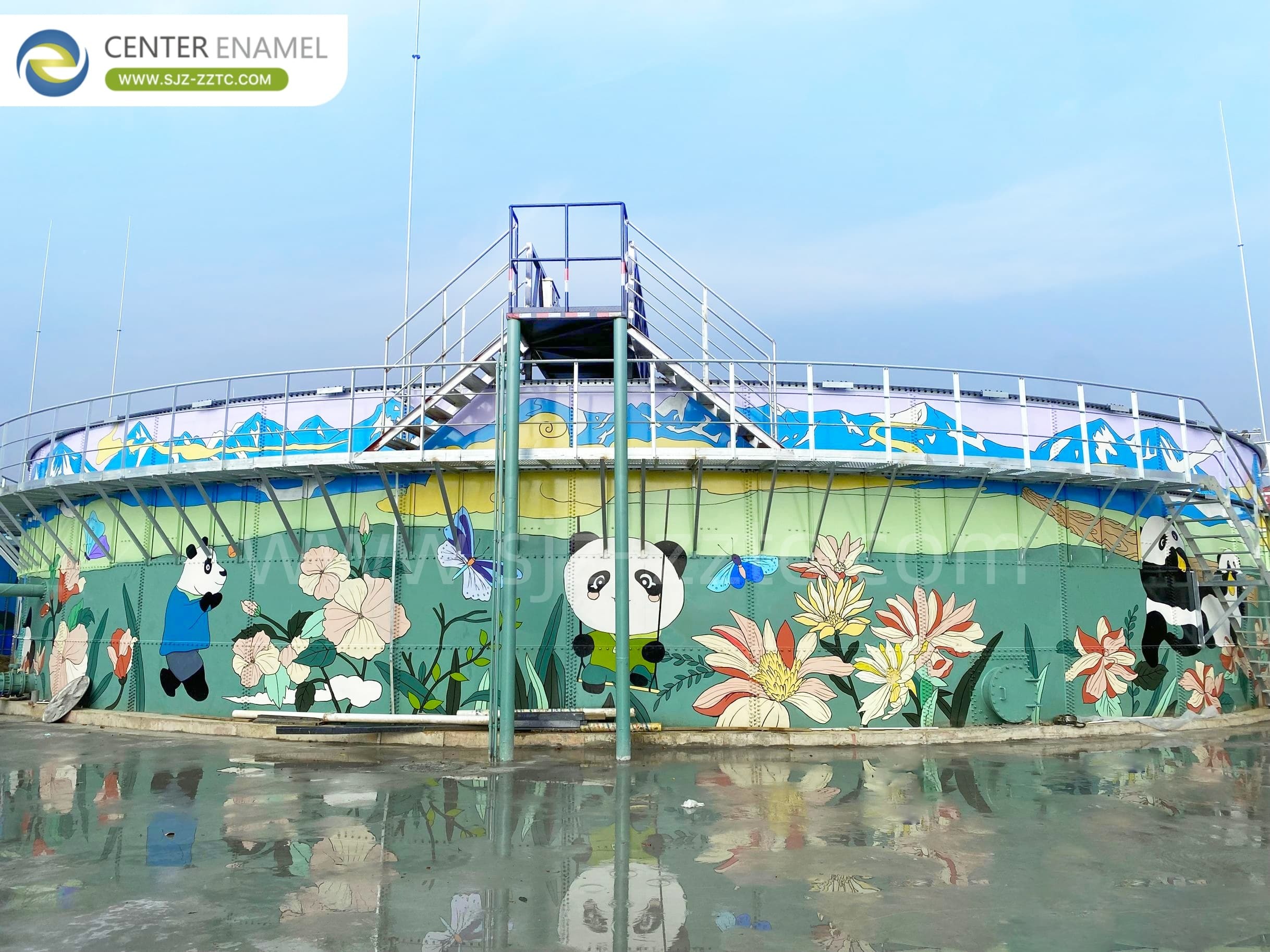
Sustainable Biogas Technology for India Pig Farm Wastewater Treatment Projects
| Place of Origin: | China |
| Brand Name: | CEC TANKS |
| Certification: | ISO 9001:2008, AWWA D103 , OSHA , BSCI |
| Model Number: | W201691123005 |
| Minimum Order Quantity: | 1set |
| Price: | $5000~$20000 one set |
| Packaging Details: | PE poly-foam between each two steel plates ; wooden pallet and wooden box |
| Delivery Time: | 0-60 days after deposit received |
| Payment Terms: | L/C, T/T |
| Supply Ability: | 60 sets per month |
|
Detail Information |
|||
| Place of Origin | China | Brand Name | CEC TANKS |
|---|---|---|---|
| Certification | ISO 9001:2008, AWWA D103 , OSHA , BSCI | Model Number | W201691123005 |
| Steel Plates Thickness: | 3mm To 12mm , Depends On The Tank Structure | Corrosion Integrity: | Excellent |
| Chemical Resistance: | Excellent | Capacity: | 20 M3 To 18,000 M3 |
| Service Life: | ≥30 Years | Permeability: | Gas / Liquid Impermeable |
| Highlight: | sustainable biogas wastewater treatment,pig farm biogas technology,India wastewater treatment projects |
||
Product Description
Sustainable Biogas Technology for India Pig Farm Wastewater Treatment Projects
As India accelerates its transition toward a sustainable green economy, the agricultural sector is undergoing a profound transformation. With one of the world's largest livestock populations, the management of organic waste has shifted from a logistical challenge to a strategic opportunity. For any modern pig farm Wastewater Treatment Project, the integration of Biogas Technology and high-performance GFS Tanks is now the gold standard for achieving environmental compliance and energy independence.
Wastewater Management in India’s Swine Industry
In India, the swine industry plays a vital role in rural livelihoods and food security. However, as farms scale up to meet growing demand, the volume of effluent generated has increased significantly.
The Hazards of Untreated Wastewater: Raw pig farm effluent is a "high-strength" waste stream, rich in ammonia, phosphorus, and organic pollutants. Improper discharge leads to the contamination of groundwater, the spread of waterborne pathogens, and the eutrophication of local ponds and rivers, which severely damages India's delicate aquatic ecosystems.
The Advantages of Biogas Integration: Implementing a biogas project turns a waste liability into a "circular economy" asset. By capturing methane, farms can generate their own electricity or heat, significantly reducing operational costs. Furthermore, the process yields a nutrient-stabilized digestate that serves as an excellent organic fertilizer, supporting India's push for sustainable soil health.
The Biogas Production Flow and Equipment
Based on the integrated engineering designs provided by Center Enamel, the production of biogas follows a sophisticated, multi-stage process flow:
Collection & Pre-treatment: Raw wastewater and manure are gathered in a collection sump. Here, Solid-Liquid Separators and mechanical screens remove heavy fibers and inorganic grit.
Anaerobic Digestion: The heart of the system is the Anaerobic Reactor (often a CSTR or UASB). Microorganisms break down organic matter in an oxygen-free environment, releasing methane gas ($CH_4$).
Gas Storage: The produced gas is captured in a Double-Membrane Biogas Holder, which provides a flexible, gas-tight storage solution to balance production and consumption.
Purification: Before utilization, the gas passes through a Desulfurization System to remove hydrogen sulfide ($H_2S$), protecting downstream equipment from corrosion.
Energy Recovery: The purified biogas is fed into a CHP (Combined Heat and Power) unit or biogas generator to produce electricity and thermal energy.
Optimized Anaerobic Processes: CSTR, UASB, and USR
Center Enamel precision-engineers different reactor types to handle the specific characteristics of Indian pig farm waste:
CSTR (Completely Stirred Tank Reactor): This is the premier choice for concentrated manure with high solids content. Using mechanical mixing, it ensures a homogeneous environment, preventing sedimentation and maximizing methane yield.
UASB (Upflow Anaerobic Sludge Blanket): Ideal for liquid-phase wastewater. It uses a dense granular sludge blanket to degrade organic pollutants as the water flows upward, offering high efficiency and a compact footprint.
USR (Upflow Solids Reactor): Specifically designed for wastewater with high suspended solids. It ensures a long solids retention time, allowing for the thorough breakdown of complex organic fibers.
The GFS Tank Advantage: Durable Infrastructure
In the corrosive and humid environments typical of many Indian states, the choice of vessel is paramount. Glass-Fused-to-Steel (GFS) tanks offer unrivaled benefits:
Corrosion Resistance: The fusion of glass and steel at over 800°C creates an inert, non-porous barrier immune to the aggressive organic acids and $H_2S$ generated during digestion.
Modular Installation: GFS tanks are bolted together on-site, which is far faster than concrete construction. This modularity allows for easy expansion as the farm grows.
Thermal Stability: These tanks can be easily insulated to maintain the stable mesophilic or thermophilic temperatures required for efficient microbial activity.
Longevity: Engineered for a service life of over 30 years, they offer an economical long-term solution with minimal maintenance.
Global Success Stories: Proven Project Cases
1. Animal Waste Treatment Project in Henan, China
Installation Date: 2013
Handling Capacity: 650 tons/day of farm animal manure and cleaning wastewater.
Treatment Method: Mesophilic Anaerobic Digestion.
Reactor Type: CSTR (Completely Stirred Tank Reactor).
Overview: This decade-old project proves the long-term reliability of GFS-based CSTR systems in handling massive volumes of high-concentration livestock waste.
2. Beijing Swine Farm Wastewater Treatment Project
Installation Date: 2020
Daily Treatment Volume: 580 cubic meters/day
Treatment Process: UASB + AOAO
Conclusion
For pig farm operators in India, the transition to sustainable Biogas Technology is a vital step toward a greener future. By combining the resilience of GFS tanks with precision-engineered anaerobic processes like CSTR and UASB, Center Enamel provides the comprehensive infrastructure needed to achieve energy independence and environmental stewardship.