-
Glass Fused To Steel Tanks (596)
-
Stainless Steel Tanks (434)
-
Fusion Bonded Epoxy Tanks (592)
-
Galvanized Steel Tanks (321)
-
Aluminum Dome Roofs (1316)
-
Wastewater Storage Tanks (231)
-
Welded Steel Tanks (457)
-
Pressure Vessels (295)
-
Anaerobic Digester (201)
-
Industrial Water Tanks (349)
-
Glass Lined Steel Tanks (180)
-
Bolted Steel Tanks (390)
-
Sludge Storage Tank (115)
-
Biogas Storage Tank (173)
-
Leachate Storage Tanks (133)
-
Agricultural Water Storage Tanks (179)
-
Fire Water Tank (166)
-
Grain Storage Silos (146)
-
Biogas Projects (425)
-
Wastewater Treatment Projects (788)
-
Double Membrane Roof (223)

|
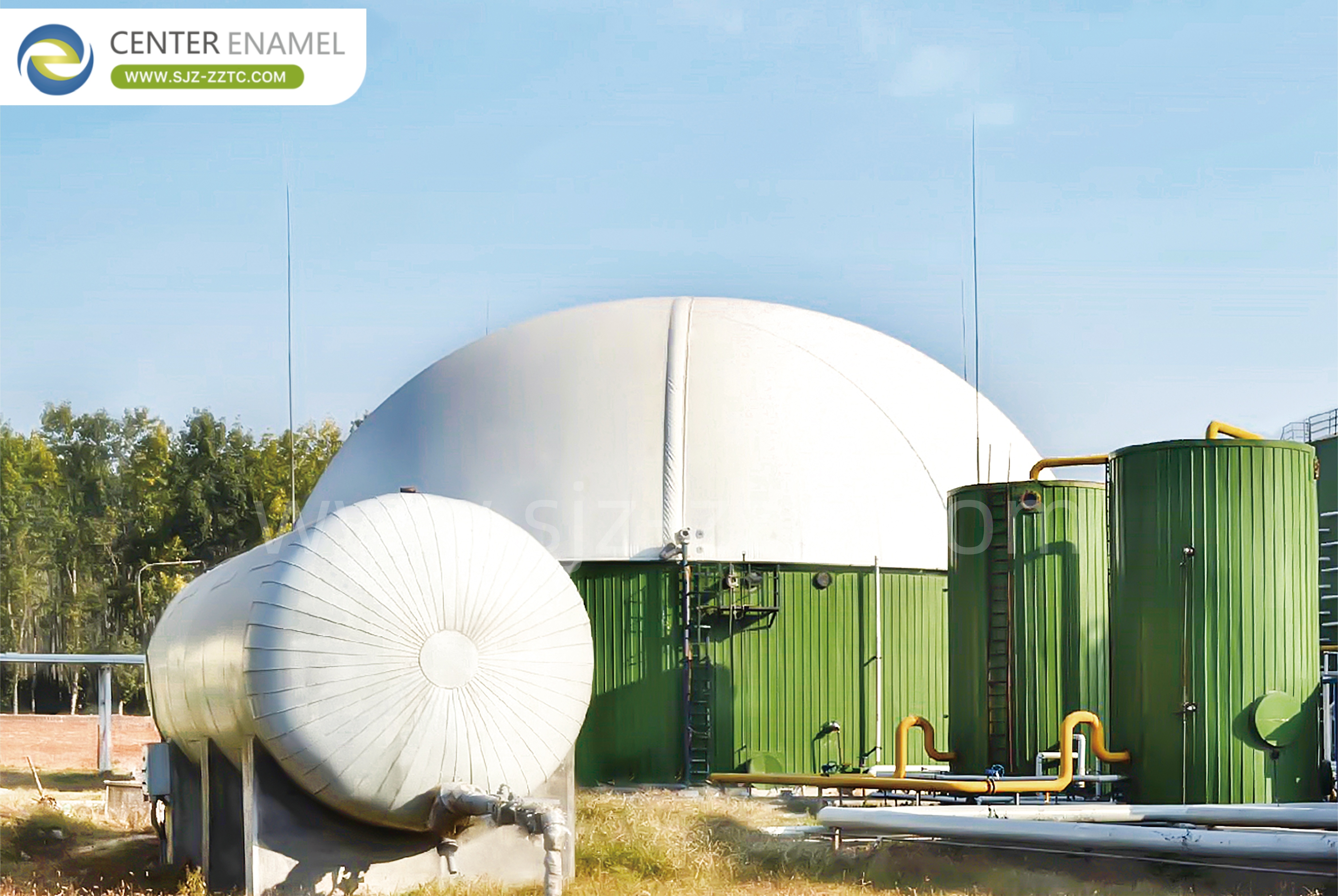
Leading Biogas Technology and GFS Tanks for Ghana Poultry Farm Wastewater Treatment
| Place of Origin: | China |
| Brand Name: | CEC TANKS |
| Certification: | ISO 9001:2008, AWWA D103 , OSHA , BSCI |
| Model Number: | W |
| Minimum Order Quantity: | 1set |
| Price: | $5000~$20000 one set |
| Packaging Details: | PE poly-foam between each two steel plates ; wooden pallet and wooden |
| Delivery Time: | 10-30 days after deposit received |
| Payment Terms: | L/C, T/T |
| Supply Ability: | 60 sets per month |
|
Detail Information |
|||
| Place of Origin | China | Brand Name | CEC TANKS |
|---|---|---|---|
| Certification | ISO 9001:2008, AWWA D103 , OSHA , BSCI | Model Number | W |
| Tank Body Color: | Dark Green / Can Be Customized | Corrosion Integrity: | Excellent |
| Steel Plates Thickness: | 3mm To 12mm , Depends On The Tank Structure | Chemical Resistance: | Excellent |
| Size Of Panel: | 2.4M * 1.2M | Easy To Clean: | Smooth, Glossy, Inert, Anti-adhesion |
| Highlight: | biogas technology for poultry wastewater,GFS tanks Ghana wastewater treatment,poultry farm wastewater treatment projects |
||
Product Description
Leading Biogas Technology and GFS Tanks for Ghana Poultry Farm Wastewater Treatment
In the heart of West Africa, Ghana’s agricultural sector is undergoing a profound transformation. As the nation intensifies its livestock and poultry production to meet growing food demands, the strategic focus has shifted toward high-efficiency energy recovery. By implementing advanced Biogas Technology—specifically through the use of GFS Tanks and integrated storage—Ghanaian farms are turning environmental challenges into a sustainable power source.
Biogas Development and Policy in Ghana’s Livestock Sector
Ghana possesses immense potential for biomass energy, yet the intensification of farming has traditionally posed risks to local groundwater and ecosystems due to high levels of organic pollutants. Recognizing this, the Ghanaian government has begun introducing policies and incentives to promote renewable energy, targeting the conversion of agricultural waste into biogas to achieve greater energy independence.
The current policy focus is shifting toward large-scale, industrial-grade anaerobic digestion plants capable of handling waste from commercial piggeries and poultry operations. These facilities require robust infrastructure capable of withstanding humid climates and the corrosive nature of manure wastewater.
Glass-Fused-to-Steel (GFS) tanks have emerged as the premier choice for these projects due to their superior acid resistance and rapid installation. As a leading Biogas Holder Manufacturer, Center Enamel provides the high-integrity storage needed to capture methane effectively, complying with discharge standards while generating decentralized electricity.
Understanding the Biogas Generation Principle
Converting farm wastewater into renewable energy relies on a stabilized biological process known as anaerobic digestion. This process flow typically involves four critical stages:
Waste Collection: Raw manure and facility wash-water are gathered in mixing pits to ensure a consistent organic load.
Anaerobic Digestion: The core reaction occurs inside a GFS tank, where specialized microorganisms break down organic matter in an oxygen-free environment.
Biogas Capture: As decomposition occurs, methane-rich biogas is produced and captured by biogas holders, such as double-membrane roofs integrated directly onto the tanks.
Energy Conversion: The stored gas is purified to generate electricity or heat, while the remaining nutrient-rich digestate serves as an organic fertilizer.
The Material and Advantages of GFS Tanks
In the demanding environment of agricultural waste treatment, Center Enamel’s GFS Tanks stand out as the industry leader, offering distinct advantages tailored for these applications:
Superior Material Composition: These tanks combine the structural strength of steel with the superior chemical resistance of glass. The glass coating is fused at temperatures exceeding 800°C, creating an inert, non-porous barrier.
Exceptional Corrosion Resistance: This barrier is immune to the high ammonia levels, hydrogen sulfide ($H_2S$), and organic acids found in livestock manure and biogas environments.
Rapid and Simple Installation: The bolted modular design eliminates the need for complex on-site welding. Standardized panels are assembled quickly with minimal labor, significantly shortening the construction cycle even in remote agricultural regions.
Long Service Life: Engineered for extreme durability, GFS tanks offer a service life of more than 30 years with minimal maintenance costs.
Precision-Engineered Processes: CSTR, USR, and UASB
To maximize energy recovery and ensure stable waste stabilization, Center Enamel’s solutions support various high-rate biological processes:
CSTR (Completely Stirred Tank Reactor): The most effective process for handling thick livestock manure. High-torque mechanical mixers maintain a completely homogeneous environment, preventing solids from settling and maximizing biogas yield.
USR (Upflow Solids Reactor): Specifically optimized for high-concentration organic wastewater with high suspended solids. The USR process ensures a high solids retention time within the reactor for the thorough digestion of complex organic matter.
UASB (Upflow Anaerobic Sludge Blanket): A high-load process ideal for the liquid fraction of effluent. Organic pollutants are rapidly degraded as wastewater flows upward through a dense granular sludge blanket.
Proven Performance: Global Infrastructure Excellence
Center Enamel’s reliability in managing intensive organic loads is demonstrated through a formidable track record of global excellence.
1. Biogas Project in Indonesia
This project highlights the efficiency and durability of GFS technology when handling aggressive organic wastewater in a tropical environment.
Application: Anaerobic reactor in a palm oil wastewater treatment plant.
Tank Model: Ø19.86 * 8.4 meters.
Quantity: 3 units of GFS tanks.
Installation: Completed by a team of 7 people in just 40 days.
Installation Date: November 2009.
2. Biogas Project in Sweden
This project demonstrates the versatility of Center Enamel’s infrastructure in the European market, where environmental standards are exceptionally stringent.
Application: Biogas production and storage.
Location: Sweden.
Equipment: Center Enamel Glass-Fused-to-Steel (GFS) tanks.
Performance: The modular design allowed for rapid deployment, ensuring the structural integrity and operational stability required for high-latitude biogas operations.
Conclusion: Partnering for a Greener Future
For farm operators in Ghana and across the globe, the transition to sustainable waste management is both an environmental responsibility and an economic opportunity. By combining the structural resilience of GFS Tanks with the efficiency of modern Biogas Technology, Center Enamel provides a comprehensive solution for Farm Wastewater Treatment. With over 30 years of experience and projects in more than 100 countries, Center Enamel (Zhengzhong Technology) remains at the forefront of the global biomass energy industry, dedicated to turning agricultural waste into a sustainable energy future.
In the pursuit of sustainable agricultural growth, Cambodia is increasingly turning to innovative waste-to-energy solutions. As commercial poultry and livestock farming expand across the country, the demand for high-efficiency Farm Wastewater Treatment has reached a new peak. By integrating advanced Biogas Technology with Glass-Fused-to-Steel (GFS) tanks, Cambodian farm operators are transforming organic waste into a valuable, renewable power source.
Biogas Development and Policy in Cambodia
Cambodia’s agricultural sector, a vital pillar of the national economy, faces the dual challenge of managing increasing waste volumes while securing stable energy for rural operations. To address this, the Cambodian government, often in collaboration with international development partners, has been promoting biogas technology through various environmental and energy policies.
These policies aim to reduce the environmental footprint of large-scale farms and decrease the reliance on imported fossil fuels. The government encourages the transition from traditional open-lagoon systems to sophisticated anaerobic digestion plants. As a leading Biogas Holder Manufacturer, Center Enamel provides the essential infrastructure—such as GFS anaerobic reactors and integrated gas storage solutions—that can withstand Cambodia's tropical climate and the corrosive nature of manure wastewater. This allows local farms to achieve greater energy independence while meeting stringent environmental discharge standards.
The Biogas Production Process: From Waste to Energy
The production of biogas is a complex but highly efficient biological process known as anaerobic digestion. The typical process flow involves several critical stages:
Feedstock Collection & Pre-treatment: Raw animal manure and facility wash-water are gathered and mixed to ensure a consistent organic load.
Anaerobic Digestion: The organic matter enters the GFS tanks, which serve as the reactor. In this oxygen-free environment, specialized microorganisms break down the waste.
Methane Formation: As the waste decomposes, methane-rich biogas is generated. This gas is captured by high-integrity biogas holders, often integrated directly atop the reactor tanks.
Energy Recovery & Nutrient Cycling: The stored biogas is purified for electricity or heat production, while the remaining liquid—digestate—becomes a high-quality organic fertilizer for local crops.
What are GFS Tanks and Their Advantages?
Glass-Fused-to-Steel (GFS) tanks are the gold standard for anaerobic reactors and biogas storage. These tanks are constructed from individual glass-coated steel panels that are fused at temperatures exceeding 800°C. This process creates a physical and chemical bond that combines the strength of steel with the superior corrosion resistance of glass.
Key Advantages:
Superior Corrosion Resistance: The inert glass coating is immune to the high ammonia levels and hydrogen sulfide ($H_2S$) typical of farm wastewater.
Rapid Modular Installation: The bolted design allows for fast assembly on-site with minimal labor, significantly shortening construction cycles compared to concrete tanks.
Long Service Life: Engineered for durability, GFS tanks offer a service life of over 30 years with very low maintenance costs.
Climate Adaptability: Their structural integrity ensures stable performance in humid tropical environments or extreme cold regions.
High-Rate Anaerobic Processes: CSTR, USR, and UASB
To maximize biogas yield, Center Enamel provides precision-engineered solutions supporting various biological processes:
CSTR (Completely Stirred Tank Reactor): Ideal for thick manure and high-solid waste. Mechanical mixers ensure a homogeneous environment for maximum microbial activity.
USR (Upflow Solids Reactor): Optimized for high-concentration organic wastewater, ensuring a high solids retention time for thorough digestion.
UASB (Upflow Anaerobic Sludge Blanket): A high-load process where wastewater flows through a dense granular sludge blanket, offering high efficiency and a small footprint.
Proven Infrastructure: Global Success Stories
Center Enamel’s reliability in managing intensive organic loads is evidenced by a formidable track record of global excellence.
1. Biogas Project in Inner Mongolia
This project demonstrates the structural stability of GFS reactors when handling high-volume mixed agricultural residues.
Location: Inner Mongolia, China.
Processing Capacity: 900 $m^3$/day of livestock manure and agricultural waste (grass straw).
Technology: Medium temperature anaerobic fermentation using the CSTR process.
Syste Details: 4 sets of GFS Anaerobic Reactors (Φ25.98 × 8.4m).
Scale: Daily biogas production of 20,000 $m^3$.
Installation Date: 2017.
2. Biogas Project in Indonesia
This case highlights the durability of GFS technology in Southeast Asia’s demanding tropical climate.
Location: Indonesia.
Application: Anaerobic reactor in a palm oil wastewater treatment plant.
Tank Models: Ø17.58 × 8.4m and Ø16.82 × 7.2m.
Quantity: 3 units of GFS tanks.
Performance: These reactors handle some of the most aggressive organic wastewater (POME) in the world.
Installation Date: 2013.
Conclusion: Partnering for a Sustainable Future
For farm operators in Cambodia and across the globe, the transition to sustainable waste management is both an environmental responsibility and an economical opportunity. By combining the structural resilience of GFS Tanks with advanced Biogas Technology, Center Enamel (Zhengzhong Technology) provides a comprehensive solution for farm wastewater treatment. With over 30 years of experience and projects in more than 100 countries, we are dedicated to providing the high-quality infrastructure needed to turn agricultural waste into a sustainable energy future.