-
Glass Fused To Steel Tanks (596)
-
Stainless Steel Tanks (434)
-
Fusion Bonded Epoxy Tanks (592)
-
Galvanized Steel Tanks (321)
-
Aluminum Dome Roofs (1316)
-
Wastewater Storage Tanks (231)
-
Welded Steel Tanks (457)
-
Pressure Vessels (295)
-
Anaerobic Digester (201)
-
Industrial Water Tanks (349)
-
Glass Lined Steel Tanks (180)
-
Bolted Steel Tanks (390)
-
Sludge Storage Tank (115)
-
Biogas Storage Tank (173)
-
Leachate Storage Tanks (133)
-
Agricultural Water Storage Tanks (179)
-
Fire Water Tank (166)
-
Grain Storage Silos (146)
-
Biogas Projects (425)
-
Wastewater Treatment Projects (788)
-
Double Membrane Roof (223)

|
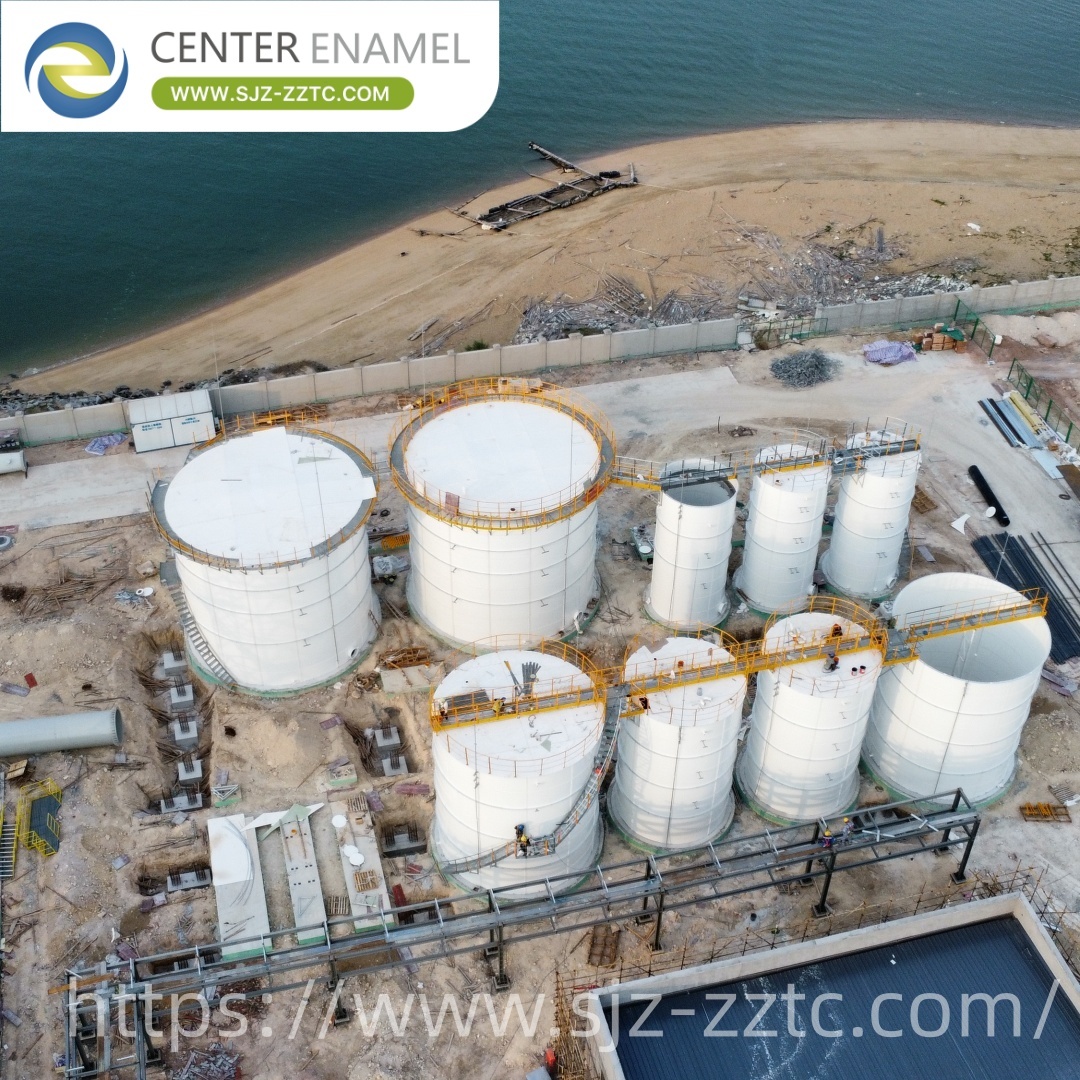
Center Enamel Provides Anaerobic Digestion Technology for Philippines Aquaculture Wastewater Treatment Project
| Place of Origin: | China |
| Brand Name: | CEC TANKS |
| Certification: | ISO 9001:2008, AWWA D103 , OSHA , BSCI |
| Model Number: | W |
| Minimum Order Quantity: | 1set |
| Price: | $5000~$20000 one set |
| Packaging Details: | PE poly-foam between each two steel plates ; wooden pallet and wooden box |
| Delivery Time: | 10-30 days after deposit received |
| Payment Terms: | L/C, T/T |
| Supply Ability: | 60 sets per month |
|
Detail Information |
|||
| Place of Origin | China | Brand Name | CEC TANKS |
|---|---|---|---|
| Certification | ISO 9001:2008, AWWA D103 , OSHA , BSCI | Model Number | W |
| Coating Thickness: | 0.25mm~0.40mm & Double Coating | Adhesion: | 3,450N/cm |
| Hardness: | 6.0Mohs | Service Life: | ≥30 Years |
| Holiday Test: | >1500v | Tank Body Color: | Dark Green / Can Be Customized |
| Highlight: | anaerobic digestion wastewater treatment technology,aquaculture wastewater treatment project,Philippines wastewater treatment with warranty |
||
Product Description
Center Enamel Provides Anaerobic Digestion Technology for Philippines Aquaculture Wastewater Treatment Project
In the archipelagic nation of the Philippines, where the aquaculture industry—ranging from intensive shrimp farming to tilapia and milkfish production—is a vital economic driver, the management of organic effluents has become a critical priority. For the Philippines Aquaculture Wastewater Treatment Project, the implementation of advanced anaerobic digestion technology serves as a cornerstone for both industrial waste stabilization and the generation of clean biogas. Aquaculture wastewater typically contains high concentrations of fish excreta, metabolic nitrogen, and uneaten feed, which contribute to elevated Chemical Oxygen Demand (COD) and Biological Oxygen Demand (BOD) levels. Treating this waste requires a high-performance reactor that can facilitate the efficient microbial breakdown of these complex organics into stable biosolids and valuable methane. For Philippine aquaculture producers, the digestion vessel must be a precision-engineered environment that offers a corrosion-free guarantee and 100% structural stability under humid, maritime conditions. Investing in a factory-certified modular system is an economical and strategic choice that ensures high-efficiency waste-to-energy conversion while meeting strict national discharge standards and protecting the country's diverse marine ecosystems.
To meet the intensive biochemical and environmental demands of the Philippines aquaculture industry, Epoxy Coated Tanks (Epoxy Coated Steel Tanks) are the premier technology choice. These bolted steel units utilize advanced, high-density factory coatings specifically engineered to provide a secure and stable foundation for anaerobic digestion reactors.
Product Application: High-Efficiency Anaerobic Resource Recovery
Our Epoxy Coated Tanks are engineered to support the complex requirements of aquaculture waste stabilization:
Anaerobic Digestion Reactors: Providing a stable, oxygen-free environment for the microbial conversion of pond sludge and organic effluents into biogas.
COD and BOD Reduction Buffers: Acting as primary treatment vessels to significantly lower the pollutant load before secondary water recirculation or discharge.
Biogas Collection and Accumulation: Safely containing the methane-rich gas generated during the digestion process for potential thermal or electrical energy recovery.
Organic Sludge Stabilization: Holding the nutrient-rich organic solids resulting from the treatment process for potential agricultural reuse or specialized disposal.
Product Advantages: Process Resilience and Structural Power
The primary advantage of selecting Epoxy Coated Tanks for anaerobic digestion lies in their specialized material science and modular precision:
Advanced Internal Corrosion Shielding: Aquaculture wastewater produces biogenic acids and hydrogen sulfide gas during digestion. The factory-applied epoxy coating provides a permanent, non-porous barrier that ensures the tank remains corrosion-free, effectively neutralizing chemical attacks and protecting the structural steel.
Superior Gas-Tight Bolted Technology: Maintaining anaerobic conditions requires a perfect seal. Our tanks utilize high-precision bolted joints combined with specialized industrial-grade sealants, ensuring 100% gas-tight integrity for the reactor.
High-Tensile Modular Engineering: Managing aquaculture sludge involves handling heavy organic loads. Our tanks utilize precision-manufactured steel panels, calculated to manage these immense physical stresses while ensuring total structural safety in tropical climates.
Economical Rapid Installation: Industrial projects in the Philippines often require efficient implementation across various islands. The bolt-together design allows for rapid on-site assembly, making it an economical choice for upgrading wastewater infrastructure without long-term operational halts.
CSTR, UASB, IC, and USR Process Integration
To maximize the efficiency of anaerobic treatment, our tanks are specifically engineered to accommodate advanced biological processes:
CSTR (Completely Stirred Tank Reactor) Process
For aquaculture wastewater with high suspended solids or thick organic sludge, the CSTR process is ideal. Our tanks are reinforced to support mechanical mixers, ensuring a completely homogeneous mixture and internal heat distribution.
UASB (Upflow Anaerobic Sludge Blanket) Process
The UASB process requires precise hydraulic control and an efficient internal separator. Our tanks are customized with specialized internal three-phase separators and uniform distribution manifolds at the bottom. The corrosion-free interior ensures that the delicate internal collectors remain stable.
IC (Internal Circulation) Process
The IC process represents a high-rate anaerobic technology suitable for high-load organic effluents. Our tanks are designed for the vertical height and internal pressure requirements of the IC process, providing a stable foundation for dual-stage digestion.
USR (Upflow Solids Reactor) Process
For high-density organic solids common in pond sediment, the USR process provides superior solids retention. Our tanks are equipped with specialized discharge and circulation nozzles that prevent solids accumulation.
Performance Parameters and Industry Standards
Our Epoxy Coated Tanks for anaerobic reactor service meet the most rigorous global technical benchmarks:
Global Quality Compliance: Meeting AWWA D103 and ISO standards for bolted steel containment and structural safety.
Quality Assurance: Every panel undergoes high-voltage factory testing to ensure coating thickness and zero porosity, providing a perfect barrier for the life of the asset.
Risk Assessment: Precision-calculated for dynamic liquid loads, internal gas pressure, and seismic requirements to ensure operational safety.
Product Installation and Maintenance
Rapid Modular Installation
The prefabricated nature of Epoxy Coated Tanks allows for rapid on-site assembly within active agricultural zones. Using a "top-down" jacking system, the tank is constructed at ground level, which significantly reduces the need for heavy cranes and improves site safety.
Minimal Maintenance and Operational Continuity
The durable epoxy finish is designed for heavy-duty service with minimal intervention. This results in an economical lifecycle where maintenance is limited to routine external inspections, ensuring that the treatment facility remains operational without the need for frequent internal recoating.
Project Cases: Proven Performance in Global Infrastructure
The reliability of our technology in managing critical waste and energy loads is demonstrated in these non-fictitious projects:
Sichuan Chengdu Wastewater Treatment Plant Project: This project utilized 16 units of tanks to manage massive volumes of materials, proving the structural stability and modular efficiency.
Saudi Municipal Sewage and Industrial Waste Project: In a region of extreme heat and environmental stress, 5 units of these tanks were installed to provide a durable, corrosion-free solution.
Hebei Municipal Water and Sewage Infrastructure Project: This project utilized 1 unit of a high-integrity bolted tank to support critical regional utility service.
Company Advantages: Our Core Competency
Our company’s core competitiveness lies in our ability to deliver "Reliable Anaerobic Process Solutions." We combine the structural resilience of Epoxy Coated Tanks with the advanced engineering required for CSTR, UASB, IC, and USR processes. By providing a comprehensive package—from hydraulic-load modeling and risk assessment to final installation—Center Enamel ensures that the Philippines Aquaculture Wastewater Treatment Project is equipped with a system built to maximize process security and ensure decades of reliable, safe operation.