-
Glass Fused To Steel Tanks (596)
-
Stainless Steel Tanks (434)
-
Fusion Bonded Epoxy Tanks (592)
-
Galvanized Steel Tanks (321)
-
Aluminum Dome Roofs (1316)
-
Wastewater Storage Tanks (231)
-
Welded Steel Tanks (457)
-
Pressure Vessels (295)
-
Anaerobic Digester (201)
-
Industrial Water Tanks (349)
-
Glass Lined Steel Tanks (180)
-
Bolted Steel Tanks (390)
-
Sludge Storage Tank (115)
-
Biogas Storage Tank (173)
-
Leachate Storage Tanks (133)
-
Agricultural Water Storage Tanks (179)
-
Fire Water Tank (166)
-
Grain Storage Silos (146)
-
Biogas Projects (425)
-
Wastewater Treatment Projects (788)
-
Double Membrane Roof (223)


|
External Floating Roof for Gasoline Fuel Storage Tank: Crucial for Eliminating Hazardous Vapors from Volatile Gasoline
| Place of Origin: | China |
| Brand Name: | CEC TANKS |
| Certification: | ISO 9001:2008, AWWA D103 , OSHA , BSCI |
| Model Number: | W |
| Minimum Order Quantity: | 1set |
| Price: | $5000~$20000 one set |
| Packaging Details: | PE poly-foam between each two steel plates ; wooden pallet and wooden |
| Delivery Time: | 10-30 days after deposit received |
| Payment Terms: | L/C, T/T |
| Supply Ability: | 60 sets per month |
|
Detail Information |
|||
| Place of Origin | China | Brand Name | CEC TANKS |
|---|---|---|---|
| Certification | ISO 9001:2008, AWWA D103 , OSHA , BSCI | Model Number | W |
| Corrosion Resistance: | Suitable For Waste Water Salt Water, Sea Water, High Sulfur Crude Oil, Salt Fox, Organic And Inorganic Compounds | Elastic: | Same As Steel Sheet |
| Tank Body Color: | Customized Design | Coating Thickness: | Customized |
| Foundation: | Concrete | Steel Grade: | Stainless Steel |
| Highlight: | external floating roof gasoline tank,welded steel fuel storage tank,hazardous vapor elimination floating roof |
||
Product Description
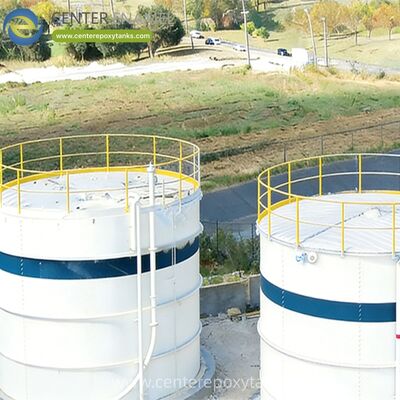
External Floating Roof for Gasoline Fuel Storage Tank: Crucial for Eliminating Hazardous Vapors from Volatile Gasoline
Gasoline is one of the most volatile and flammable liquids stored in industrial quantities. Its low flash point and high vapor pressure mean that even slight temperature increases can lead to the rapid formation of explosive gas mixtures within a storage vessel. The External Floating Roof for Welded Stainless Steel Gasoline Fuel Storage Tanks is a mandatory safety component in modern terminal design. This system is crucial for eliminating hazardous vapors from volatile gasoline, providing a buoyant, airtight barrier that rests directly on the liquid surface to prevent the formation of a flammable headspace. When integrated with a welded stainless steel shell and an Aluminum Dome Roof, it provides the highest level of fire protection and emission control.
Eliminating the Explosive Atmosphere
In a traditional fixed-roof tank, the space between the gasoline and the roof is filled with a mixture of air and gasoline vapors. This "vapor space" is highly hazardous, as any static spark or lightning strike could lead to a catastrophic explosion. The external floating roof addresses this risk by functioning as a moving deck that eliminates the vapor space entirely.
The choice of welded stainless steel for the tank shell is essential for gasoline safety. Gasoline can contain aggressive additives and trace moisture that lead to corrosion in carbon steel, resulting in rough internal surfaces. In a welded stainless steel tank, the walls remain perfectly smooth, allowing the floating roof’s specialized mechanical seals to maintain a superior, gas-tight contact. This precision is what makes the system crucial for eliminating hazardous vapors, effectively locking the gasoline in its liquid phase and ensuring that no explosive concentrations of gas can accumulate.
Maximum Security with Aluminum Dome Roofs
To provide a primary shield against external ignition sources and weather, an Aluminum Dome Roof is utilized as the external cover. The geodesic dome provides a clear-span, weather-tight shield that protects the internal floating roof and the volatile gasoline from rain, wind, and lightning.
A major advantage of the Aluminum Dome Roof is its column-free design. Traditional fixed roofs require internal support pillars that must penetrate the floating roof, creating dozens of potential leak paths where gasoline vapors could escape into the upper tank area. By utilizing a self-supporting aluminum dome, the interior of the welded stainless steel tank remains completely unobstructed. This allow the floating roof to provide a 100% effective seal across the entire surface. Furthermore, the reflective panels of the aluminum dome help maintain a much lower internal temperature, significantly reducing the vapor pressure of the gasoline and enhancing the overall safety of the facility.
Durability, Hygiene, and Maintenance
The combination of welded stainless steel and an aluminum dome offers a solution with the lowest total cost of ownership. Welded stainless steel does not require internal epoxy linings, which can degrade and contaminate the high-purity gasoline required for modern engines. Similarly, the Aluminum Dome Roof is naturally resistant to atmospheric corrosion and does not require periodic painting or sandblasting, ensuring the site remains free of debris that could interfere with the floating roof's movement.
This integrated system also facilitates safer and more efficient inspections. The structural simplicity of the column-free design allows technicians to monitor the condition of the seals without navigating complex internal support structures. By suppressing vapors and protecting the product from the elements, this configuration ensures that gasoline storage is both economically efficient and environmentally responsible.
Project Case Examples
In a high-capacity energy terminal, a project involved the installation of 3 Welded Stainless Steel Gasoline Fuel Storage Tanks, with each tank featuring a volume of 8,500 m³. This facility utilized the floating roof and aluminum dome system to meet strict urban emission standards.
A regional distribution hub successfully implemented 5 Welded Stainless Steel Gasoline Fuel Storage Tanks, each with a volume of 4,000 m³. The system was chosen specifically to eliminate the risk of vapor accumulation near residential zones.
In a large-scale industrial fuel farm, the site deployed 6 Welded Stainless Steel Gasoline Fuel Storage Tanks, with each tank having a volume of 5,500 m³. The use of the aluminum dome provided essential protection against high-intensity solar radiation, maintaining product stability throughout the year.
Conclusion
In the management of volatile energy assets, the quality of storage infrastructure is the most significant factor in risk mitigation. External Floating Roofs for Welded Stainless Steel Gasoline Fuel Storage Tanks provide the most effective barrier against product loss and hazardous atmospheres. By prioritizing a design that is crucial for eliminating hazardous vapors, operators protect their personnel, their property, and the surrounding environment. When these systems are reinforced with the maintenance-free protection of an Aluminum Dome Roof, they represent a world-class solution that balances safety, durability, and performance.