-
Glass Fused To Steel Tanks (596)
-
Stainless Steel Tanks (434)
-
Fusion Bonded Epoxy Tanks (592)
-
Galvanized Steel Tanks (321)
-
Aluminum Dome Roofs (1316)
-
Wastewater Storage Tanks (231)
-
Welded Steel Tanks (457)
-
Pressure Vessels (295)
-
Anaerobic Digester (201)
-
Industrial Water Tanks (349)
-
Glass Lined Steel Tanks (180)
-
Bolted Steel Tanks (390)
-
Sludge Storage Tank (115)
-
Biogas Storage Tank (173)
-
Leachate Storage Tanks (133)
-
Agricultural Water Storage Tanks (179)
-
Fire Water Tank (166)
-
Grain Storage Silos (146)
-
Biogas Projects (425)
-
Wastewater Treatment Projects (788)
-
Double Membrane Roof (223)
|
Floating Roof for Welded Stainless Steel Fuel Storage Tanks: A High-Efficiency Vapor Suppression Component Designed to Reduce Fuel Loss and Environmental Impact
| Brand Name: | Shijiazhuang Zhengzhong Technology Co., Ltd (Center Enamel) |
|
Detail Information |
|||
Product Description
Floating Roof for Welded Stainless Steel Fuel Storage Tanks: A High-Efficiency Vapor Suppression Component Designed to Reduce Fuel Loss and Environmental Impact
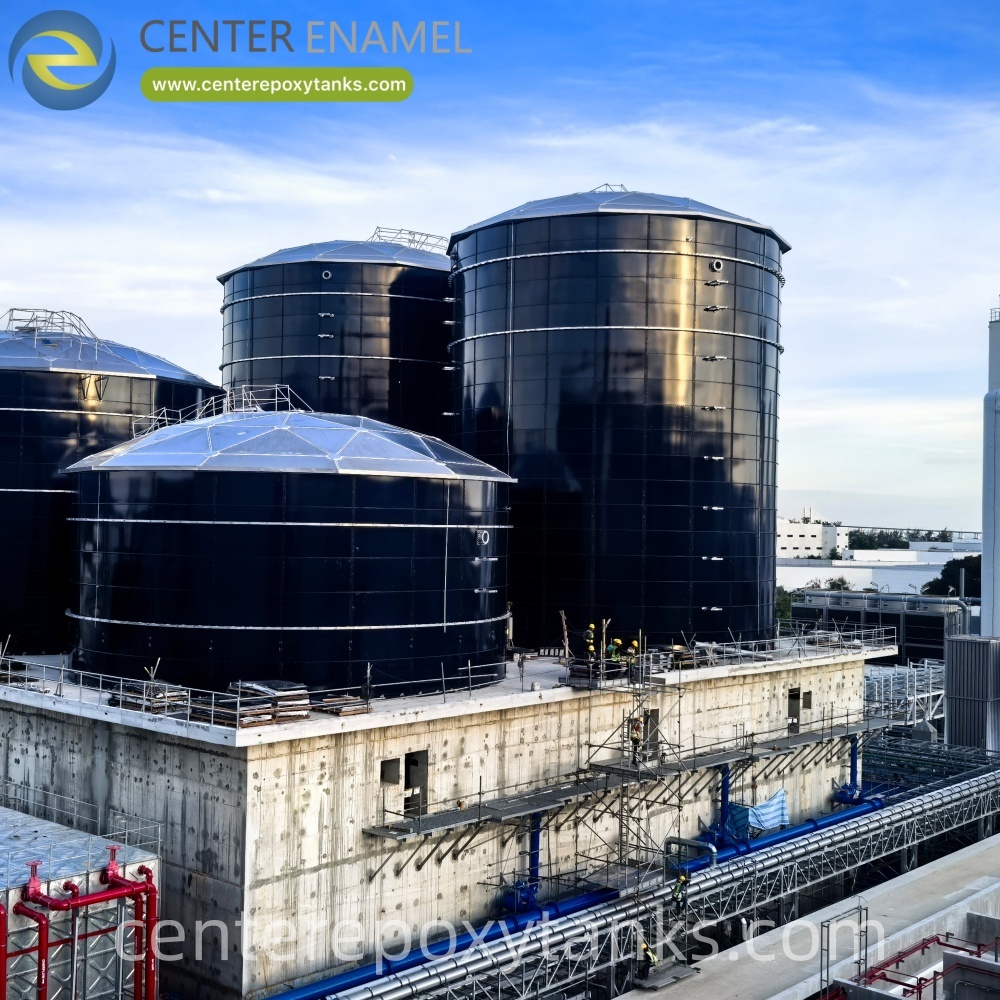
In the management of global energy reserves, the efficiency of storage infrastructure is measured by its ability to preserve product volume and minimize atmospheric emissions. Traditional fixed-roof tanks often suffer from "breathing losses," where temperature fluctuations cause valuable fuel to evaporate and escape into the environment. The Floating Roof for Welded Stainless Steel Fuel Storage Tanks is the definitive engineering answer to this challenge. This system is a high-efficiency vapor suppression component designed to reduce fuel loss and environmental impact by providing a buoyant barrier that eliminates the air-liquid interface. When this internal deck is paired with a welded stainless steel shell and protected by an Aluminum Dome Roof, it creates a high-performance containment system that optimizes inventory retention.
Maximizing Inventory Retention through Surface Isolation
The primary driver of fuel loss in bulk storage is the evaporation of light-end hydrocarbons. In a standard tank, the open space above the liquid fills with fuel vapor; as the tank is filled or as ambient temperatures rise, these vapors are expelled through vents. The internal floating roof addresses this at the source by resting directly on the fuel.
As the fuel level rises or falls, the floating roof moves in tandem, ensuring that there is never a significant vapor headspace. The effectiveness of this vapor seal is significantly enhanced by the use of welded stainless steel for the tank shell. Unlike carbon steel, which can develop rust and scale that creates friction for the roof seals, stainless steel maintains a smooth, consistent internal surface. This allows the perimeter seals of the floating roof to maintain a gas-tight contact throughout the entire vertical travel of the deck. This precision is what makes the system a high-efficiency vapor suppression component, ensuring that fuel is preserved as a liquid asset rather than lost to the atmosphere.
Structural Synergy with Aluminum Dome Roofs
While the floating roof manages the liquid-vapor interface, the tank requires a robust external cover to protect the internal components from the elements. In modern facility design, the Aluminum Dome Roof is the ideal partner for a welded stainless steel tank. The geodesic dome provides a clear-span, weather-tight shield that protects the internal floating roof from wind-driven rain, snow, and ice, all of which could otherwise affect the roof's buoyancy.
A decisive advantage of the Aluminum Dome Roof is its self-supporting design. Traditional fixed roofs require internal support columns that must penetrate the floating roof, creating multiple potential leak paths for vapors and complicating the movement of the floating deck. By utilizing a column-free aluminum dome, the interior of the tank remains completely unobstructed. This allows the floating roof to provide a seamless, 100% effective vapor barrier. Furthermore, the reflective properties of the aluminum dome help maintain a stable internal temperature, further reducing fuel loss by minimizing the thermal energy that drives evaporation.
Durability, Safety, and Environmental Impact
The combination of welded stainless steel and an aluminum dome offers a solution with unmatched longevity. Welded stainless steel is inherently resistant to the aggressive components found in modern fuels and does not require internal linings that can peel and contaminate the fuel. Similarly, the Aluminum Dome Roof is naturally resistant to atmospheric corrosion and does not require periodic sandblasting or repainting.
This integrated system also dramatically enhances site safety. By suppressing flammable vapors and shielding the tank with a conductive aluminum dome—which acts as a natural Faraday cage against lightning—the risk of fire or static discharge is virtually eliminated. By reducing environmental impact through the elimination of volatile organic compound emissions, facilities can meet the strictest air quality regulations while maintaining a safer working environment for personnel.
Application Areas
The need for high-efficiency vapor control and structural resilience makes these systems essential for:
Bulk Fuel Terminals: Managing high-turnover inventory with minimal evaporative loss.
Refinery Product Hubs: Ensuring the stability of volatile intermediate and finished fuels.
Strategic Energy Reserves: Providing secure, long-term storage with minimal maintenance requirements.
Coastal Industrial Terminals: Where welded stainless steel and Aluminum Dome Roofs provide the best protection against salt-air corrosion.
Company Advantage and Comprehensive Service
Center Enamel is recognized globally for providing high-performance industrial containment. Our approach to Floating Roofs for Welded Stainless Steel Fuel Storage Tanks is defined by technical precision and operational reliability:
Vapor-Control Expertise: We design floating roof systems specifically to maximize vapor suppression and eliminate product loss in standard configurations.
Advanced Material Standards: We utilize precision-welded stainless steel and high-grade aluminum alloys to ensure a seamless, non-corrosive storage environment.
Global Technical Support: We provide expert technical supervision for the installation of floating roofs, tank shells, and Aluminum Dome Roofs worldwide, ensuring absolute reliability for mission-critical fuel infrastructure.
Conclusion
In the competitive energy market, the quality of storage infrastructure is a direct driver of profitability and safety. Floating Roofs for Welded Stainless Steel Fuel Storage Tanks provide the most effective barrier against product loss and hazardous emissions. By prioritizing a design that is a high-efficiency vapor suppression component, operators protect their assets and ensure the sustainability of their operations. When these systems are reinforced with the maintenance-free protection of an Aluminum Dome Roof, they represent a world-class solution that balances safety, durability, and performance.