-
Glass Fused To Steel Tanks (596)
-
Stainless Steel Tanks (434)
-
Fusion Bonded Epoxy Tanks (592)
-
Galvanized Steel Tanks (321)
-
Aluminum Dome Roofs (1316)
-
Wastewater Storage Tanks (231)
-
Welded Steel Tanks (457)
-
Pressure Vessels (295)
-
Anaerobic Digester (201)
-
Industrial Water Tanks (349)
-
Glass Lined Steel Tanks (180)
-
Bolted Steel Tanks (390)
-
Sludge Storage Tank (115)
-
Biogas Storage Tank (173)
-
Leachate Storage Tanks (133)
-
Agricultural Water Storage Tanks (179)
-
Fire Water Tank (166)
-
Grain Storage Silos (146)
-
Biogas Projects (425)
-
Wastewater Treatment Projects (788)
-
Double Membrane Roof (223)

|
Floating Roof for Welded Stainless Steel Aviation Fuel Tank: Ensures High Fuel Purity and Reduces Fire Hazards by Eliminating the Vapor Space
| Place of Origin: | China |
| Brand Name: | Center Enamel |
| Certification: | ISO 9001 |
| Model Number: | Aluminum Dome Roofs |
| Minimum Order Quantity: | 1 |
| Price: | 100-50000 |
| Packaging Details: | 2000 |
| Delivery Time: | 8 weeks |
| Payment Terms: | L/C, T/T |
| Supply Ability: | 6000 |
|
Detail Information |
|||
Product Description
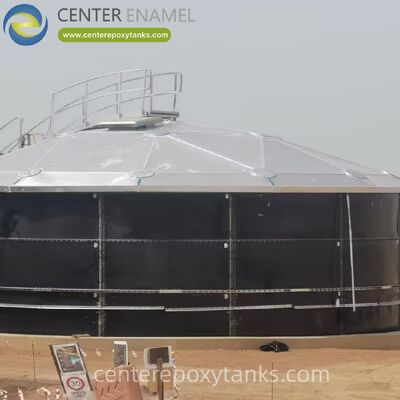
Floating Roof for Welded Stainless Steel Aviation Fuel Tank: Ensures High Fuel Purity and Reduces Fire Hazards by Eliminating the Vapor Space
In the aviation industry, the integrity of the storage environment is as critical as the refinement of the fuel itself. Jet fuel is highly sensitive to moisture and particulate contamination, both of which can lead to engine failure if not strictly managed. The Floating Roof for Welded Stainless Steel Aviation Fuel Tanks is the primary engineering safeguard used to maintain these standards. This system ensures high fuel purity and reduces fire hazards by eliminating the vapor space, providing a dynamic barrier that rests directly on the liquid surface. When integrated into a welded stainless steel shell and protected by an Aluminum Dome Roof, this configuration offers the most advanced protection available for modern airport fuel farms.
Achieving Absolute Purity through Surface Coverage
The core function of an internal floating roof is to eliminate the interface between the liquid fuel and the atmosphere. Aviation fuel is hygroscopic, meaning it naturally attracts water from the air. In a standard fixed-roof tank, the large volume of air in the headspace allows moisture to condense on the interior walls and drop into the fuel. This water promotes the growth of microorganisms and causes the fuel to fail "clear and bright" inspections.
The floating roof solves this by covering nearly 100% of the liquid surface. Because the roof rises and falls with the fuel level, there is no large headspace for humid air to circulate. By eliminating the vapor space, the system drastically reduces the opportunity for moisture ingress and airborne dust to contaminate the product. When paired with a welded stainless steel tank shell—which is chosen for its smooth, non-scaling surface—the floating roof ensures that the aviation fuel remains in a pristine, refinery-fresh state from the moment it is delivered until it is pumped into the aircraft.
Fire Hazard Mitigation and Vapor Suppression
Safety is the paramount concern in aviation fuel storage. Jet fuel produces volatile vapors that, when mixed with oxygen in a tank's headspace, can create an explosive atmosphere. A lightning strike or a static discharge in a traditional fixed-roof tank can lead to a catastrophic fire. The internal floating roof is the most effective tool for mitigating this risk.
By resting directly on the fuel, the floating roof suppresses the formation of these vapors at the source. There is no large "vapor cloud" inside the tank that can ignite. This design reduces fire hazards by ensuring that the concentration of flammable gases is kept well below the lower explosive limit. To further enhance safety, these tanks are typically topped with an Aluminum Dome Roof. The dome provides a secondary layer of protection, shielding the floating roof from wind-driven rain and extreme weather, while also serving as a lightning-protective Faraday cage. This multi-layered approach—floating roof for vapor suppression, stainless steel for structural fire resistance, and an aluminum dome for environmental shielding—creates a secure, high-integrity storage system.
Structural Efficiency and Maintenance Reliability
The combination of a welded stainless steel shell and an internal floating roof provides a storage solution with exceptional longevity. Unlike carbon steel tanks that require internal linings—which can peel and contaminate the fuel—stainless steel provides a naturally corrosion-resistant surface. The floating roof's perimeter seals move smoothly against the stainless steel walls, ensuring a consistent and reliable vapor barrier over decades of service.
The use of an Aluminum Dome Roof as the outer cover further reduces maintenance needs. The dome is a clear-span structure, meaning it requires no internal support columns. In traditional tanks, support columns must penetrate the floating roof, creating leak paths for vapors and complicating the movement of the roof. By using a column-free aluminum dome, the floating roof can operate with 100% efficiency and zero penetrations. This simplifies the mechanical design, reduces the risk of the roof "hanging up" on a column, and facilitates easier inspections. The result is a high-performance system that maximizes fuel stability and site safety while minimizing the total cost of ownership for the airport or military facility.
Application Areas
The requirement for absolute fuel purity and fire safety makes these systems essential for:
International Hub Airports: Where the highest throughput of Jet A-1 requires fail-safe storage.
Military Fuel Depots: Ensuring mission-ready fuel quality in diverse and harsh climates.
Aviation Fuel Refineries: Protecting the finished product during bulk storage and loading.
Strategic Fuel Reserves: Providing long-term, stable storage for national energy security.
Company Advantage and Comprehensive Service
Center Enamel is a global leader in providing high-performance industrial containment for the aviation sector. Our approach to Floating Roofs for Welded Stainless Steel Aviation Fuel Tanks is defined by a commitment to technical precision and flight safety:
Safety-Focused Engineering: We design floating roof systems specifically to maximize vapor suppression and eliminate fire risks in volatile fuel environments.
Advanced Manufacturing Standards: Our facility utilizes precision-welded stainless steel and high-grade aluminum alloys to ensure every component meets international aviation standards.
Global Technical Support: We provide expert technical supervision for the installation of floating roofs, tank shells, and Aluminum Dome Roofs worldwide, ensuring absolute reliability for mission-critical fuel storage.
Conclusion
In the aviation industry, the quality of storage infrastructure is the first line of defense against fuel degradation and operational hazards. Floating Roofs for Welded Stainless Steel Aviation Fuel Tanks provide the most effective barrier against contamination and fire. By prioritizing a design that ensures purity and reduces risk by eliminating vapor space, operators protect their assets and the safety of the global aviation network. When these systems are reinforced with the maintenance-free protection of an Aluminum Dome Roof, they represent a world-class solution that balances safety, durability, and operational excellence.