-
Glass Fused To Steel Tanks (596)
-
Stainless Steel Tanks (434)
-
Fusion Bonded Epoxy Tanks (592)
-
Galvanized Steel Tanks (321)
-
Aluminum Dome Roofs (1316)
-
Wastewater Storage Tanks (231)
-
Welded Steel Tanks (457)
-
Pressure Vessels (295)
-
Anaerobic Digester (201)
-
Industrial Water Tanks (349)
-
Glass Lined Steel Tanks (180)
-
Bolted Steel Tanks (390)
-
Sludge Storage Tank (115)
-
Biogas Storage Tank (173)
-
Leachate Storage Tanks (133)
-
Agricultural Water Storage Tanks (179)
-
Fire Water Tank (166)
-
Grain Storage Silos (146)
-
Biogas Projects (425)
-
Wastewater Treatment Projects (788)
-
Double Membrane Roof (223)


|
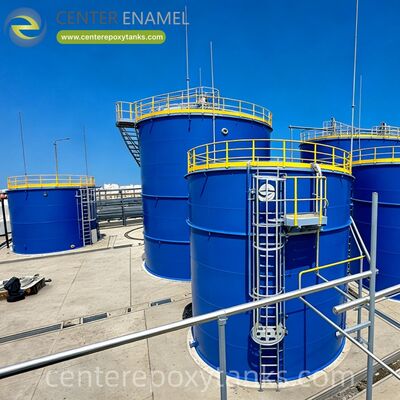
Internal Floating Roof for Welded Stainless Steel Aviation Fuel Tank: Ensures the Highest Level of Fuel Purity and Reduces Volatile Fire Hazards
| Place of Origin: | China |
| Brand Name: | CEC TANKS |
| Certification: | ISO 9001:2008, AWWA D103 , OSHA , BSCI |
| Model Number: | W |
| Minimum Order Quantity: | 1set |
| Price: | $5000~$20000 one set |
| Packaging Details: | PE poly-foam between each two steel plates ; wooden pallet and wooden |
| Delivery Time: | 10-30 days after deposit received |
| Payment Terms: | L/C, T/T |
| Supply Ability: | 60 sets per month |
|
Detail Information |
|||
| Place of Origin | China | Brand Name | CEC TANKS |
|---|---|---|---|
| Certification | ISO 9001:2008, AWWA D103 , OSHA , BSCI | Model Number | W |
| Corrosion Resistance: | Suitable For Waste Water Salt Water, Sea Water, High Sulfur Crude Oil, Salt Fox, Organic And Inorganic Compounds | Elastic: | Same As Steel Sheet |
| Tank Body Color: | Customized Design | Coating Thickness: | Customized |
| Foundation: | Concrete | Steel Grade: | Stainless Steel |
| Highlight: | welded stainless steel aviation fuel tank,internal floating roof fuel tank,aviation fuel tank with fire hazard reduction |
||
Product Description
Internal Floating Roof for Welded Stainless Steel Aviation Fuel Tank: Ensures the Highest Level of Fuel Purity and Reduces Volatile Fire Hazards
The aviation industry operates under the most stringent safety and quality protocols in the world. Aviation fuel, particularly Jet A-1, must remain free of particulates, surfactants, and—most critically—water to ensure the safety of flight operations at high altitudes. Internal Floating Roofs for Welded Stainless Steel Aviation Fuel Tanks are the gold standard for high-integrity fuel management. This system ensures the highest level of fuel purity and reduces volatile fire hazards by utilizing a buoyant internal deck that creates a permanent physical seal on the fuel surface. By eliminating the air-to-liquid interface, the system prevents the primary drivers of jet fuel contamination and fire risk: moisture accumulation and the formation of an explosive vapor headspace.
Eliminating Contamination through Total Surface Isolation
The primary threat to aviation fuel integrity is the "tank breathing" process. In a traditional fixed-roof tank, the volume of air trapped above the fuel contains humidity. As the tank cools at night, this moisture condenses on the internal walls and falls into the fuel. Water in jet fuel can lead to ice crystal formation at high altitudes or promote the growth of "cladosporium resinae" (fuel fungus), both of which are catastrophic for aircraft engines. Internal Floating Roofs for Welded Stainless Steel Aviation Fuel Tanks solve this fundamental risk by physically suppressing the fuel surface, leaving no room for moist air to occupy.
Because the roof remains in direct contact with the fuel, it ensures that the liquid is never exposed to the moving air stream within the tank shell. This constant isolation is the core mechanism that ensures fuel purity. To achieve the "zero-contamination" standard required by airport fuel farms, modern facilities integrate Aluminum Dome Roofs into their architecture. While the internal floating roof manages the fuel surface, the Aluminum Dome Roof acts as a superior, weather-tight external cover. The geodesic design of the Aluminum Dome Roof is a clear-span structure, requiring no internal support columns. This is a decisive advantage; in traditional tanks, support columns penetrate the floating roof, creating gaps where moisture can seep in and where volatile vapors can escape. By utilizing a column-free aluminum dome, the internal floating roof remains an unbroken barrier, providing a superior hermetic seal that traps emissions and protects the fuel from rainwater, dust, and wind-blown contaminants.
Material Excellence and Advanced Thermal Management
Stainless steel is the premier choice for aviation fuel storage due to its exceptional resistance to corrosion and its ability to maintain fuel purity without the risk of internal rust or coating failure. The construction of Internal Floating Roofs for Welded Stainless Steel Aviation Fuel Tanks utilizes automated precision welding to ensure a seamless, high-strength primary container. Unlike carbon steel, stainless steel does not suffer from internal scaling. This is vital because even microscopic rust particles can cause fuel to fail the "Clear and Bright" test, leading to the rejection of entire batches. Stainless steel ensures that the tank remains a robust, inert, and clean environment for decades, preserving the strict quality standards required for aviation.
The addition of an external Aluminum Dome Roof reinforces this durability through advanced thermal regulation. Aluminum is highly reflective and naturally resistant to the corrosive environments often found in industrial or coastal airport zones. The Aluminum Dome Roof acts as a permanent thermal regulator; by reflecting a significant portion of solar radiation, it helps maintain a lower and more stable internal temperature for the jet fuel. This thermal stability is essential for reducing volatile fire hazards; lower temperatures significantly reduce the internal vapor pressure of the fuel, which minimizes the mechanical stress on the floating roof's perimeter seals and keeps the fuel below its flash point. By keeping the tank environment cool and stable, the combination of a welded stainless steel shell and a maintenance-free aluminum dome results in a storage system that offers the highest level of safety and structural longevity.
Enhancing Operational Efficiency and Maintenance Safety
The clear-span nature of the Aluminum Dome Roof also facilitates easier and more effective inspection and maintenance, which is critical for meeting strict aviation authority audits. Fuel tanks require frequent monitoring of seal integrity and water-drainage systems to ensure no contaminants have bypassed the secondary seals. Without internal columns obstructing the view or the movement of the floating roof, technicians can more easily verify the condition of the deck and the effectiveness of the primary and secondary seals. This structural simplicity reduces the time the tank must spend offline during maintenance, maximizing the airport's fueling capacity.
Furthermore, the absence of internal columns eliminates the risk of "hang-ups," where a floating roof might become stuck on a pillar during liquid level changes. In a reservoir containing high-value aviation fuel, a stuck roof can lead to a sudden exposure of the liquid surface or mechanical damage to the tank structure. By providing a clear-span environment, the aluminum dome ensures that the internal floating roof operates smoothly and predictably, maintaining its role to reduce volatile fire hazards without interruption. This synergy between the stainless steel shell and the aluminum dome represents a world-class standard for risk management and the protection of high-value aviation assets.
Application Areas
The need for high-integrity purity control and absolute structural resilience makes these tanks essential for:
Airport Fuel Farms: Managing bulk inventories of Jet A and Jet A-1 fuel for commercial aviation.
Military Airbases: Providing secure storage for high-performance aviation fuels in strategic locations.
Refinery Aviation Terminals: Holding fuels after final filtration and before dispatch to airports.
Coastal and Marine Port Facilities: Where the combination of a stainless steel shell and an Aluminum Dome Roof provides the best protection against salt-air corrosion.
Company Advantage and Comprehensive Service
Center Enamel is recognized globally for its expertise in providing high-performance industrial containment for the aviation and energy sectors. Our approach to Internal Floating Roofs for Welded Stainless Steel Aviation Fuel Tanks is defined by a commitment to technical precision and fuel integrity:
Purity-Focused Engineering: We design tank systems specifically to maximize air exclusion and eliminate fuel degradation, frequently incorporating Aluminum Dome Roofs for a high-purity internal environment.
Advanced Manufacturing Standards: Our facility utilizes precision automated welding and high-grade stainless steel to ensure the tank shell is a seamless, robust barrier against environmental stress.
Global Technical Support: We provide expert technical supervision for the assembly of internal decks and geodesic domes worldwide, ensuring absolute reliability for mission-critical fuel applications.
Conclusion
In the modern aviation landscape, the quality of storage infrastructure is the foundation of flight safety. Internal Floating Roofs for Welded Stainless Steel Aviation Fuel Tanks provide the most effective barrier against the primary causes of fuel contamination and fire risk. By prioritizing a design that ensures the highest level of fuel purity and reduces volatile fire hazards, operators protect their expensive inventories and the lives of those who rely on aviation services. When these tanks are reinforced with the maintenance-free protection of an Aluminum Dome Roof, they represent a world-class solution that balances safety, durability, and operational excellence.