-
Glass Fused To Steel Tanks (596)
-
Stainless Steel Tanks (434)
-
Fusion Bonded Epoxy Tanks (592)
-
Galvanized Steel Tanks (321)
-
Aluminum Dome Roofs (1316)
-
Wastewater Storage Tanks (231)
-
Welded Steel Tanks (457)
-
Pressure Vessels (295)
-
Anaerobic Digester (201)
-
Industrial Water Tanks (349)
-
Glass Lined Steel Tanks (180)
-
Bolted Steel Tanks (390)
-
Sludge Storage Tank (115)
-
Biogas Storage Tank (173)
-
Leachate Storage Tanks (133)
-
Agricultural Water Storage Tanks (179)
-
Fire Water Tank (166)
-
Grain Storage Silos (146)
-
Biogas Projects (425)
-
Wastewater Treatment Projects (788)
-
Double Membrane Roof (223)

|
Internal Floating Roof for Welded Carbon Steel Aviation Fuel Tank: Ensures High Fuel Purity and Reduces Fire Hazards
| Place of Origin: | China |
| Brand Name: | Center Enamel |
| Certification: | ISO 9001 |
| Model Number: | Aluminum Dome Roofs |
| Minimum Order Quantity: | 1 |
| Price: | 100-50000 |
| Packaging Details: | 2000 |
| Delivery Time: | 8 weeks |
| Payment Terms: | L/C, T/T |
| Supply Ability: | 6000 |
|
Detail Information |
|||
Product Description
Internal Floating Roof for Welded Carbon Steel Aviation Fuel Tank: Ensures High Fuel Purity and Reduces Fire Hazards
In the aviation industry, there is no margin for error regarding fuel quality. Whether it is JET A-1 or Avgas, the integrity of the fuel directly impacts flight safety and engine performance. Internal Floating Roof for Welded Carbon Steel Aviation Fuel Tank systems are the definitive solution for airport fuel farms and strategic reserves. Aviation fuel is highly sensitive to particulate contamination, water ingress, and the build-up of static electricity. This specialized storage configuration is vital because it ensures high fuel purity and reduces fire hazards, creating a secure, vapor-controlled environment that meets the stringent international standards required for aviation operations.
Preserving Fuel Purity through Vapor and Moisture Control
The primary threat to aviation fuel during bulk storage is the accumulation of moisture and the ingress of atmospheric dust. In a traditional fixed-roof tank, the large headspace allows for the "breathing" of the tank, drawing in humid air that eventually condenses into water. This water can lead to microbial growth and icing issues in aircraft filters. An Internal Floating Roof for Welded Carbon Steel Aviation Fuel Tank addresses this by placing a high-precision, lightweight deck directly on the fuel surface.
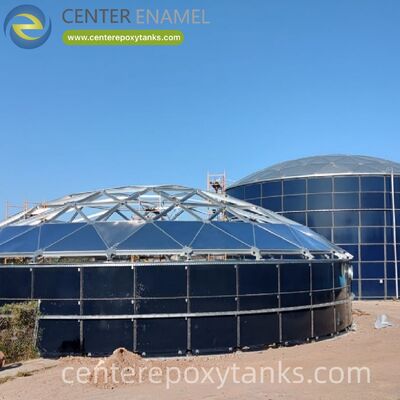
By removing the air-to-liquid interface, the internal floating roof (IFR) effectively suppresses the formation of vapors and prevents the fuel from coming into contact with moist air. This is the primary mechanism that ensures high fuel purity and reduces fire hazards. To maximize this level of protection, the integration of Aluminum Dome Roofs has become the global industry standard for airport fuel farms. While the floating roof manages the fuel surface, the Aluminum Dome Roof provides a superior, weather-tight external cover. The geodesic design of the Aluminum Dome Roof is a clear-span structure, meaning it requires no internal support columns. This is a critical advantage for aviation safety; in traditional tanks, support columns penetrate the floating roof, creating small gaps where moisture can bypass the seal. By utilizing a column-free aluminum dome, the internal floating roof remains entirely continuous, providing a superior hermetic seal that keeps the fuel dry and clean.
Structural Integrity and Lightning Protection
Aviation fuel storage requires a robust vessel that can withstand extreme environmental conditions while maintaining a sterile internal environment. The construction of Internal Floating Roof for Welded Carbon Steel Aviation Fuel Tank units utilizes heavy-gauge carbon steel and precision automated welding to ensure a seamless, high-strength primary container. However, the external roof is the most vulnerable point for environmental hazards, particularly lightning—a major concern for flammable liquids. This is where the Aluminum Dome Roof provides a decisive safety advantage.
Aluminum is naturally non-sparking and provides an excellent path for electrical grounding, which is vital for preventing ignition during electrical storms. Furthermore, the Aluminum Dome Roof acts as a permanent thermal regulator. By reflecting a significant portion of solar radiation, the aluminum structure helps maintain a lower and more stable internal temperature for the stored fuel. This thermal stability is essential for preventing the "breathing" of the tank and the resulting intake of atmospheric humidity. By keeping the tank cool, the system reduces the vapor pressure of the fuel and minimizes the physical stress on the internal floating roof's perimeter seals. The combination of a high-strength welded carbon steel shell and a maintenance-free aluminum dome results in a storage system that offers the highest level of fire safety and product stability.
Enhancing Operational Readiness and Safety
The clear-span nature of the Aluminum Dome Roof also facilitates easier and more effective inspection and maintenance, which is mandatory for aviation safety audits. Fuel farms require frequent quality sampling and seal integrity checks to ensure the fuel meets JIG (Joint Inspection Group) or ASTM standards. Without internal columns obstructing the view or the movement of the internal floating roof, technicians can more easily verify the condition of the deck and the efficacy of the vapor suppression system. This structural simplicity reduces the time the tank must spend offline, maximizing the facility's operational readiness.
Furthermore, the absence of internal columns eliminates the risk of "hang-ups," where a floating roof might become stuck on a pillar. In the highly sensitive environment of aviation fuel storage, a stuck roof can lead to a sudden exposure of the fuel surface or a build-up of pressure, creating an immediate fire hazard. By providing a clear-span environment, the aluminum dome ensures that the internal floating roof operates smoothly and predictably, maintaining its role to ensure high fuel purity and reduce fire hazards without interruption. This synergy between the welded shell and the aluminum dome represents a world-class standard for mission-critical fuel management.
Application Areas
The need for high-integrity vapor suppression and purity control makes these tanks essential for:
International Airport Fuel Farms: Managing the massive throughput of JET A-1 for commercial aviation.
Military Air Bases: Ensuring the reliability of fuel for high-performance defense aircraft.
Strategic Aviation Reserves: Where long-term stability and fire safety are required for national security.
Regional General Aviation Hubs: Providing secure storage for Avgas and smaller-scale aviation operations.
Company Advantage and Comprehensive Service
Center Enamel is recognized globally for its expertise in providing high-performance industrial containment for the aviation sector. Our approach to Internal Floating Roof for Welded Carbon Steel Aviation Fuel Tank systems is defined by a commitment to technical precision and safety:
Safety-Driven Engineering: We design tank systems specifically to maximize vapor suppression and eliminate ignition risks, frequently incorporating Aluminum Dome Roofs to ensure a column-free, high-purity internal environment.
Advanced Manufacturing Standards: Our facility utilizes precision automated welding and high-grade materials to ensure the tank shell is a seamless barrier against environmental stress and leaks.
Global Technical Support: We provide expert technical supervision for the assembly of internal floating decks and geodesic domes worldwide, ensuring that the system ensures high fuel purity and reduces fire hazards with absolute reliability.
Conclusion
In the aviation world, the quality of the fuel is a non-negotiable component of safety. Internal Floating Roof for Welded Carbon Steel Aviation Fuel Tank solutions provide the most effective barrier against the primary causes of fuel contamination and fire risk. By prioritizing a design that ensures high fuel purity and reduces fire hazards, operators protect their assets and the lives of those who depend on their service. When these tanks are reinforced with the maintenance-free protection of an Aluminum Dome Roof, they represent a world-class solution that balances safety, durability, and operational excellence.