-
Glass Fused To Steel Tanks (596)
-
Stainless Steel Tanks (434)
-
Fusion Bonded Epoxy Tanks (592)
-
Galvanized Steel Tanks (321)
-
Aluminum Dome Roofs (1316)
-
Wastewater Storage Tanks (231)
-
Welded Steel Tanks (457)
-
Pressure Vessels (295)
-
Anaerobic Digester (201)
-
Industrial Water Tanks (349)
-
Glass Lined Steel Tanks (180)
-
Bolted Steel Tanks (390)
-
Sludge Storage Tank (115)
-
Biogas Storage Tank (173)
-
Leachate Storage Tanks (133)
-
Agricultural Water Storage Tanks (179)
-
Fire Water Tank (166)
-
Grain Storage Silos (146)
-
Biogas Projects (425)
-
Wastewater Treatment Projects (788)
-
Double Membrane Roof (223)

|
Internal Floating Roofs for Welded Steel Diesel Tank: Reduces Fuel Degradation and Sludge
| Brand Name: | Shijiazhuang Zhengzhong Technology Co., Ltd (Center Enamel) |
|
Detail Information |
|||
Product Description
Internal Floating Roofs for Welded Steel Diesel Tank: Reduces Fuel Degradation and Sludge
In the critical infrastructure of transport, logistics, and emergency power generation, the stability of diesel fuel reserves is a cornerstone of operational readiness. Internal Floating Roofs for Welded Steel Diesel Tanks are specialized engineering solutions designed to protect bulk diesel inventory from the subtle but destructive forces of the atmosphere. While diesel is often perceived as more stable than gasoline, it is highly susceptible to long-term degradation when exposed to oxygen and moisture. This specialized storage configuration is vital because it reduces fuel degradation and sludge, ensuring that the fuel remains within performance specifications and does not compromise the high-pressure injection systems of modern diesel engines.
Preventing the Chemical Breakdown of Diesel
The primary mechanism of diesel spoilage is oxidation. When diesel is stored in a traditional fixed-roof tank, the large air gap above the fuel allows for constant interaction between the hydrocarbons and atmospheric oxygen. This interaction triggers a chain reaction that leads to the formation of peroxides and organic acids, which eventually manifest as insoluble gums and sediments. Furthermore, temperature fluctuations cause the tank to "breathe," drawing in humidity that condenses into water. Water in diesel is the primary catalyst for microbial growth, often referred to as "diesel bug," which creates a thick, acidic sludge.
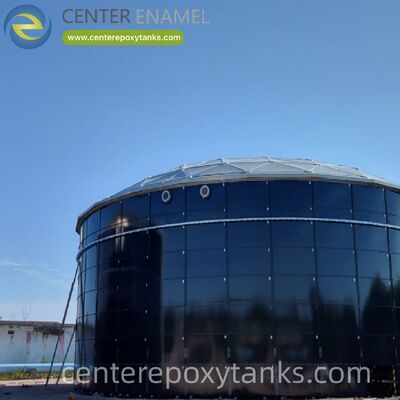
Internal Floating Roofs for Welded Steel Diesel Tanks solve this by eliminating the air-to-liquid interface. The floating deck rests directly on the fuel surface, rising and falling with the liquid level. By blocking the fuel's exposure to oxygen and humidity, the system effectively reduces fuel degradation and sludge formation. To further enhance this protective barrier, the integration of Aluminum Dome Roofs has become a best practice for high-reliability fuel depots. While the internal floating roof manages the fuel surface, the Aluminum Dome Roof provides a superior, weather-tight external cover. The geodesic design of the Aluminum Dome Roof is a clear-span structure, meaning it requires no internal support columns. This is a critical advantage; in traditional tanks, support columns penetrate the floating roof, creating gaps where moist air can still enter. By utilizing a column-free aluminum dome, the internal floating roof remains entirely continuous, providing a superior seal against the elements.
Structural Integrity and Particulate Protection
Modern diesel engines, particularly those utilizing Common Rail High-Pressure Injection (CRHPI) technology, require fuel that is exceptionally clean. Even microscopic particles can cause catastrophic engine failure. The construction of Internal Floating Roofs for Welded Steel Diesel Tanks utilizes heavy-gauge steel and precision welding to create a seamless, leak-proof primary container. However, the choice of roof material is equally important for maintaining purity. Traditional steel roofs can corrode over time, shedding rust or paint flakes into the tank. This is where the Aluminum Dome Roof provides a decisive benefit. Aluminum is naturally corrosion-resistant and does not require painting, ensuring that no particulate matter from the roof can ever fall into the tank and contaminate the diesel.
Furthermore, the Aluminum Dome Roof serves as a highly effective thermal regulator. By reflecting a significant portion of solar radiation, the aluminum structure helps maintain a stable and lower internal temperature for the stored fuel. This thermal regulation is essential for diesel; by reducing temperature swings, the system minimizes the "breathing" of the tank and the potential for water condensation. The combination of a high-strength welded shell and a maintenance-free aluminum dome results in a storage system that offers the highest level of product security while requiring minimal long-term operational expenditure.
Strategic Advantages of Clear-Span Engineering
The clear-span nature of the Aluminum Dome Roof also facilitates easier inspection and maintenance. Without internal columns obstructing the view or the movement of the internal floating roof, technicians can more easily verify the integrity of the vapor seals and the condition of the deck. This structural simplicity reduces the time the tank must spend offline for regulatory inspections. Furthermore, the absence of internal columns eliminates the risk of "hang-ups" where the floating roof might become stuck on a pillar, which would immediately break the protective seal and expose the diesel to the atmosphere.
By investing in a high-integrity storage system, facilities can significantly extend the service life of their diesel reserves. Reducing the rate of oxidation and moisture ingress means that the fuel remains within its performance specifications for longer periods, reducing the frequency of expensive fuel polishing or tank cleaning cycles. This results in a direct financial benefit to the operator, all while ensuring that the high-value machinery served by the fuel remains protected from contaminated or degraded diesel.
Application Areas
The need for high-stability and clean diesel storage makes these tanks essential for several key sectors:
Emergency Power Facilities: Storing critical backup fuel for hospitals, data centers, and telecommunications hubs.
Maritime Bunkering Terminals: Managing large volumes of marine diesel in humid coastal environments.
National Strategic Reserves: Ensuring the long-term readiness and quality of fuel for defense and emergency services.
Large-Scale Logistics Hubs: Where the combination of a welded shell and an Aluminum Dome Roof ensures a zero-contamination environment for transport fleets.
Company Advantage and Comprehensive Service
Center Enamel is recognized globally for its expertise in providing high-performance industrial containment for the fuel industry. Our approach to Internal Floating Roofs for Welded Steel Diesel Tanks is defined by a commitment to quality and technical precision:
Stability-Focused Engineering: We design tank systems specifically to eliminate air contact and prevent moisture ingress, frequently incorporating Aluminum Dome Roofs to ensure a column-free, high-purity internal environment.
Advanced Manufacturing Standards: Our facility utilizes precision automated welding and high-grade materials to ensure the tank shell is a seamless barrier against leaks and structural stress.
Global Technical Support: We provide expert technical supervision for the assembly of internal floating decks and geodesic domes worldwide, ensuring that the system reduces fuel degradation and sludge with absolute reliability.
Conclusion
In the demanding world of energy storage, the quality of the stored fuel determines the reliability of the system. Internal Floating Roofs for Welded Steel Diesel Tanks provide the most effective barrier against the primary causes of fuel degradation. By prioritizing a design that reduces fuel degradation and sludge, operators protect their most valuable assets and ensure consistent performance. When these tanks are reinforced with the maintenance-free protection of an Aluminum Dome Roof, they represent a world-class solution that balances safety, durability, and operational excellence.