-
Glass Fused To Steel Tanks (596)
-
Stainless Steel Tanks (434)
-
Fusion Bonded Epoxy Tanks (592)
-
Galvanized Steel Tanks (321)
-
Aluminum Dome Roofs (1316)
-
Wastewater Storage Tanks (231)
-
Welded Steel Tanks (457)
-
Pressure Vessels (295)
-
Anaerobic Digester (201)
-
Industrial Water Tanks (349)
-
Glass Lined Steel Tanks (180)
-
Bolted Steel Tanks (390)
-
Sludge Storage Tank (115)
-
Biogas Storage Tank (173)
-
Leachate Storage Tanks (133)
-
Agricultural Water Storage Tanks (179)
-
Fire Water Tank (166)
-
Grain Storage Silos (146)
-
Biogas Projects (425)
-
Wastewater Treatment Projects (788)
-
Double Membrane Roof (223)


|
Internal Floating Roofs for Welded Steel Biofuels Tank: Guards Against Biodegradation from Air
| Place of Origin: | China |
| Brand Name: | Center Enamel |
| Certification: | ISO 9001 |
| Model Number: | Aluminum Dome Roofs |
| Minimum Order Quantity: | 1 |
| Price: | 100-50000 |
| Packaging Details: | 2000 |
| Delivery Time: | 8 weeks |
| Payment Terms: | L/C, T/T |
| Supply Ability: | 6000 |
|
Detail Information |
|||
| Place of Origin | China | Brand Name | Center Enamel |
|---|---|---|---|
| Certification | ISO 9001 | Model Number | Aluminum Dome Roofs |
| Material: | Aluminum | Structure: | Self-supporting Structure |
| Corrosion Resistant: | High Corrosion Resistant | Maintenance: | Virtually Maintenance Free |
| Installation: | Quick Field Installation | Design: | Clear Span Design |
| Highlight: | welded steel biofuels tank internal floating roof,aluminum dome roof for biodegradation protection,internal floating roof for welded tanks |
||
Product Description
Internal Floating Roofs for Welded Steel Biofuels Tank: Guards Against Biodegradation from Air
As the global energy transition accelerates, the storage of renewable fuels has introduced a new set of chemical challenges to the midstream sector. Internal Floating Roofs for Welded Steel Biofuels Tank are specifically engineered to handle the unique sensitivities of ethanol, biodiesel, and sustainable aviation fuels (SAF). Unlike traditional petroleum-based fuels, biofuels are often highly hygroscopic and chemically active, making them particularly vulnerable to the presence of oxygen and moisture. This specialized storage configuration is essential because it guards against biodegradation from air, ensuring that these renewable assets maintain their energy density and do not undergo premature fermentation or chemical breakdown.
Blocking the Catalyst for Biological and Chemical Decay
The primary threat to biofuel integrity is atmospheric exposure. Biofuels, particularly those derived from plant oils or sugars, are prone to a process called autoxidation when in contact with oxygen. This reaction leads to the formation of organic acids and polymers, which increase the fuel's viscosity and can clog engine filters. Furthermore, biofuels have a high affinity for water. In a standard fixed-roof tank, "breathing" cycles pull in humid air, which the biofuel absorbs. This moisture creates an ideal breeding ground for microbes, leading to rapid biodegradation and the development of corrosive biosludge.
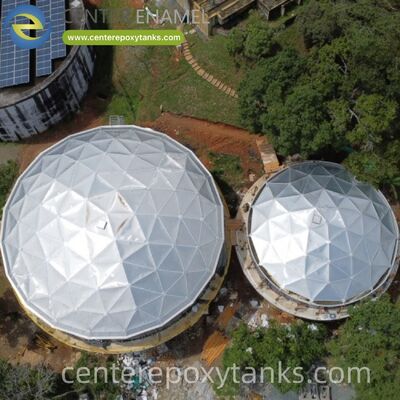
Internal Floating Roofs for Welded Steel Biofuels Tank provide a critical defense by eliminating the air-to-liquid interface. The internal floating roof (IFR) rests directly on the surface of the biofuel, rising and falling with the liquid level. By sealing off the fuel from the air, the system effectively guards against biodegradation from air and moisture absorption. To maximize this protective barrier, the integration of Aluminum Dome Roofs has become a best practice for modern renewable fuel terminals. While the internal floating roof manages the fuel interface, the Aluminum Dome Roof provides a superior, weather-tight external cover. The geodesic design of the Aluminum Dome Roof is a clear-span structure, meaning it requires no internal support columns. This is a vital advantage for biofuel storage; in traditional tanks, support columns penetrate the floating roof, creating gaps where oxygen and humidity can bypass the seal. By utilizing a column-free aluminum dome, the internal floating roof remains entirely continuous, providing a superior hermetic seal.
Structural Integrity and Corrosion Resistance
Biofuels can be more chemically aggressive than conventional fuels. Ethanol, for example, is highly conductive and can accelerate certain types of corrosion, while biodiesel can act as a solvent on traditional coatings. The construction of Internal Floating Roofs for Welded Steel Biofuels Tank utilizes heavy-gauge steel and precision welding to create a seamless, high-integrity primary container. However, the upper part of the tank and the roof are often exposed to corrosive vapors and external humidity. This is where the Aluminum Dome Roof provides a decisive structural benefit. Aluminum is naturally resistant to corrosion and does not require the heavy coatings or frequent repainting that steel roofs demand.
Furthermore, the Aluminum Dome Roof acts as a permanent thermal shield. By reflecting a significant portion of solar radiation, the aluminum structure helps maintain a stable and lower internal temperature for the stored biofuel. This thermal regulation is essential for preventing the "breathing" of the tank and the resulting moisture intake. It also helps stabilize the biofuel's chemical composition, as high temperatures can accelerate the natural degradation of organic molecules. The combination of a high-strength welded shell and a maintenance-free aluminum dome results in a storage system that offers the highest level of product security for the renewable energy sector.
Strategic Advantages for Renewable Infrastructure
The clear-span nature of the Aluminum Dome Roof also facilitates easier inspection and maintenance, which is vital for biofuels that require frequent quality sampling. Without internal columns obstructing the view or the movement of the internal floating roof, technicians can more easily verify the integrity of the seals and the cleanliness of the deck. This structural simplicity reduces the time the tank must spend offline for regulatory inspections, maximizing the facility's operational throughput.
By investing in a high-integrity storage system, facilities can significantly extend the shelf life of their biofuel inventory. Reducing the rate of oxidation and moisture ingress means that the fuel remains within its performance specifications for longer periods, reducing the frequency of expensive reprocessing or disposal of degraded batches. This results in a direct financial benefit to the operator, all while ensuring that the renewable energy supply remains reliable and the transition to a greener future is supported by robust infrastructure.
Application Areas
The need for high-stability and biological protection makes these tanks essential for several key sectors:
Ethanol Production and Storage: Managing large-scale reserves of high-purity ethanol for fuel blending.
Biodiesel Refineries: Protecting fatty acid methyl esters (FAME) from oxidation and moisture.
Sustainable Aviation Fuel (SAF) Terminals: Ensuring the absolute purity and dryness required for flight-ready renewable fuels.
Green Energy Hubs: Where the combination of a welded shell and an Aluminum Dome Roof ensures the lowest possible environmental impact and longest asset life.
Company Advantage and Comprehensive Service
Center Enamel is recognized globally for its expertise in providing high-performance industrial containment for the evolving energy industry. Our approach to Internal Floating Roofs for Welded Steel Biofuels Tank is defined by technical excellence:
Biodegradation-Prevention Engineering: We design tank systems specifically to eliminate air contact and prevent moisture ingress, frequently incorporating Aluminum Dome Roofs to ensure a column-free, high-purity internal environment.
Advanced Manufacturing Standards: Our facility utilizes precision automated welding and high-grade materials to ensure the tank shell is a seamless barrier against environmental stress and chemical corrosion.
Global Technical Support: We provide expert technical supervision for the assembly of internal floating decks and geodesic domes worldwide, ensuring that the system guards against biodegradation from air with absolute reliability.
Conclusion
In the emerging biofuels market, the integrity of the storage environment determines the commercial viability of the fuel. Internal Floating Roofs for Welded Steel Biofuels Tank provide the most effective barrier against the primary causes of renewable fuel degradation. By prioritizing a design that guards against biodegradation from air, operators protect the quality of their assets and the reliability of the engines that depend on them. When these tanks are reinforced with the maintenance-free protection of an Aluminum Dome Roof, they represent a world-class solution that balances safety, durability, and environmental responsibility.