-
Glass Fused To Steel Tanks (596)
-
Stainless Steel Tanks (434)
-
Fusion Bonded Epoxy Tanks (592)
-
Galvanized Steel Tanks (321)
-
Aluminum Dome Roofs (1316)
-
Wastewater Storage Tanks (231)
-
Welded Steel Tanks (457)
-
Pressure Vessels (295)
-
Anaerobic Digester (201)
-
Industrial Water Tanks (349)
-
Glass Lined Steel Tanks (180)
-
Bolted Steel Tanks (390)
-
Sludge Storage Tank (115)
-
Biogas Storage Tank (173)
-
Leachate Storage Tanks (133)
-
Agricultural Water Storage Tanks (179)
-
Fire Water Tank (166)
-
Grain Storage Silos (146)
-
Biogas Projects (425)
-
Wastewater Treatment Projects (788)
-
Double Membrane Roof (223)

|
Internal Floating Roofs for Welded Steel Finished Fuel Storage Tanks: Protects Refined Specifications from Moisture and Oxidation
| Brand Name: | Shijiazhuang Zhengzhong Technology Co., Ltd (Center Enamel) |
|
Detail Information |
|||
Product Description
Internal Floating Roofs for Welded Steel Finished Fuel Storage Tanks: Protects Refined Specifications from Moisture and Oxidation
In the high-precision world of downstream petroleum logistics, maintaining the chemical integrity of the final product is paramount. Internal Floating Roofs for Welded Steel Finished Fuel Storage Tanks are engineered to be the ultimate defense for high-value refined products such as gasoline, diesel, and aviation kerosene. Unlike crude oil, finished fuels are highly susceptible to environmental degradation. Atmospheric oxygen and humidity can trigger complex chemical reactions that compromise the fuel's performance and safety. This specialized storage configuration is vital because it protects refined specifications from moisture and oxidation, ensuring that the fuel remains within strict quality tolerances until it reaches the end consumer.
Eliminating the Atmospheric Interface to Preserve Quality
The primary cause of fuel degradation is the presence of a "vapor space" above the liquid. In a traditional fixed-roof tank, a large volume of air exists between the fuel surface and the roof. This air introduces oxygen, which leads to oxidative instability—a process that forms gums, resins, and sediments that can clog engine injectors. Furthermore, temperature changes cause the tank to "breathe," drawing in moist air that condenses into water. Water in fuel leads to microbial growth and corrosion in downstream storage systems.
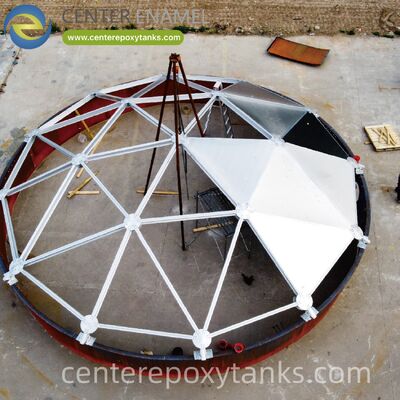
Internal Floating Roofs for Welded Steel Finished Fuel Storage Tanks solve this problem by providing a physical barrier that floats directly on the liquid surface. By eliminating the air gap, the system prevents the fuel from interacting with atmospheric oxygen and humidity. This direct contact effectively protects refined specifications from moisture and oxidation. To maximize this protection, the integration of Aluminum Dome Roofs has become the global standard for modern fuel terminals. While the internal floating roof manages the liquid-air interface, the Aluminum Dome Roof provides an impenetrable, weather-tight external shield. The geodesic design of the Aluminum Dome Roof is a clear-span structure, meaning it requires no internal support columns. This is essential for fuel purity; in traditional tanks, support columns penetrate the floating roof, creating potential points for moisture ingress and vapor escape.
Structural Integrity and Contamination Prevention
The construction of Internal Floating Roofs for Welded Steel Finished Fuel Storage Tanks involves high-integrity welding of heavy-gauge steel. This creates a seamless, leak-proof primary container capable of withstanding seismic loads and high hydrostatic pressure. However, the external roof is often a source of particulate contamination if made from traditional materials. Steel roofs can shed rust or paint flakes into the product, which is unacceptable for refined fuels. This is why the Aluminum Dome Roof is the preferred choice for purity-sensitive applications. Aluminum does not rust and does not require painting, ensuring that no debris from the roof can ever fall into the tank and contaminate the fuel.
Furthermore, the Aluminum Dome Roof serves as a highly effective thermal regulator. By reflecting solar radiation, the aluminum structure helps maintain a stable and lower internal temperature for the stored fuel. This stability reduces the thermal "breathing" of the tank, further assisting the internal floating roof in its mission of protecting refined specifications from moisture and oxidation. The combination of a high-strength welded shell and a maintenance-free aluminum dome results in a storage system that offers the highest level of product security while requiring minimal long-term operational expenditure.
Strategic Advantages of Clear-Span Engineering
The "column-free" internal environment created by the Aluminum Dome Roof allows the internal floating deck to operate with maximum precision. Without internal obstructions, the perimeter seals of the floating roof can maintain a perfect, uninterrupted contact with the tank wall. This ensures that the vapor seal remains airtight across the entire surface area of the fuel reserve. Additionally, the lack of internal columns simplifies the internal inspection and cleaning of the tank, reducing the downtime required for regulatory compliance checks and ensuring that the tank remains in service for longer periods.
Application Areas
The need for absolute fuel purity makes these tanks indispensable in several critical sectors:
Airport Fuel Farms: Storing Jet A-1 where fuel dryness and specification adherence are life-safety issues.
Refined Product Terminals: Managing large inventories of gasoline and diesel for regional distribution.
Military Fuel Depots: Ensuring the long-term stability and readiness of strategic fuel reserves in diverse climates.
Specialty Chemical Blending: Where refined feedstocks must be protected from atmospheric degradation.
Company Advantage and Comprehensive Service
Center Enamel is a global leader in providing high-integrity containment solutions for the petroleum industry. Our approach to Internal Floating Roofs for Welded Steel Finished Fuel Storage Tanks is built on technical excellence and quality assurance:
Purity-Focused Engineering: We design systems specifically to eliminate moisture ingress and oxidation, frequently incorporating Aluminum Dome Roofs to ensure a column-free, high-purity internal environment.
Advanced Manufacturing Standards: Our fabrication facility utilizes precision automated welding and high-grade materials to ensure the tank shell is a seamless barrier against environmental stress.
Global Project Support: We provide expert technical supervision for the installation of both the internal floating decks and the geodesic domes, ensuring the system protects refined specifications from moisture and oxidation with absolute reliability.
Conclusion
In the refined fuel market, quality is the primary competitive advantage. Internal Floating Roofs for Welded Steel Finished Fuel Storage Tanks provide the most effective barrier against the chemical degradation of stored assets. By prioritizing a design that protects refined specifications from moisture and oxidation, operators safeguard the value of their inventory and the reliability of the engines that depend on it. When these tanks are shielded by the maintenance-free protection of an Aluminum Dome Roof, they offer a world-class solution that balances product safety with long-term structural durability.