
-
Glass Fused To Steel Tanks (596)
-
Stainless Steel Tanks (434)
-
Fusion Bonded Epoxy Tanks (592)
-
Galvanized Steel Tanks (321)
-
Aluminum Dome Roofs (1336)
-
Wastewater Storage Tanks (232)
-
Welded Steel Tanks (457)
-
Pressure Vessels (295)
-
Anaerobic Digester (202)
-
Industrial Water Tanks (349)
-
Glass Lined Steel Tanks (180)
-
Bolted Steel Tanks (389)
-
Sludge Storage Tank (115)
-
Biogas Storage Tank (173)
-
Leachate Storage Tanks (133)
-
Agricultural Water Storage Tanks (179)
-
Fire Water Tank (166)
-
Grain Storage Silos (146)
-
Biogas Projects (424)
-
Wastewater Treatment Projects (1078)
-
Double Membrane Roof (223)
|
High-Durability Stainless Steel Tanks for Industrial Wastewater Treatment: A Guide to Long-Term Efficiency
| Place of Origin: | China |
| Brand Name: | CEC TANKS |
| Certification: | ISO 9001:2008, AWWA D103 , OSHA , BSCI |
| Model Number: | W |
| Minimum Order Quantity: | 1set |
| Price: | $5000~$20000 one set |
| Packaging Details: | PE poly-foam between each two steel plates ; wooden pallet and wooden |
| Delivery Time: | 10-30 days after deposit received |
| Payment Terms: | L/C,T/T |
| Supply Ability: | 60 sets per month |
|
Detail Information |
|||
Product Description
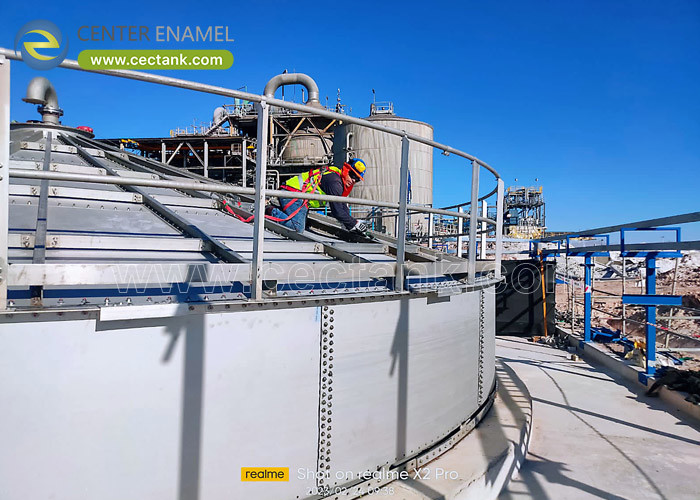
A stainless steel wastewater tank is an engineered storage vessel constructed from high-grade chromium-nickel alloys, specifically designed to contain industrial effluent, process water, and aggressive wastewater. Unlike conventional carbon steel or concrete, stainless steel tanks offer an inert, non-porous surface that provides exceptional resistance to oxidation, chemical corrosion, and environmental degradation, making them the preferred solution for facilities requiring 30+ years of operational reliability.
In industrial wastewater treatment, the primary enemy of infrastructure is corrosion. Wastewater often contains varying pH levels, high chloride concentrations, and organic contaminants that rapidly degrade lesser materials.
The hallmark of stainless steel is its passive chromium oxide layer. This self-healing barrier forms instantly upon exposure to oxygen, protecting the underlying steel from the acidic or caustic nature of industrial effluent. For highly aggressive environments, Grade 316/316L stainless steel provides added molybdenum, offering enhanced resistance to pitting and crevice corrosion.
Stainless steel provides an excellent strength-to-weight ratio. This allows for thinner tank walls compared to concrete, without compromising the tank's ability to handle high hydrostatic pressure or seismic loads. This rigidity ensures that the tank maintains its geometry, preventing structural fatigue over decades of service.
While the initial capital expenditure of stainless steel may be higher than plastic or carbon steel, the TCO is significantly lower. Stainless steel requires no specialized liners, no recurring protective coatings, and minimal maintenance, eliminating the operational downtime associated with tank refurbishment.
| Performance Metric | Stainless Steel (304/316) | Carbon Steel (Coated) | Reinforced Concrete |
|---|---|---|---|
| Corrosion Resistance | Excellent (Inherent) | Low (Coating dependent) | Moderate (Needs Lining) |
| Maintenance | Minimal | High (Periodic recoating) | Moderate (Crack repair) |
| Lifespan | 30–50+ Years | 15–20 Years | 20–25 Years |
| Structural Integrity | High | Moderate | High (Subject to cracking) |
| Best Application | Highly Corrosive Effluent | General Process Water | Massive volume, low corrosivity |
Achieving long-term efficiency requires adherence to rigorous engineering standards:
-
Welding and Passivation: The integrity of a stainless steel tank depends on its weld quality. Post-welding, tanks must undergo passivation—a chemical treatment that removes free iron from the surface and restores the protective chromium oxide layer.
-
Surface Finish: Depending on the application, specific surface finishes (e.g., 2B or polished) are utilized to prevent the accumulation of solids or biofilms, which are common in wastewater treatment processes.
-
Seismic and Wind Design: Even with high-strength materials, engineering calculations must align with ASCE 7 or local seismic codes to ensure the tank structure remains secure under extreme external loads.
A: Use 316/316L if your industrial wastewater contains chlorides, high salt concentrations, or high acidity. The addition of molybdenum in 316 provides superior resistance to pitting and crevice corrosion, which are common in chemical and food-processing wastewater.
A: In most cases, no. One of the main advantages of stainless steel is its chemically inert surface. Liners are typically used for concrete or carbon steel to prevent contact with the material; stainless steel is designed to handle the contact directly.
A: Yes. The smooth, non-porous surface of stainless steel prevents the buildup of organic solids, algae, and biofilms. This makes the cleaning process faster and more effective, ensuring the tank maintains its volume capacity and hygienic standards.
A: Yes. Stainless steel is highly fabricable. Whether you need a low-profile rectangular tank to fit in a basement or a high-capacity vertical cylinder for an outdoor facility, stainless steel can be engineered to meet precise site-specific dimensions.
At Center Enamel, we understand that wastewater storage is a critical operational asset. Our team provides end-to-end engineering support—from material selection and structural calculation to manufacturing and installation—to ensure your wastewater management system delivers peak efficiency for decades.
Ready to upgrade your treatment facility? Contact our engineering team today for a technical consultation, capacity analysis, or a customized proposal.



