-
Glass Fused To Steel Tanks (596)
-
Stainless Steel Tanks (434)
-
Fusion Bonded Epoxy Tanks (592)
-
Galvanized Steel Tanks (321)
-
Aluminum Dome Roofs (1336)
-
Wastewater Storage Tanks (232)
-
Welded Steel Tanks (457)
-
Pressure Vessels (295)
-
Anaerobic Digester (202)
-
Industrial Water Tanks (349)
-
Glass Lined Steel Tanks (180)
-
Bolted Steel Tanks (389)
-
Sludge Storage Tank (115)
-
Biogas Storage Tank (173)
-
Leachate Storage Tanks (133)
-
Agricultural Water Storage Tanks (179)
-
Fire Water Tank (166)
-
Grain Storage Silos (146)
-
Biogas Projects (424)
-
Wastewater Treatment Projects (1248)
-
Double Membrane Roof (223)
|
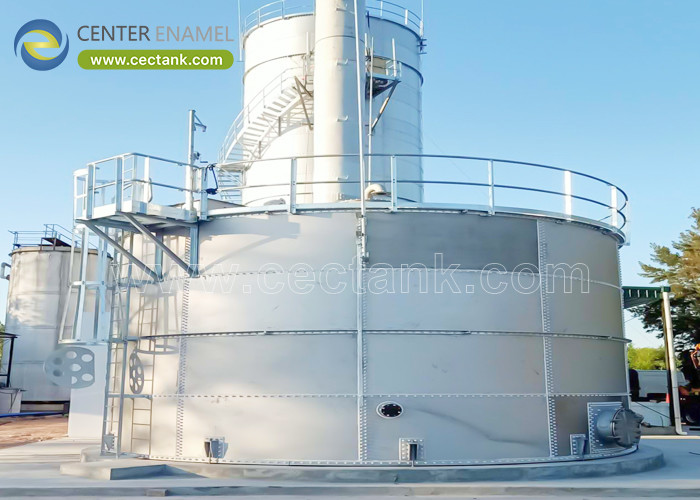
Stainless Steel Tanks for Anaerobic Digester Tanks: High-Performance Biogas Containment
| Place of Origin: | China |
| Brand Name: | CEC TANKS |
| Certification: | ISO 9001:2008, AWWA D103 , OSHA , BSCI |
| Model Number: | W |
| Minimum Order Quantity: | 1set |
| Price: | $5000~$20000 one set |
| Packaging Details: | PE poly-foam between each two steel plates ; wooden pallet and wooden |
| Delivery Time: | 10-30 days after deposit received |
| Payment Terms: | L/C,T/T |
| Supply Ability: | 60 sets per month |
|
Detail Information |
|||
Product Description
The global transition toward renewable energy and sustainable waste management has placed anaerobic digestion (AD) at the forefront of modern environmental engineering. By breaking down organic matter—such as agricultural manure, food processing by-products, municipal sewage sludge, and industrial organic waste—in the absence of oxygen, anaerobic digesters generate valuable biogas (methane and carbon dioxide) alongside nutrient-rich digestate. However, the biological and chemical environment inside an active digester is exceptionally aggressive. Traditional reinforced concrete and coated carbon steel tanks frequently suffer from severe chemical degradation, coating blistering, and structural failure when exposed to corrosive gases.
To establish an uncompromised standard for longevity and chemical inertness, forward-thinking biogas plant operators and engineering firms increasingly specify Stainless Steel Tanks for Anaerobic Digesters. Fabricated from high-grade austenitic or duplex stainless steel, these specialized vessels provide absolute resistance to corrosive byproducts, ensuring decades of reliable, maintenance-free operation.
Biogas reactors act as intensive biochemical processors, subjecting containment walls to severe physical and chemical stressors:
- Hydrogen Sulfide (H₂S) and Sulfuric Acid Attack: As sulfur-rich organic substrates break down, they release hydrogen sulfide gas into the tank headspace. When H₂S interacts with moisture condensation, it forms sulfuric acid, which rapidly etches ordinary concrete matrices and causes severe pitting corrosion in standard mild steel.
- Mesophilic and Thermophilic Thermal Stresses: Digesters operate under tightly controlled elevated temperatures (typically 35°C to 55°C) to optimize bacterial activity, requiring tank materials that maintain structural integrity and accommodate thermal expansion without cracking.
- Continuous Dynamic Agitation: Internal mechanical mixers or hydraulic recirculation systems exert constant physical stress on tank walls, demanding high structural tensile strength and rigidity.
Stainless steel tanks—particularly those engineered from AISI 304L, 316L, or high-performance duplex grades—offer unmatched advantages for anaerobic digestion applications:
- Passive Chromium-Oxide Layer: Stainless steel naturally forms an invisible, self-healing chromium-oxide passive film on its surface that is virtually immune to the organic acids and sulfur compounds generated during the digestion process.
- Elimination of Protective Coatings: Unlike carbon steel tanks that rely entirely on field-applied epoxy or glass linings that can chip, scratch, or blister over time, solid stainless steel provides uniform corrosion resistance through its entire cross-section, eliminating interior recoating downtime.
- Superior Structural Hygiene: The smooth, non-porous finish of stainless steel inhibits biofilm colonization and mineral scaling, ensuring that internal heat exchangers, mixing paths, and gas collection interfaces remain unobstructed.
- Modular Bolted Flexibility: Modern stainless steel digester tanks feature precision-engineered sectional panels that bolt together on-site with specialized elastomeric seals, allowing for rapid erection, future capacity expansion, or site relocation.
| Evaluation Metric | Stainless Steel Digester Tank | Reinforced Concrete Basin | Coated Carbon Steel Tank |
|---|---|---|---|
| Corrosion & Acid Defense | Superior (Naturally inert to H₂S, sulfuric acid, and organic acids) | Moderate (Vulnerable to concrete carbonation and acid etching over time) | Low (Prone to rapid rust-through once protective coatings breach) |
| Lifecycle Maintenance | Extremely Low (No interior repainting, relining, or corrosion patching required) | High (Requires periodic crack injection, joint sealing, and surface patching) | High (Requires continuous inspection and recurring interior recoating cycles) |
| Installation Speed | Fast (Prefabricated modular panels bolted rapidly on-site with zero curing delays) | Very Slow (Months of civil formwork, pouring, and multi-week concrete curing) | Moderate (Requires heavy field plate rolling and welding) |
| Digestate & Fertilizer Purity | Absolute (Inert material prevents toxic chemical leaching into organic fertilizer) | Moderate (Leaching of alkaline compounds can alter digestate chemistry) | Low (Risk of flaking paint or heavy metal rust contamination in fertilizer) |
Engineering Assurance: Premium stainless steel anaerobic digester tanks are engineered in accordance with rigorous international design standards, ensuring flawless liquid and gas tightness, high structural load capacity, and seamless integration with membrane gasholder roofs and thermal insulation systems.
A: While concrete basins are heavy and prone to sulfuric acid attack from biogas byproducts (H₂S), stainless steel provides native, uncompromised corrosion resistance without requiring special chemical liners. Furthermore, modular stainless steel tanks install much faster than concrete without multi-week curing delays.
A: Stainless steel contains chromium, which reacts with oxygen to form a passive, self-healing chromium-oxide surface layer. This protective layer is completely immune to the sulfuric acid condensation created when hydrogen sulfide mixes with moisture in the digester headspace.
A: Yes. Food waste introduces highly variable organic loads and accelerated acidification compared to animal manure alone. Stainless steel's chemical inertness handles these aggressive, fluctuating co-digestion environments exceptionally well without material degradation.
A: When properly engineered and maintained, stainless steel anaerobic digester tanks deliver an exceptional operational lifespan exceeding 30 to 40+ years, significantly reducing total cost of ownership by eliminating recurring recoating and structural repair overheads.