Catagories
-
Glass Fused To Steel Tanks (596)
-
Stainless Steel Tanks (434)
-
Fusion Bonded Epoxy Tanks (592)
-
Galvanized Steel Tanks (321)
-
Aluminum Dome Roofs (1336)
-
Wastewater Storage Tanks (232)
-
Welded Steel Tanks (457)
-
Pressure Vessels (295)
-
Anaerobic Digester (202)
-
Industrial Water Tanks (349)
-
Glass Lined Steel Tanks (180)
-
Bolted Steel Tanks (389)
-
Sludge Storage Tank (115)
-
Biogas Storage Tank (173)
-
Leachate Storage Tanks (133)
-
Agricultural Water Storage Tanks (179)
-
Fire Water Tank (166)
-
Grain Storage Silos (146)
-
Biogas Projects (424)
-
Wastewater Treatment Projects (1218)
-
Double Membrane Roof (223)


|
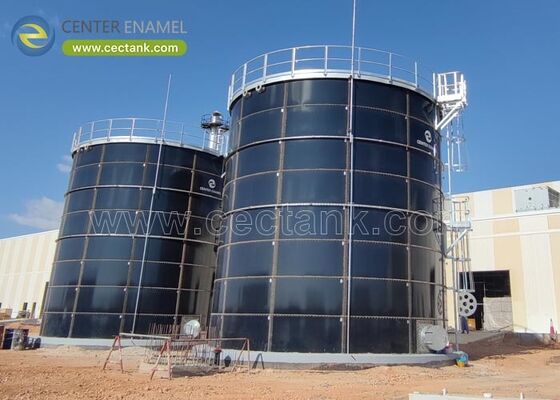
Convenient Installation GFS Commercial Convenient Installation GFS Commercial Water Tanks: Streamlining Modern Water StorageWater Tanks
Product Details
| Place of Origin: | China |
| Brand Name: | CEC TANKS |
| Certification: | ISO 9001:2008, AWWA D103 , OSHA , BSCI |
| Model Number: | W20171218003 |
Payment & Shipping Terms
| Minimum Order Quantity: | 1set |
| Price: | $5000~$20000 one set |
| Packaging Details: | PE poly-foam between each two steel plates ; wooden pallet and wooden box |
| Delivery Time: | 10-30 days after deposit received |
| Supply Ability: | 60 sets per month |
|
Detail Information |
|||
| Place of Origin | China | Brand Name | CEC TANKS |
|---|---|---|---|
| Certification | ISO 9001:2008, AWWA D103 , OSHA , BSCI | Model Number | W20171218003 |
| Permeability: | Gas / Liquid Impermeable | Elastic: | Same As Steel Sheet ,around 500KN /mm |
| Tank Body Color: | Dark Green / Can Be Customized | Coating Thickness: | 0.25mm~0.40mm , Two Layer Of Coating Internal And External |
| Foundation: | Concrete Or Glass Fused Steel | Roof Available: | Glass Fused Steel Roof , Membrane Roof, Aluminum Roof , GRP Roof |
| Highlight: | GFS Commercial Water Tanks,Membrane Roof Commercial Water Tanks |
||
Product Description
Convenient Installation GFS Commercial Water Tanks: Streamlining Modern Water Storage
In commercial real estate, municipal infrastructure, industrial complexes, and hospitality facilities, reliable water storage is critical for daily operations, fire protection reserves, and potable water safety. However, traditional construction methods—such as poured-in-place concrete basins or heavy field-welded steel tanks—frequently introduce major project bottlenecks. Lengthy concrete formwork and multi-week curing phases, coupled with the heavy machinery required to weld massive steel plates, drive up labor costs, extend construction timelines, and complicate site logistics.
To overcome these traditional challenges, modern project engineers and commercial developers prioritize Convenient Installation GFS Commercial Water Tanks. Engineered by Shijiazhuang Zhengzhong Technology Co., Ltd. (Center Enamel), these modular Glass-Fused-to-Steel (GFS) systems revolutionize water storage by combining unmatched corrosion resistance with a rapid, bolt-together assembly methodology that requires minimal heavy equipment.
The Engineering Value of Fast-Assembly Modular Architecture
The concept of "convenient installation" in modern tank engineering extends far beyond simple speed; it encompasses a fully optimized logistics and assembly framework:
-
Prefabricated Precision: All structural steel panels are manufactured and coated under strict, controlled factory conditions. This eliminates the dimensional inaccuracies and weather-dependent setbacks common in traditional civil construction.
-
Elimination of Heavy Lifting Equipment: Unlike massive welded steel tanks that demand large cranes and specialized rigging teams, GFS commercial tanks are erected using specialized mechanical brackets and self-locking hardware, making them ideal for confined urban spaces or remote sites.
-
Weather-Independent Erection: Because the panels are factory-finished and joined via bolted connections and industrial sealants, on-site installation proceeds smoothly regardless of local climatic fluctuations, slashing total labor hours by up to 75%.
Technical Superiority of Center Enamel's GFS Commercial Tanks
Center Enamel combines advanced material science with streamlined modular design to deliver elite performance across commercial water applications:
-
High-Temperature Thermal Fusion: Premium structural steel plates are coated on both sides with specialized glass enamel frit and fired in high-temperature furnaces between 820°C and 930°C. This creates an inseparable molecular bond that merges the high tensile strength of steel with the chemical inertness of glass.
-
Certified Hygienic Safety: Compliant with global potable water standards such as NSF/ANSI 61, the non-porous glass interior inhibits bacterial growth, biofilm formation, and algae accumulation, ensuring safe drinking water storage for hotels, schools, hospitals, and municipal utilities.
-
Modular Expandability and Relocation: The bolted panel design allows tanks to be easily expanded in volume, disassembled, or relocated if facility operational needs change over time.
Comparative Matrix: Commercial Water Storage Technologies
| Evaluation Metric | Center Enamel GFS Modular Tank | Poured-in-Place Concrete Basin | Traditional Field-Welded Tank |
| Installation Speed & Convenience | Fast (Prefabricated modular panels bolted rapidly with zero concrete curing delays) | Very Slow (Months of civil formwork, pouring, and multi-week curing phases) | Moderate (Requires heavy field plate rolling, welding, and radiograph testing) |
| Heavy Equipment Dependency | Low (Assembled using lightweight mechanical brackets and standard tools without massive cranes) | High (Requires concrete mixers, pump trucks, and heavy shoring equipment) | High (Demands heavy cranes, welding generators, and extensive rigging) |
| Corrosion Resistance & Hygiene | Superior (Inert glass fused to steel prevents rust, pitting, and microbial growth) | Moderate (Vulnerable to concrete carbonation, cracking, and water seepage) | Low (Dependent on field-applied epoxy coatings that blister and peel over time) |
| Scalability & Relocation | High (Modular bolted design allows effortless capacity expansion or relocation) | None (Permanent civil structure; impossible to expand without major demolition) | Limited (Destructive cutting and field welding required to modify size) |
Engineering Assurance: All GFS commercial water storage tanks engineered by Center Enamel comply strictly with internationally recognized standards, including NSF/ANSI 61, AWWA D103-09, ISO 9001, and ISO 28765, backed by 100% high-voltage holiday spark testing prior to factory dispatch.
Frequently Asked Questions (FAQ)
Q: What makes GFS commercial water tanks faster and more convenient to install than traditional tanks?
A: GFS tanks utilize a modular, pre-fabricated panel design that is bolted together on-site using specialized hardware and sealants. This bypasses the months of waiting required for concrete to cure or the complex radiograph testing needed for field welds, allowing complete installation in a fraction of the time.
Q: Are GFS commercial water tanks safe for storing drinking water?
A: Yes. Center Enamel's GFS water tanks comply with stringent international hygiene certifications, including NSF/ANSI 61 for potable water contact. The smooth, non-porous glass-fused surface prevents leaching, rust, and bacterial growth.
Q: Do I need heavy cranes or large machinery to erect a GFS tank on-site?
A: No. One of the primary installation advantages of GFS tanks is that they can be erected using efficient mechanical assembly techniques and standard tools, making them well-suited for tight urban job sites or remote locations with limited access.
Q: Can a GFS commercial water tank be expanded if my facility's water demand increases?
A: Yes. Because the tank is constructed from modular bolted panels, operators can easily dismantle upper sections, add new ring plates, and increase the overall height or diameter of the tank to scale up storage capacity without starting from scratch.
Want to Know more details about this product
Similar Products
Shijiazhuang Zhengzhong Technology Co., Ltd
sales@cectank.com86-20-34061629
Fuli Commercial Center room 301#, Xingang West Rd.11#, Haizhu area, Guangzhou, Guangdong province, China.
China Good Quality Glass Fused To Steel Tanks Supplier. Copyright © 2016-2026 cectanks.com . All Rights Reserved.