-
Glass Fused To Steel Tanks (596)
-
Stainless Steel Tanks (434)
-
Fusion Bonded Epoxy Tanks (592)
-
Galvanized Steel Tanks (321)
-
Aluminum Dome Roofs (1336)
-
Wastewater Storage Tanks (232)
-
Welded Steel Tanks (457)
-
Pressure Vessels (295)
-
Anaerobic Digester (202)
-
Industrial Water Tanks (349)
-
Glass Lined Steel Tanks (180)
-
Bolted Steel Tanks (389)
-
Sludge Storage Tank (115)
-
Biogas Storage Tank (173)
-
Leachate Storage Tanks (133)
-
Agricultural Water Storage Tanks (179)
-
Fire Water Tank (166)
-
Grain Storage Silos (146)
-
Biogas Projects (424)
-
Wastewater Treatment Projects (1248)
-
Double Membrane Roof (223)

|
Glass Lined Steel Tanks vs. Plastic Liquid Storage Tanks: A Comprehensive Industrial Comparison
| Place of Origin: | China |
| Brand Name: | CEC TANKS |
| Certification: | ISO 9001:2008, AWWA D103 , OSHA , BSCI |
| Model Number: | W20160901001 |
| Minimum Order Quantity: | 1set |
| Price: | $5000~$20000 one set |
| Packaging Details: | PE poly-foam between each two steel plates ; wooden pallet and wooden box |
| Delivery Time: | 0-60 days after deposit received |
| Payment Terms: | L/C,T/T |
| Supply Ability: | 60 sets per month |
|
Detail Information |
|||
Product Description
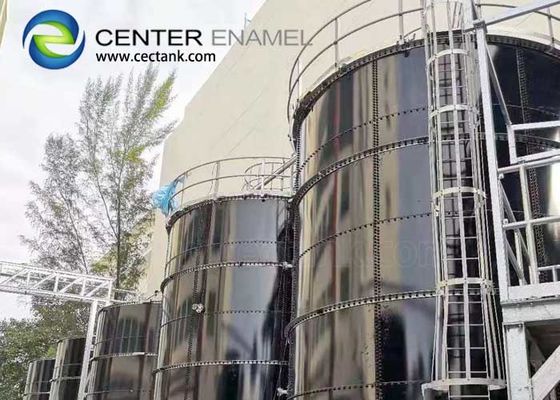
When designing industrial, municipal, or agricultural liquid containment infrastructure, selecting the correct material is vital to operational safety, environmental compliance, and long-term financial efficiency. Plant engineers and project managers frequently evaluate two primary contenders for chemical, wastewater, and water storage: Glass Lined Steel (Glass-Fused-to-Steel / GFS) Tanks and Plastic (Polyethylene / FRP) Liquid Storage Tanks.
While plastic tanks offer lightweight flexibility and low initial costs for small-scale applications, heavy-duty industrial environments demand robust structural integrity, massive volume capacities, and uncompromised resistance to thermal and chemical stress. Understanding the core engineering differences between glass-lined steel and plastic containers is essential for maximizing capital return and ensuring zero containment failure.
- Glass Lined Steel (Glass-Fused-to-Steel): Manufactured by fusing specialized inorganic glass enamel frit onto high-strength structural steel plates at extreme industrial temperatures (820°C–930°C). This thermal fusion creates an inseparable molecular bond that marries the extreme tensile strength of industrial steel with the chemical inertness and hardness of glass.
- Plastic Liquid Storage Tanks: Typically molded from linear or cross-linked high-density polyethylene (HDPE) or fabricated from Fiberglass Reinforced Plastic (FRP). While plastic is naturally non-reactive to certain chemicals, it relies entirely on its polymer matrix for structural rigidity without internal steel reinforcement.
- Mechanical Load Resistance: Glass-lined steel tanks excel in large-scale industrial setups where massive hydrostatic pressures, heavy wind loads, and seismic forces are present. Their modular bolted design allows capacities to exceed millions of gallons safely.
- Plastic Tank Limitations: Plastic tanks are cost-effective for smaller volumes (typically under 20,000 to 50,000 gallons). However, as capacity scales upward, plastic walls bow under hydrostatic pressure unless heavily supported by external steel structures, and they cannot handle elevated internal fluid pressures.
- Outdoor and High-Temperature Resilience: Glass-lined steel tanks are completely unaffected by ultraviolet (UV) radiation, severe freeze-thaw cycles, or elevated operating temperatures up to boiling points, maintaining absolute dimensional stability.
- Plastic Vulnerability: Unprotected polyethylene tanks degrade, chalk, and lose tensile strength over years of intense outdoor UV exposure. Furthermore, standard plastic tanks experience softening and structural deformation at elevated temperatures (typically limited to under 50°C–60°C).
| Evaluation Metric | Glass Lined Steel (GFS) Tanks | Plastic / Polyethylene Tanks |
|---|---|---|
| Structural Strength & Rigidity | Superior (High-tensile steel core handles immense hydrostatic and seismic loads) | Moderate to Low (Prone to wall deflection and bowing under heavy liquid loads) |
| Capacity Scalability | Unlimited (Modular bolted design scales effortlessly to millions of gallons) | Limited (Generally restricted to smaller or moderate volume applications) |
| UV & Weather Resistance | Absolute (Inorganic glass-fused surface is completely immune to UV and weathering) | Vulnerable (Plastics degrade, embrittle, and weaken under prolonged UV exposure) |
| Temperature Tolerance | High (Withstands extreme sub-zero and elevated industrial temperatures) | Low to Moderate (Prone to softening and loss of structural integrity when heated) |
| Lifecycle & Durability | Exceptional (Engineered for a dependable service life exceeding 30 to 40+ years) | Moderate (Typical lifespan of 10 to 20 years depending on UV and chemical exposure) |
Engineering Assurance: Premium industrial storage solutions engineered by global leaders such as Center Enamel comply strictly with internationally recognized standards, including AWWA D103-09, ISO 28765, and ISO 9001, providing verified reliability for critical municipal and industrial containment projects.
A: Glass-lined steel tanks are the preferred choice for large-capacity storage (over 20,000 gallons), high-temperature liquids, aggressive chemical environments, and outdoor installations subject to intense UV radiation or high seismic loads where structural failure cannot be tolerated. Plastic tanks are generally reserved for smaller, low-pressure, indoor chemical dosing applications.
A: While plastic offers good resistance to specific acids, it can be permeated by certain solvents and weakened by oxidizers. Glass-lined (Glass-Fused-to-Steel) tanks feature an inert glass surface that provides universal resistance across a broad pH range (pH 1 to 14), preventing chemical attack and eliminating structural degradation.
A: No. High-quality glass-lined steel tanks are designed for a multi-decade operational lifespan exceeding 30 to 40+ years with minimal maintenance. In contrast, plastic tanks typically experience polymer aging, UV embrittlement, and thermal fatigue, requiring replacement much sooner in heavy industrial settings.
A: Yes. Glass-lined steel tanks utilize a modular bolted panel architecture. This allows the components to be shipped efficiently and erected rapidly on-site—similar to the installation convenience of plastic tanks—while delivering the massive strength and volumetric capacity of heavy industrial steel.