-
Glass Fused To Steel Tanks (596)
-
Stainless Steel Tanks (434)
-
Fusion Bonded Epoxy Tanks (592)
-
Galvanized Steel Tanks (321)
-
Aluminum Dome Roofs (1336)
-
Wastewater Storage Tanks (232)
-
Welded Steel Tanks (457)
-
Pressure Vessels (295)
-
Anaerobic Digester (202)
-
Industrial Water Tanks (349)
-
Glass Lined Steel Tanks (180)
-
Bolted Steel Tanks (389)
-
Sludge Storage Tank (115)
-
Biogas Storage Tank (173)
-
Leachate Storage Tanks (133)
-
Agricultural Water Storage Tanks (179)
-
Fire Water Tank (166)
-
Grain Storage Silos (146)
-
Biogas Projects (424)
-
Wastewater Treatment Projects (1268)
-
Double Membrane Roof (223)


|
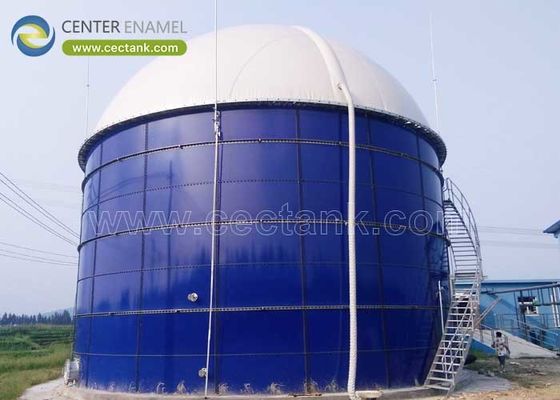
Glass-Lined Steel Biogas Holding Tanks with Double Membrane Gas Holders: The Pinnacle of Renewable Energy Containment
| Place of Origin: | CHINA |
| Brand Name: | CEC TANKS |
| Certification: | ISO 9001:2008, AWWA D103 , OSHA , BSCI |
| Model Number: | W20180508013 |
| Minimum Order Quantity: | 1 set |
| Price: | $5000~$20000 one set |
| Packaging Details: | PE poly-foam between each two plates;wooden pallet and wooden box |
| Delivery Time: | 10-30 days after deposit received |
| Payment Terms: | L/C,T/T |
| Supply Ability: | 60 sets per month |
|
Detail Information |
|||
| Place of Origin | CHINA | Brand Name | CEC TANKS |
|---|---|---|---|
| Certification | ISO 9001:2008, AWWA D103 , OSHA , BSCI | Model Number | W20180508013 |
| Tank Body Color: | Dark Green / Blue / White , Can Be Customized | Capacity: | 20 M³ To 18,000 M³ |
| Permeability: | Gas / Liquid Impermeable | Coating Thickness: | 0.25mm~0.40mm & Double Coating |
| Easy To Clean: | Smooth, Glossy, Inert, Anti-adhesion | Warranty Period: | 2 Years Free Of Charge |
| Highlight: | Glass Lined Steel Biogas Plant Project,Double Membrane Biogas Plant Project,20m3 Biogas Plant Project |
||
Product Description
In the global transition toward decarbonization and circular bio-economy models, anaerobic digestion facilities play a vital role in converting agricultural manure, municipal wastewater sludge, and organic industrial byproducts into clean, renewable methane. However, maximizing the efficiency of a biogas plant requires more than just biological digestion; it demands highly specialized storage infrastructure capable of simultaneously holding corrosive liquid digestate and safely containing pressurized biogas under variable atmospheric conditions.
Addressing these rigorous industrial demands, the integration of Glass-Lined Steel (GFS) Biogas Holding Tanks with Double Membrane Gas Holders represents the gold standard in modern renewable energy engineering. By combining the absolute chemical inertia of factory-fused glass steel panels with the flexible, high-capacity containment of dual-layer pneumatic membrane roofs, these integrated systems deliver unmatched durability, spatial optimization, and operational safety.
An integrated biogas holding system combines a robust liquid storage core with an advanced overhead gas containment canopy, functioning through a synchronized multi-tier design:
- The Glass-Fused-to-Steel Core: The primary vertical holding tank is constructed from high-strength steel plates fused with specialized glass enamel at extreme temperatures between 820°C and 930°C. This creates an inseparable molecular bond that provides complete immunity to corrosive hydrogen sulfide ($H_2S$), volatile fatty acids, and moisture present in anaerobic environments.
- The Double Membrane Canopy: Mounted atop the tank structure, the gas holder features an outer membrane (protecting against wind, snow, and UV radiation) and an inner membrane that expands and contracts dynamically based on stored gas volume. A controlled air space between the inner and outer layers maintains consistent operating pressure for downstream co-generation units or boilers.
- Hermetic Seal and Safety Integration: Specialized clamping profiles and gas-tight sealing systems prevent fugitive methane emissions while incorporating pressure relief valves, safety blow-off devices, and liquid overflow protection.
- Dual-Function Space Optimization: Combining liquid digestion storage and gas holding into a single vertical footprint eliminates the need for expensive, standalone gasholder basins, significantly reducing capital expenditure and land usage.
- Zero-Maintenance Interior Longevity: Unlike field-welded steel tanks that require frequent interior recoating, the hard, non-porous glass-fused surface prevents rust scaling and biological degradation for a service life exceeding 30 years.
- Modular Rapid Erection: Prefabricated under strict ISO 9001 factory controls, bolted tank panels and membrane components ship efficiently and assemble rapidly on-site using lightweight jacking systems, bypassing complex civil construction delays.
| Evaluation Metric | Glass-Lined Steel Tanks with Double Membrane | Cast-in-Place Concrete Digesters with Concrete Domes | Traditional Welded Steel Tanks with Fixed Roofs |
|---|---|---|---|
| Corrosion & $H_2S$ Defense | Superior (Inert glass-fused surface and UV-resistant membranes resist harsh biogas exposure) | Moderate (Vulnerable to concrete carbonation, sulfuric acid attack, and gas seepage) | Low (Dependent on field-applied epoxy coats that blister, pit, and peel over time) |
| Gas Storage Integration | Integrated (Dynamic double membrane roof stores variable biogas volumes safely) | Requires Separate Unit (Demands standalone gasholder spheres or membrane bags) | Limited (Fixed roofs offer minimal gas buffering capacity without external holders) |
| Installation Velocity | Fast (Modular bolted panels and pre-cut membranes installed rapidly on-site) | Very Slow (Months of civil formwork, pouring, and multi-week concrete curing phases) | Moderate (Requires heavy field plate rolling, welding, and radiograph testing) |
| Lifecycle Maintenance | Minimal (Permanent glass surface and durable polymer membranes require little upkeep) | High (Demands frequent crack sealing, joint injection, and structural patching) | High (Continuous maintenance overhead to prevent rust-through and leaks) |
A: It is an advanced, integrated storage system where a corrosion-resistant Glass-Fused-to-Steel (GFS) tank holds liquid anaerobic digestate, while an overhead dual-layer pneumatic membrane roof safely stores and pressurizes the generated biogas.
A: Double membrane gas holders expand and contract dynamically based on gas production volume. This provides essential buffering capacity for fluctuating biogas supply and demand while maintaining steady operational pressure for downstream power generators or boilers.
A: Glass-lined steel (GFS) is manufactured by fusing molten glass to structural steel at 820°C to 930°C. This creates a hard, chemically inert barrier that is completely immune to corrosive hydrogen sulfide (H2S), moisture, and organic acids found in anaerobic digestion environments.
A: High-performance biogas holding tanks and membrane systems are engineered in strict compliance with major global benchmarks, including AWWA D103-09 (Bolted Steel Tanks), ISO 28765, ISO 9001 quality management systems, and relevant structural safety codes.