What Is a Biogas Plant and How Does It Work? An Engineering Overview
2026-04-16

What Is a Biogas Plant and How Does It Work? An Engineering Overview
The Engine of Circular Economy
A biogas plant is a specialized industrial facility designed to convert organic waste into renewable energy through a biological process called Anaerobic Digestion (AD). By simulating the natural digestive systems of ruminants in a controlled, oxygen-free environment, these plants transform "liabilities" (manure, sludge, food waste) into "assets" (methane gas and nutrient-rich fertilizer).
For modern municipalities and agricultural enterprises, the biogas plant is the cornerstone of carbon-neutral energy strategies.
1. The Core Components: The Anatomy of a Biogas Plant
A high-efficiency biogas plant requires more than just a tank; it requires a precision-engineered containment system.
- Inlet Tank (Reception Area): Where raw biomass (feedstock) is collected, homogenized, and prepared as a slurry.
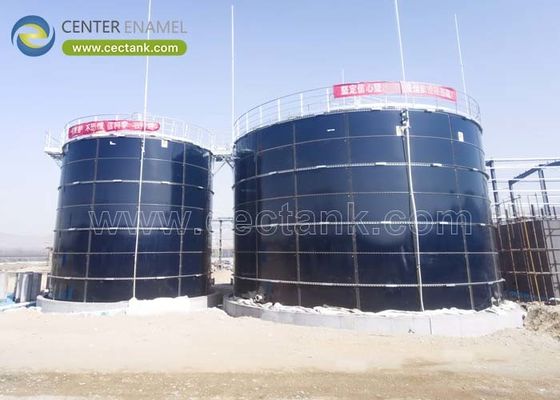
- Anaerobic Digester (The Heart): A sealed, airtight vessel where the biological breakdown occurs. Glass-Fused-to-Steel (GFS) and Fusion Bonded Epoxy (FBE) tanks are the global standards here due to their resistance to corrosive H_2S.
- Gas Holder: A storage unit (often a double-membrane roof) that captures and pressurizes the methane-rich biogas.
- Digestate Storage: Tanks that hold the liquid and solid byproducts, which serve as high-quality organic fertilizer.
2. How It Works: The Four Stages of Anaerobic Digestion
Biogas production is a sequential biochemical process driven by specialized microorganisms. Understanding these stages is critical for optimizing gas yield.
Stage 1: Hydrolysis
The process begins by breaking down complex organic polymers (carbohydrates, proteins, and fats) into soluble derivatives like sugars and amino acids. This is often the rate-limiting step.
C_6H_{12}O_6 rightarrow 3CO_2 + 3CH_4
(Simplified representation of organic breakdown)
Stage 2: Acidogenesis
Acidogenic bacteria further convert the hydrolyzed products into volatile fatty acids (VFAs), along with ammonia, CO_2, and hydrogen sulfide (H_2S).
Stage 3: Acetogenesis
In this phase, bacteria convert the organic acids into acetic acid, hydrogen, and carbon dioxide—the direct precursors for methane production.
Stage 4: Methanogenesis
The final, sensitive stage where methanogens convert the intermediates into Biogas (typically 50–75% Methane and 25–50% CO_2). This stage requires a stable pH (6.5–8.0) and temperature control.
3. Material Excellence: Why GFS and FBE Tanks are Critical
The environment inside a digester is notoriously aggressive. As a world leader in bolted tank technology, Center Enamel provides the structural foundation for these plants.
| Feature | Glass-Fused-to-Steel (GFS) | Fusion Bonded Epoxy (FBE) |
| Corrosion Resistance | pH 1–14; Immune to H_2S | High resistance to VFAs and ammonia |
| Hardness | 6.0 Mohs (Scratch-resistant) | High ductility and impact resistance |
| Capacity | Up to 60,000 m3+ | Up to 60,000 m3+ |
| Testing | 1500V Spark Test | 100% Holiday-free guarantee |
Why choose bolted tanks? Traditional concrete digesters are prone to "concrete rot" from sulfuric acid. Center Enamel’s GFS tanks provide an inorganic glass barrier that ensures a 30–50 year service life, even in high-corrosion biogas environments.
4. Strategic Advantages of Center Enamel Biogas Solutions
Precision Engineering (AWWA D103-09)
Our tanks are designed using Finite Element Analysis (FEA) to handle the unique hydrostatic and gas pressures of industrial-scale digestion. We conform to global standards including ISO 28765 and NSF/ANSI 61.
Scalability and Rapid Deployment
The modular bolted design allows for a multi-thousand cubic meter plant to be commissioned in weeks rather than months. This "tank-in-a-box" model is ideal for remote agricultural sites or expanding municipal facilities.
Global Proven Performance
From the Beijing Daxing Stability Circular Economy Park (10,392 m3 total volume) to projects in Sweden, France, and Malaysia, Center Enamel is the trusted partner for large-scale bio-energy infrastructure.
5. FAQ: Key Insights for Project Managers
What is the best temperature for a biogas plant?
Most plants operate under Mesophilic (35°C–37°C) or Thermophilic (50°C–55°C) conditions. Proper insulation of GFS tanks is essential to maintain these setpoints.
How is the gas stored?
We integrate Double Membrane Gas Holders directly onto our GFS tanks. These membranes act as a flexible lungs, expanding and contracting as gas is produced and consumed.
Can the tanks be expanded later?
Yes. One of the core benefits of Center Enamel’s bolted system is scalability. If your feedstock volume increases, additional rings can often be added to the existing structure.
About Shijiazhuang Zhengzhong Technology (Center Enamel)
With over 30 years of experience and nearly 200 patents, Center Enamel is Asia's premier manufacturer of bolted tanks. We help the world convert waste into energy through record-breaking engineering and sustainable material science.
-
2026-07-10
-
2026-07-10
-
2026-07-09
-
2026-05-08