-
Glass Fused To Steel Tanks (596)
-
Stainless Steel Tanks (434)
-
Fusion Bonded Epoxy Tanks (592)
-
Galvanized Steel Tanks (321)
-
Aluminum Dome Roofs (1316)
-
Wastewater Storage Tanks (231)
-
Welded Steel Tanks (457)
-
Pressure Vessels (295)
-
Anaerobic Digester (201)
-
Industrial Water Tanks (349)
-
Glass Lined Steel Tanks (180)
-
Bolted Steel Tanks (390)
-
Sludge Storage Tank (115)
-
Biogas Storage Tank (173)
-
Leachate Storage Tanks (133)
-
Agricultural Water Storage Tanks (179)
-
Fire Water Tank (166)
-
Grain Storage Silos (146)
-
Biogas Projects (425)
-
Wastewater Treatment Projects (788)
-
Double Membrane Roof (223)

|
Optimizing Anaerobic Solutions: GFS Tanks & CSTR Process for Uganda Biogas Project
| Place of Origin: | China |
| Brand Name: | CEC TANKS |
| Certification: | ISO 9001:2008, AWWA D103 , OSHA , BSCI |
| Model Number: | W |
| Minimum Order Quantity: | 1set |
| Price: | $5000~$20000 one set |
| Packaging Details: | PE poly-foam between each two steel plates ; wooden pallet and wooden |
| Delivery Time: | 10-30 days after deposit received |
| Payment Terms: | L/C,T/T |
| Supply Ability: | 60 sets per month |
|
Detail Information |
|||
| Place of Origin | China | Brand Name | CEC TANKS |
|---|---|---|---|
| Certification | ISO 9001:2008, AWWA D103 , OSHA , BSCI | Model Number | W |
| Tank Body Color: | Dark Green / Can Be Customized | Corrosion Integrity: | Excellent |
| Steel Plates Thickness: | 3mm To 12mm , Depends On The Tank Structure | Chemical Resistance: | Excellent |
| Size Of Panel: | 2.4M * 1.2M | Easy To Clean: | Smooth, Glossy, Inert, Anti-adhesion |
| Highlight: | GFS tanks for biogas projects,CSTR process wastewater treatment,anaerobic digestion solutions Uganda |
||
Product Description
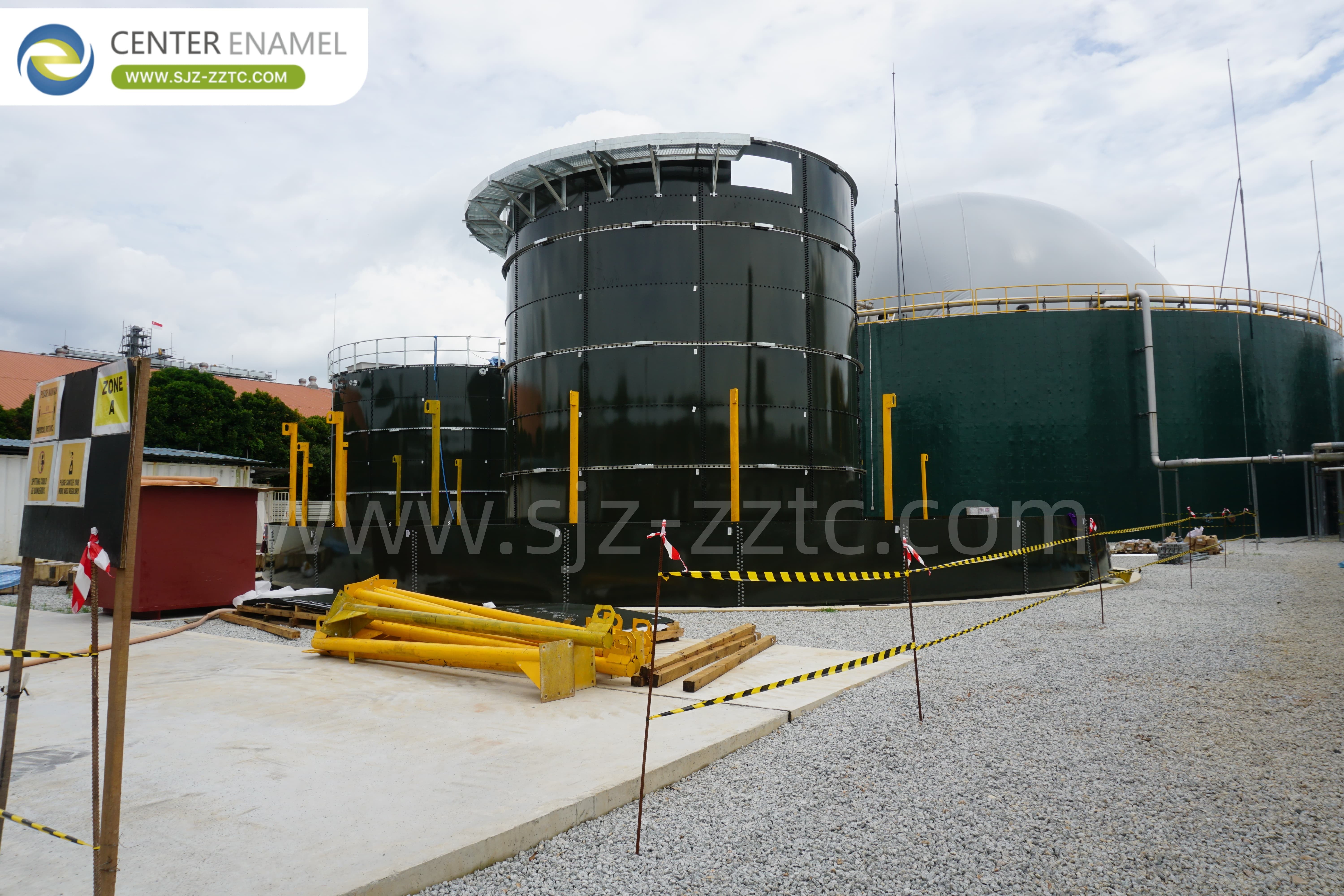
Optimizing Anaerobic Solutions: GFS Tanks & CSTR Process for Uganda Biogas Project
In Uganda, the livestock and dairy sectors are expanding rapidly, yet this growth brings a significant environmental hurdle: the substantial, unmanaged accumulation of cattle manure. As farming operations scale up to meet local and regional demand, traditional manure disposal methods—such as open-air dumping or basic composting—are proving to be ecologically unsustainable. These outdated techniques frequently lead to the contamination of soil and local water sources through hazardous nitrate leaching and pathogen runoff. Furthermore, improper waste management contributes significantly to unnecessary greenhouse gas emissions. For Ugandan farmers, implementing efficient organic waste management is no longer just a regulatory necessity; it is a critical advancement for ensuring sustainable agricultural operations and protecting vital local resources.
The Strategic Advantage of Biogas Conversion
Transforming cow manure into biogas is a transformative solution for the Ugandan agricultural landscape. Through the process of anaerobic digestion, manure—which is often viewed as a waste liability—is converted into a clean, renewable energy resource. This process effectively stabilizes organic matter and significantly reduces the total volume of waste requiring disposal. By capturing methane, a potent greenhouse gas, and utilizing it as a clean fuel for heating or electricity, farmers can drastically lower their operational costs while simultaneously shrinking their carbon footprint.
Center Enamel: Professional Design for Biogas Success
Center Enamel provides comprehensive, professional design services tailored specifically to the unique requirements of biogas projects in Uganda. Our expert team performs a thorough evaluation of site-specific factors, including waste composition, total volume, and local environmental conditions, to engineer a highly efficient system. By integrating advanced processing technology with robust, high-quality infrastructure, we ensure that every facility is not only compliant with strict environmental standards but is also optimized for long-term reliability and maximum gas production. Our design philosophy emphasizes simplified maintenance, ensuring that farm operators can manage their systems with greater ease and confidence.
Efficient Pre-treatment and CSTR Processing
The pre-treatment stage is crucial for protecting downstream equipment and ensuring system efficiency. Organic waste first passes through a screen to intercept larger solid impurities that could cause blockages. Next, a crushing device is utilized to break down remaining materials, ensuring faster degradation. Finally, in the homogenization tank, the wastewater is mixed uniformly to remove sand and heavy particles, stabilizing the feed for the fermentation process.
The core of our solution is the CSTR (Continuous Stirred-Tank Reactor). This technology utilizes a mechanical stirring device to ensure that organic raw materials and anaerobic microorganisms are thoroughly and consistently mixed within a closed tank. This uniform state of fermentation allows for the effective degradation of high-concentration organic matter and high-suspended solids, resulting in optimized biogas yields and superior waste stabilization.
GFS Tanks and Double Membrane Roof: Optimized Containment
For high-performance biogas storage, Center Enamel recommends pairing Glass-Fused-to-Steel (GFS) tanks with a Double Membrane Roof. Under normal working conditions, the double membrane roof is the preferred solution due to its exceptional space efficiency and cost optimization. This design significantly reduces roof costs and minimizes the foundation construction required for biogas storage compared to traditional, heavy structures. By providing a secure, flexible, and economical storage method, this combination ensures the produced biogas is managed safely and efficiently.
Essential Ancillary Equipment
To ensure the seamless operation of the entire facility, we provide a robust suite of supporting equipment:
Gas Holder: Provides safe, flexible storage for the produced biogas.
Black Membrane: Often utilized in containment applications for improved system efficiency.
Solid-Liquid Separator: Efficiently splits digestate into solid waste and liquid fertilizer for easier post-processing.
Torch System: Safely flares excess biogas when pressure management is required.
Lifting Pump: Ensures the reliable, consistent transfer of slurry between treatment units.
Dehydration and Desulfurization Tank: Purifies the raw biogas by removing moisture and hydrogen sulfide.
Screw Sludge Dewatering Machine: Drastically reduces the volume of final sludge, simplifying disposal.
Center Enamel: Your One-Stop Solution Provider for Uganda
Center Enamel serves as a dedicated, one-stop solution provider for complete biogas projects across Uganda. With over 36 years of international expertise and the largest manufacturing capacity for GFS tanks in Asia, we offer comprehensive EPC services—from initial design and process packaging to equipment supply and final commissioning. Our adherence to international standards, including ISO9001 and CE/EN1090, ensures that Ugandan dairy farms receive world-class, reliable, and sustainable infrastructure designed to meet their specific local needs.
Conclusion
Transitioning to advanced biogas technology is a strategic investment for the future of Ugandan agriculture. By partnering with Center Enamel, farm operators can resolve their manure management challenges while unlocking significant energy savings. Our combination of expert design, high-performance GFS tanks, optimized double membrane roof storage, and advanced CSTR processing provides a comprehensive, sustainable path toward long-term economic efficiency.
Frequently Asked Questions (FAQ)
Q1: How does the CSTR mechanical stirring system improve fermentation?
A: The mechanical stirring system ensures that microorganisms and organic materials remain in a complete, uniform mixture within the tank. This constant interaction is essential for degrading high-concentration solids effectively, which prevents sedimentation and significantly increases the biogas output compared to non-mixed systems.
Q2: What makes the Double Membrane Roof a cost-effective choice for Ugandan biogas projects?
A: Under normal working conditions, the Double Membrane Roof is highly preferred because it optimizes both cost and space. It drastically lowers capital expenditure on roof construction and requires less foundation support than traditional stationary gas holders, making it an ideal choice for streamlining project budgets.
Q3: Why is a Solid-Liquid Separator necessary after the fermentation process?
A: The separator is vital for managing digestate effectively. It efficiently divides the byproduct into solid waste and high-quality liquid fertilizer. This process makes the final product much easier to transport and apply to agricultural land, thereby maximizing the economic value retrieved from the farm's waste stream.