-
Glass Fused To Steel Tanks (596)
-
Stainless Steel Tanks (434)
-
Fusion Bonded Epoxy Tanks (592)
-
Galvanized Steel Tanks (321)
-
Aluminum Dome Roofs (1316)
-
Wastewater Storage Tanks (231)
-
Welded Steel Tanks (457)
-
Pressure Vessels (295)
-
Anaerobic Digester (201)
-
Industrial Water Tanks (349)
-
Glass Lined Steel Tanks (180)
-
Bolted Steel Tanks (390)
-
Sludge Storage Tank (115)
-
Biogas Storage Tank (173)
-
Leachate Storage Tanks (133)
-
Agricultural Water Storage Tanks (179)
-
Fire Water Tank (166)
-
Grain Storage Silos (146)
-
Biogas Projects (425)
-
Wastewater Treatment Projects (788)
-
Double Membrane Roof (223)

|
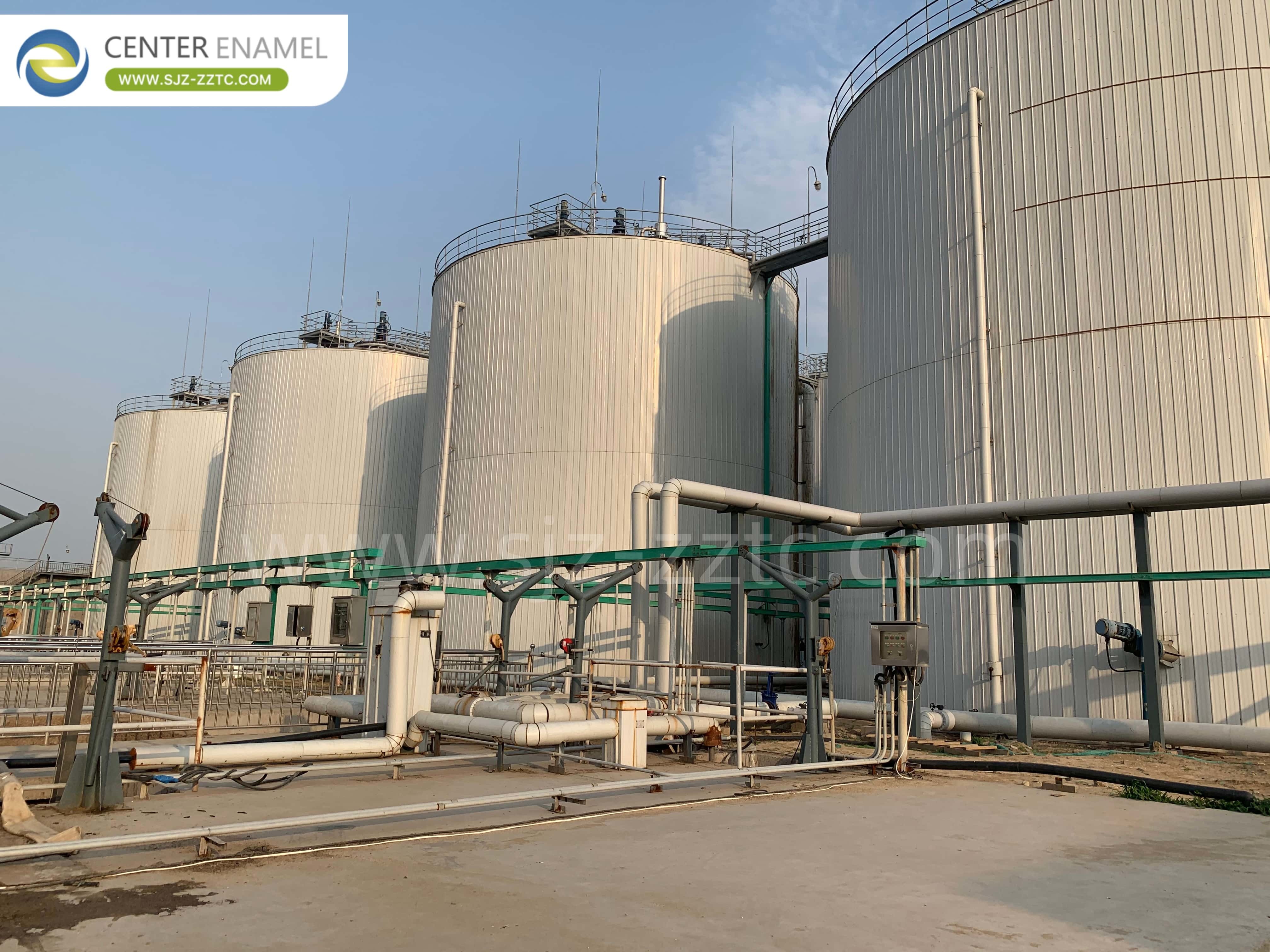
Biogas Projects in India: Efficient GFS Tanks & Double Membrane Roof Solutions
| Place of Origin: | China |
| Brand Name: | CEC TANKS |
| Certification: | ISO 9001:2008, AWWA D103 , OSHA , BSCI |
| Model Number: | W |
| Minimum Order Quantity: | 1set |
| Price: | $5000~$20000 one set |
| Packaging Details: | PE poly-foam between each two steel plates ; wooden pallet and wooden |
| Delivery Time: | 10-30 days after deposit received |
| Payment Terms: | L/C,T/T |
| Supply Ability: | 60 sets per month |
|
Detail Information |
|||
| Place of Origin | China | Brand Name | CEC TANKS |
|---|---|---|---|
| Certification | ISO 9001:2008, AWWA D103 , OSHA , BSCI | Model Number | W |
| Tank Body Color: | Dark Green / Can Be Customized | Corrosion Integrity: | Excellent |
| Steel Plates Thickness: | 3mm To 12mm , Depends On The Tank Structure | Chemical Resistance: | Excellent |
| Size Of Panel: | 2.4M * 1.2M | Easy To Clean: | Smooth, Glossy, Inert, Anti-adhesion |
| Highlight: | Biogas GFS tanks India,Double membrane roof biogas,Wastewater treatment biogas projects |
||
Product Description
Biogas Projects in India: Efficient GFS Tanks & Double Membrane Roof Solutions
In India, the booming cattle industry faces an escalating environmental challenge: the massive accumulation of cattle manure. As dairy farms scale up, traditional disposal methods—such as open-air dumping or simple composting—are proving inadequate and ecologically detrimental. These practices not only lead to severe soil and water contamination through nitrate leaching and pathogen runoff but also contribute significantly to greenhouse gas emissions. Managing this organic waste efficiently is no longer just a regulatory necessity for Indian farmers; it is a critical step toward achieving sustainable operations and mitigating local environmental hazards.
The Power of Transforming Cow Manure into Biogas
Converting cattle manure into biogas is a transformative solution for dairy farms. Through anaerobic digestion, manure—a problematic waste product—is turned into a valuable renewable energy resource. This process effectively reduces waste volume, stabilizes organic matter, and generates high-quality digestate, which serves as an excellent organic fertilizer. By capturing methane, a potent greenhouse gas, and using it as a clean fuel source for heat or electricity, farmers can significantly reduce their carbon footprint while lowering operational energy costs.
Center Enamel: Professional Design for Optimized Biogas Projects
Center Enamel offers comprehensive, professional design solutions tailored specifically to the unique requirements of cow manure biogas projects. Our expert team evaluates the specific waste composition, volume, and environmental conditions of the dairy farm to engineer a highly efficient system. By integrating advanced process technology with robust, durable infrastructure, Center Enamel ensures that every biogas plant is not only compliant with stringent environmental standards but is also optimized for maximum gas production, long-term reliability, and simplified maintenance.
Pre-treatment Stage: Ensuring Efficiency
The pre-treatment stage is vital to simplify the waste and protect downstream equipment. Organic waste first passes through a screen to remove larger solid impurities that could clog the system. Following this, a crushing device breaks down the remaining material, reducing its physical size to ensure easier handling and faster degradation. Finally, in the homogenization tank, sand and heavier particles are removed, and the wastewater is mixed uniformly to stabilize water flow, preparing a consistent feed for the fermentation process.
The Core Technology: CSTR Process
At the heart of our biogas solution is the CSTR (Continuous Stirred-Tank Reactor). This technology facilitates a high-efficiency anaerobic fermentation process. Equipped with a mechanical stirring device, the CSTR ensures that raw materials and microorganisms are thoroughly mixed in a closed tank. This constant, uniform state of fermentation allows for the effective degradation of high-suspended solids and high-concentration organic matter, resulting in a maximized biogas yield and stable waste stabilization.
GFS Tanks and Double Membrane Roof: The Superior Combination
For optimal biogas storage, Center Enamel recommends pairing Glass-Fused-to-Steel (GFS) tanks with a Double Membrane Roof. Under normal operating conditions, the double membrane roof is the preferred solution due to its exceptional cost optimization and space efficiency. It significantly reduces roof costs and minimizes the required foundation construction compared to traditional gas holder structures. The GFS tanks provide unmatched durability and corrosion resistance, while the double membrane roof ensures a secure, flexible, and economical storage solution for the generated biogas.
Essential Ancillary Equipment
To ensure the entire project runs seamlessly, we provide a robust suite of supporting equipment:
Gas Holder: Provides safe, flexible storage for the produced biogas.
Black Membrane: Often used in related containment applications for efficiency.
Solid-Liquid Separator: Efficiently separates digestate into liquid fertilizer and solid waste for easier handling.
Torch System: Safely flares excess biogas when necessary.
Lifting Pump: Ensures the consistent transfer of slurry between treatment stages.
Dehydration and Desulfurization Tank: Purifies the raw biogas by removing moisture and hydrogen sulfide.
Screw Sludge Dewatering Machine: Further reduces the volume of final sludge, simplifying disposal or usage.
Center Enamel: Your One-Stop Solution Provider for India
Center Enamel is more than an equipment supplier; we are a dedicated one-stop solution provider for biogas projects across India. Leveraging over 36 years of industry experience and the largest GFS tank manufacturing capacity in Asia, we offer complete EPC services—from initial design and process packaging to equipment supply and final commissioning. Our commitment to international standards (such as ISO9001 and CE/EN1090) ensures that Indian dairy farms receive world-class, reliable, and sustainable biogas infrastructure tailored to their specific needs.
Conclusion
Transitioning to biogas technology is a strategic investment in the future of Indian dairy farming. By partnering with Center Enamel, farm operators can overcome the challenges of manure management while unlocking significant energy savings. Our combination of expert design, high-performance GFS tanks, optimized double membrane roof storage, and advanced CSTR processing provides a comprehensive path toward environmental sustainability and long-term economic efficiency.
Frequently Asked Questions (FAQ)
Q1: How does the CSTR technology handle high-concentration manure from dairy farms? A: The CSTR (Continuous Stirred-Tank Reactor) is specifically designed for high-suspended solids. Its integrated mechanical stirring device ensures that organic material and anaerobic microorganisms remain in a state of complete mixing, preventing sedimentation and promoting highly effective degradation of concentrated organic matter.
Q2: Why is a Double Membrane Roof preferred over a GFS roof for biogas storage? A: Under normal working conditions, the Double Membrane Roof offers superior cost and space optimization. It significantly reduces overall capital expenditure on the roof structure and requires less foundation support compared to traditional ground-mounted gas holders, making it a highly efficient solution for standard environmental conditions.
Q3: What are the main benefits of using a Solid-Liquid Separator in this process? A: The Solid-Liquid Separator is crucial for post-fermentation management. It effectively separates the liquid digestate, which can be utilized as high-quality liquid fertilizer, from the solid organic matter. This separation makes the final product easier to handle, transport, and apply to crops, thereby maximizing the economic value of the byproduct.