-
Glass Fused To Steel Tanks (596)
-
Stainless Steel Tanks (434)
-
Fusion Bonded Epoxy Tanks (592)
-
Galvanized Steel Tanks (321)
-
Aluminum Dome Roofs (1316)
-
Wastewater Storage Tanks (231)
-
Welded Steel Tanks (457)
-
Pressure Vessels (295)
-
Anaerobic Digester (201)
-
Industrial Water Tanks (349)
-
Glass Lined Steel Tanks (180)
-
Bolted Steel Tanks (390)
-
Sludge Storage Tank (115)
-
Biogas Storage Tank (173)
-
Leachate Storage Tanks (133)
-
Agricultural Water Storage Tanks (179)
-
Fire Water Tank (166)
-
Grain Storage Silos (146)
-
Biogas Projects (425)
-
Wastewater Treatment Projects (788)
-
Double Membrane Roof (223)

|
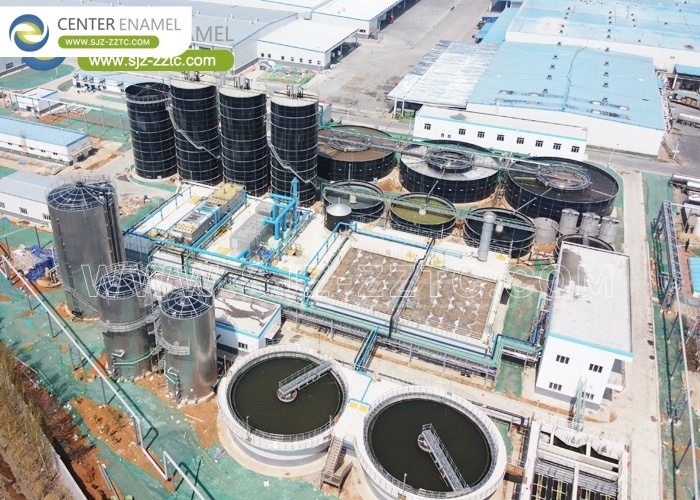
Biogas Project: Advanced GFS Tanks & Double Membrane Roof Solutions in Bangladesh
| Place of Origin: | China |
| Brand Name: | CEC TANKS |
| Certification: | ISO 9001:2008, AWWA D103 , OSHA , BSCI |
| Model Number: | W |
| Minimum Order Quantity: | 1set |
| Price: | $5000~$20000 one set |
| Packaging Details: | PE poly-foam between each two steel plates ; wooden pallet and wooden |
| Delivery Time: | 10-30 days after deposit received |
| Payment Terms: | L/C,T/T |
| Supply Ability: | 60 sets per month |
|
Detail Information |
|||
| Place of Origin | China | Brand Name | CEC TANKS |
|---|---|---|---|
| Certification | ISO 9001:2008, AWWA D103 , OSHA , BSCI | Model Number | W |
| Tank Body Color: | Dark Green / Can Be Customized | Corrosion Integrity: | Excellent |
| Steel Plates Thickness: | 3mm To 12mm , Depends On The Tank Structure | Chemical Resistance: | Excellent |
| Size Of Panel: | 2.4M * 1.2M | Easy To Clean: | Smooth, Glossy, Inert, Anti-adhesion |
| Highlight: | Biogas project GFS tanks Bangladesh,Biogas project double membrane roof,Wastewater treatment GFS tank solutions |
||
Product Description
Biogas Project: Advanced GFS Tanks & Double Membrane Roof Solutions in Bangladesh
The rapid expansion of the dairy sector in Bangladesh has brought to light a pressing environmental dilemma: the unmanaged accumulation of cattle manure. As local farming operations scale up to meet growing domestic demand, traditional waste disposal techniques—such as piling manure in open fields or utilizing rudimentary composting methods—are proving insufficient and environmentally hazardous. These outdated practices facilitate the leaching of nitrates into soil and groundwater, while also serving as a significant source of pathogen runoff and uncontrolled greenhouse gas emissions. For Bangladeshi dairy farmers, transitioning to modern, efficient waste management is no longer merely a matter of regulatory compliance; it is a vital necessity for safeguarding local ecosystems and ensuring the long-term sustainability of their agricultural businesses.
Transforming Manure into Sustainable Energy
Converting agricultural waste into biogas represents a breakthrough for the livestock industry in Bangladesh. Through anaerobic digestion, manure—typically regarded as a burdensome waste product—is systematically converted into a valuable renewable energy source. This biological process performs the dual function of stabilizing organic matter and significantly reducing the overall volume of waste. By capturing methane that would otherwise be released into the atmosphere, farmers can utilize it as a clean fuel for electricity or heating. Furthermore, the resulting digestate functions as a nutrient-rich organic fertilizer, enhancing soil quality and reducing dependency on chemical alternatives, thereby fostering a circular economy on the farm.
Professional Engineering by Center Enamel
Center Enamel provides specialized design services specifically engineered for the unique challenges faced by biogas projects in Bangladesh. Our engineering team conducts a thorough analysis of the specific farm environment, including total waste volume and organic composition, to develop a tailored system design. By combining sophisticated process engineering with durable, high-quality infrastructure, we ensure that every facility is designed not only to meet strict environmental standards but also to achieve maximum biogas production and long-term operational reliability. Our approach emphasizes simplified maintenance and superior performance, ensuring that project owners in Bangladesh receive a system capable of delivering consistent energy yields for years to come.
Optimized Pre-treatment and CSTR Processing
The efficiency of a biogas system is heavily dependent on effective pre-treatment to simplify waste before it enters the reactor. Initially, organic waste is passed through a screen to remove large impurities that could cause blockages. Subsequently, a crushing device is employed to reduce the particle size of the feedstock, which accelerates the subsequent degradation process. Finally, the slurry enters a homogenization tank where sand and heavy particles are settled out, and the waste is mixed to ensure a consistent, stable flow into the fermentation unit.
At the core of the conversion process is our CSTR (Continuous Stirred-Tank Reactor) technology. Designed for high-efficiency fermentation, the CSTR utilizes a mechanical stirring system to maintain a uniform mixture of raw materials and anaerobic microorganisms within a closed environment. This consistent state of mixing is essential for degrading high-concentration organic matter and high-suspended solids, which leads to a significantly higher biogas output compared to traditional, non-mixed systems.
GFS Tanks and Double Membrane Roof Storage
For superior biogas containment, Center Enamel promotes the use of Glass-Fused-to-Steel (GFS) tanks integrated with a Double Membrane Roof. The double membrane roof is widely regarded as the most efficient storage solution for standard operating environments due to its exceptional space utilization and cost-effectiveness. By adopting this design, projects can achieve substantial savings on initial roof construction costs while requiring a smaller physical footprint than traditional stationary gas holders. The GFS tanks offer the benefit of high chemical resistance and durability, while the flexible double membrane roof provides a secure, economical, and responsive method for storing the generated biogas.
Essential Ancillary Equipment
To ensure the seamless integration and operation of the entire biogas facility, we provide a full suite of specialized ancillary equipment:
Gas Holder: Facilitates flexible, secure storage of produced biogas.
Black Membrane: Frequently utilized in containment systems to improve overall site efficiency.
Solid-Liquid Separator: Plays a key role in splitting digestate into usable liquid fertilizer and solid byproducts.
Torch System: Safely manages excess biogas through flaring when necessary.
Lifting Pump: Ensures the reliable and consistent transfer of slurry throughout the treatment plant.
Dehydration and Desulfurization Tank: Purifies raw gas by stripping away moisture and hydrogen sulfide, ensuring high-quality energy.
Screw Sludge Dewatering Machine: Drastically reduces the volume of final sludge, making waste disposal and agricultural reuse far easier.
Center Enamel: Your Partner for Biogas in Bangladesh
Center Enamel serves as a comprehensive, one-stop provider for biogas project implementation across Bangladesh. Backed by over 36 years of global expertise and the largest manufacturing capacity for GFS tanks in Asia, we provide end-to-end EPC services. From the initial project feasibility and process engineering to equipment procurement and final facility commissioning, our team manages the entire lifecycle. Our commitment to international certifications, including ISO9001 and CE/EN1090, guarantees that our clients receive sustainable, world-class infrastructure tailored to the specific needs of the Bangladeshi agricultural market.
Conclusion
Investing in modern biogas technology is a strategic move for the future of the dairy industry in Bangladesh. By partnering with Center Enamel, farm operators can resolve their manure management challenges while simultaneously generating significant energy savings. Our combination of expert design, high-performance GFS tanks, optimized double membrane roof storage, and advanced CSTR processing provides a comprehensive roadmap toward achieving both environmental sustainability and long-term economic prosperity.
Frequently Asked Questions (FAQ)
Q1: How does the GFS tank material specifically benefit biogas projects in Bangladesh's climate?
A: GFS (Glass-Fused-to-Steel) tanks provide exceptional corrosion resistance and high durability, which are critical for maintaining structural integrity in humid or potentially aggressive environments, ensuring minimal maintenance over a long lifespan.
Q2: Can the energy produced by this biogas system be used directly by the farm? A: Yes, once the raw biogas is purified through our desulfurization and dehydration tanks, it can be utilized as a clean fuel source to provide heat or generate electricity, directly lowering the farm's reliance on external energy sources.
Q3: How long does the commissioning of a full EPC biogas project typically take? A: As a one-stop solution provider, Center Enamel manages the entire EPC process—from initial design to final commissioning. The timeline is tailored to the scale and complexity of the specific project, ensuring an efficient transition from planning to full-scale energy production.