-
Glass Fused To Steel Tanks (596)
-
Stainless Steel Tanks (434)
-
Fusion Bonded Epoxy Tanks (592)
-
Galvanized Steel Tanks (321)
-
Aluminum Dome Roofs (1316)
-
Wastewater Storage Tanks (231)
-
Welded Steel Tanks (457)
-
Pressure Vessels (295)
-
Anaerobic Digester (201)
-
Industrial Water Tanks (349)
-
Glass Lined Steel Tanks (180)
-
Bolted Steel Tanks (390)
-
Sludge Storage Tank (115)
-
Biogas Storage Tank (173)
-
Leachate Storage Tanks (133)
-
Agricultural Water Storage Tanks (179)
-
Fire Water Tank (166)
-
Grain Storage Silos (146)
-
Biogas Projects (425)
-
Wastewater Treatment Projects (788)
-
Double Membrane Roof (223)

|
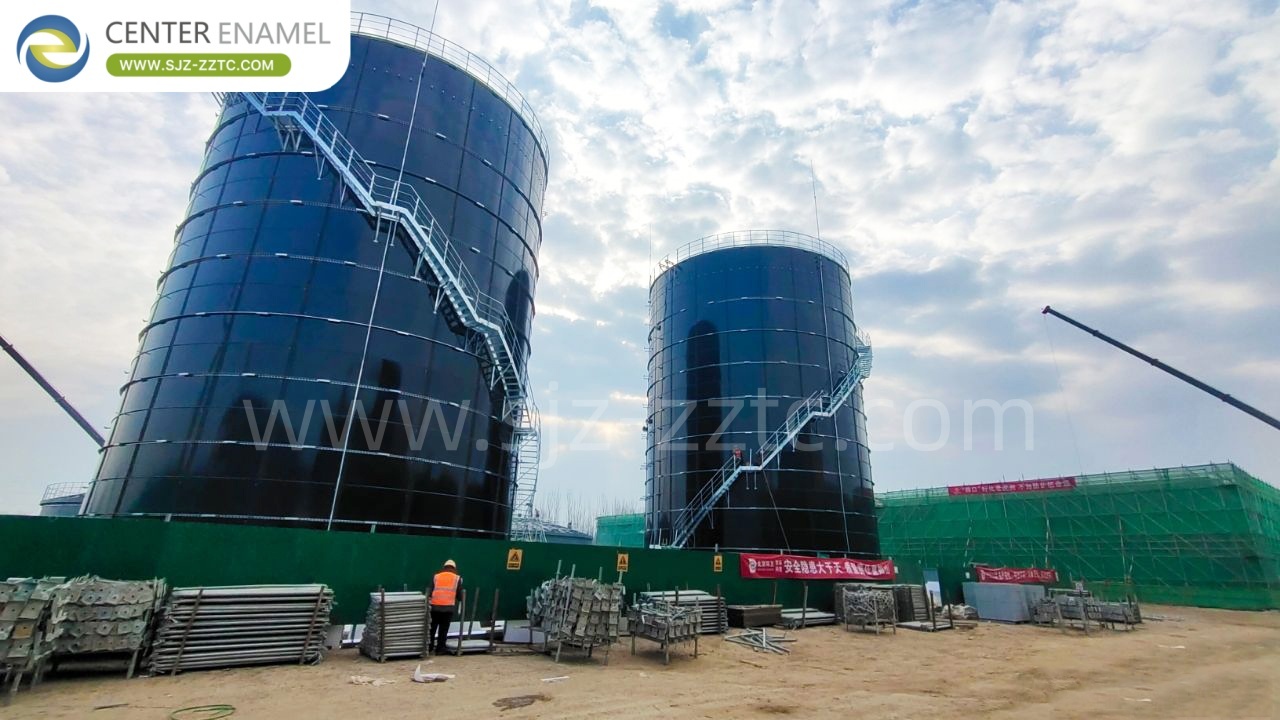
Advanced Anaerobic Technologies: GFS Tanks & Double Membrane Roof Solutions for Kenya
| Place of Origin: | China |
| Brand Name: | CEC TANKS |
| Certification: | ISO 9001:2008, AWWA D103 , OSHA , BSCI |
| Model Number: | W |
| Minimum Order Quantity: | 1set |
| Price: | $5000~$20000 one set |
| Packaging Details: | PE poly-foam between each two steel plates ; wooden pallet and wooden |
| Delivery Time: | 10-30 days after deposit received |
| Payment Terms: | L/C,T/T |
| Supply Ability: | 60 sets per month |
|
Detail Information |
|||
| Place of Origin | China | Brand Name | CEC TANKS |
|---|---|---|---|
| Certification | ISO 9001:2008, AWWA D103 , OSHA , BSCI | Model Number | W |
| Tank Body Color: | Dark Green / Can Be Customized | Corrosion Integrity: | Excellent |
| Steel Plates Thickness: | 3mm To 12mm , Depends On The Tank Structure | Chemical Resistance: | Excellent |
| Size Of Panel: | 2.4M * 1.2M | Easy To Clean: | Smooth, Glossy, Inert, Anti-adhesion |
| Highlight: | GFS tanks for wastewater treatment,double membrane roof solutions Kenya,anaerobic wastewater treatment projects Kenya |
||
Product Description
Advanced Anaerobic Technologies: GFS Tanks & Double Membrane Roof Solutions for Kenya
In Kenya, the rapid growth of the dairy and cattle industries has created a significant environmental challenge: the massive daily accumulation of manure. As farming operations expand to meet increasing consumer demand, traditional waste disposal techniques, such as open-air piling or basic land application, are proving to be unsustainable and ecologically hazardous. These outdated practices lead to severe degradation of local soil and the contamination of groundwater through hazardous nitrate leaching. Furthermore, the uncontrolled release of methane and other potent greenhouse gases from decomposing manure poses a growing climate concern. For Kenyan agricultural operators, transitioning toward modern, structured waste management is now a fundamental requirement for maintaining long-term ecological health, ensuring sustainable agricultural productivity, and protecting vital water resources for the local community.
The Strategic Advantage of Biogas Conversion
Repurposing cattle manure into biogas represents a sustainable paradigm shift for Kenya's agricultural sector. Through controlled anaerobic digestion, waste products—often viewed as liabilities—are systematically transformed into high-value renewable energy. This stabilization process not only reduces overall waste volume but also mitigates the harmful environmental impact of organic runoff. By capturing biogas, farmers can create a reliable source of clean energy for heat or electricity, which directly reduces energy expenditures. Additionally, the process yields nutrient-rich digestate, an excellent organic fertilizer that improves soil structure and crop yields, supporting a circular economy that minimizes reliance on expensive synthetic fertilizers.
Center Enamel: Expert Design for Biogas Projects
Center Enamel provides professional, dedicated design solutions specifically engineered to overcome the unique environmental and operational challenges encountered by biogas projects in Kenya. Our technical team conducts thorough evaluations of site-specific factors, such as manure composition, daily waste volumes, and local climatic variations, to ensure the construction of a highly efficient and resilient system. By integrating world-class process engineering with robust, durable infrastructure, Center Enamel ensures that each plant is fully compliant with environmental standards while being optimized for consistent biogas production, long-term operational safety, and ease of maintenance. Our designs focus on enabling farmers to achieve maximum productivity with minimal technical complexity.
Efficient Pre-treatment and CSTR Technology
System efficiency relies heavily on the pre-treatment of feedstock to simplify the waste stream and protect the reactor. Organic waste is initially passed through a specialized screen to intercept larger solid impurities that could cause mechanical blockages. This is followed by a crushing device that reduces the physical size of the material, a process critical for faster microbial degradation. Finally, the waste enters a homogenization tank for uniform mixing, which removes sand and heavy particles to ensure a consistent, stable feed for the fermentation process.
At the heart of our anaerobic technologies is the CSTR (Continuous Stirred-Tank Reactor). This core unit utilizes a mechanical stirring system to keep microorganisms and raw organic materials in a state of complete, uniform mixing within a sealed environment. By maintaining this steady fermentation state, the CSTR effectively degrades high concentrations of organic matter and suspended solids, which is essential for maximizing biogas yields and ensuring stable waste stabilization, even when processing dense manure.
GFS Tanks and Double Membrane Roof: Optimized Storage
For secure and efficient biogas containment, Center Enamel recommends the integration of Glass-Fused-to-Steel (GFS) tanks with a Double Membrane Roof. Under normal operational conditions, the double membrane roof is the ideal solution due to its superior cost-efficiency and space-saving design. It significantly reduces initial construction costs and minimizes the foundation footprint compared to traditional, fixed gas holders. Combined with the exceptional corrosion resistance and longevity of GFS tanks, this setup provides a flexible, secure, and highly economical method for storing biogas, ensuring that the facility remains operational and reliable over many years in Kenya's unique climate.
Essential Ancillary Equipment
To ensure the entire biogas plant functions as an integrated, seamless system, we provide a robust suite of necessary supporting equipment:
Gas Holder: Facilitates safe and flexible storage for the produced biogas.
Black Membrane: Used in containment applications to enhance environmental efficiency.
Solid-Liquid Separator: Efficiently divides the digestate into high-value liquid fertilizer and solids.
Torch System: Safely flares off excess biogas to maintain system pressure balance.
Lifting Pump: Ensures the reliable, consistent transfer of slurry between treatment stages.
Dehydration and Desulfurization Tank: Purifies the biogas by removing moisture and hydrogen sulfide for better gas quality.
Screw Sludge Dewatering Machine: Further reduces the final sludge volume for easier transport and agricultural use.
Center Enamel: Your Partner for Biogas in Kenya
Center Enamel stands as a premier one-stop solution provider for complete biogas projects across Kenya. With over 36 years of international industry experience and the largest manufacturing base for GFS tanks in Asia, we provide comprehensive EPC services. We manage the entire project lifecycle, from initial site-specific design and process engineering to equipment manufacturing, supply, and final commissioning. By adhering to strict international standards such as ISO9001 and CE/EN1090, we ensure that Kenyan farms receive world-class, durable, and reliable biogas infrastructure that is perfectly tailored to meet their specific sustainable energy needs.
Conclusion
Adopting advanced anaerobic technologies is a critical step for the modernization of Kenya’s dairy and livestock sectors. By partnering with Center Enamel, farm operators can resolve critical waste management challenges while generating substantial economic benefits through renewable energy production and the supply of organic fertilizer. Our expert design, combined with high-performance GFS tanks, the double membrane roof system, and advanced CSTR processing, offers a comprehensive path toward environmental sustainability and long-term economic efficiency for farmers throughout the region.
Frequently Asked Questions (FAQ)
Q1: How does the CSTR technology adapt to the varying manure quality on a farm? A: The CSTR technology is inherently flexible. Because it features a mechanical stirring system that maintains complete mixing, it can handle variations in feedstock concentration and particle size, ensuring that microorganisms always have consistent access to nutrients for steady biogas production.
Q2: Is the Double Membrane Roof suitable for regions with intense solar heat?
A: Yes, the materials used in our double membrane roofs are engineered for resilience. They provide an excellent storage solution that is designed to withstand normal working conditions, offering both cost-effectiveness and durability while effectively protecting the biogas stored within.
Q3: How does the inclusion of a Dehydration and Desulfurization Tank improve project viability?
A: This equipment is vital for gas quality. By removing moisture and corrosive hydrogen sulfide from the raw biogas, it prevents damage to downstream equipment like engines or boilers, thereby extending the service life of the entire system and ensuring the biogas is safe for use as clean fuel.