-
Glass Fused To Steel Tanks (596)
-
Stainless Steel Tanks (434)
-
Fusion Bonded Epoxy Tanks (592)
-
Galvanized Steel Tanks (321)
-
Aluminum Dome Roofs (1336)
-
Wastewater Storage Tanks (232)
-
Welded Steel Tanks (457)
-
Pressure Vessels (295)
-
Anaerobic Digester (201)
-
Industrial Water Tanks (349)
-
Glass Lined Steel Tanks (180)
-
Bolted Steel Tanks (389)
-
Sludge Storage Tank (115)
-
Biogas Storage Tank (173)
-
Leachate Storage Tanks (133)
-
Agricultural Water Storage Tanks (179)
-
Fire Water Tank (166)
-
Grain Storage Silos (146)
-
Biogas Projects (425)
-
Wastewater Treatment Projects (928)
-
Double Membrane Roof (223)
|
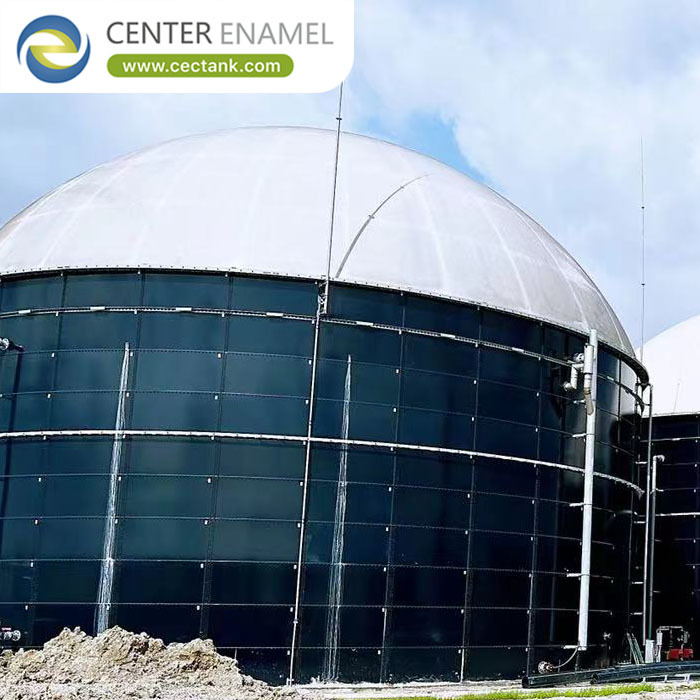
Double Membrane Biogas Holders: The Core of Efficient Anaerobic Digestion
| Place of Origin: | China |
| Brand Name: | CEC TANKS |
| Certification: | ISO 9001:2008, AWWA D103 , OSHA , BSCI |
| Model Number: | W |
| Minimum Order Quantity: | 1set |
| Price: | $5000~$20000 one set |
| Packaging Details: | PE poly-foam between each two steel plates ; wooden pallet and wooden |
| Delivery Time: | 10-30 days after deposit received |
| Payment Terms: | L/C,T/T |
| Supply Ability: | 60 sets per month |
|
Detail Information |
|||
Product Description
Double Membrane Biogas Holders: The Core of Efficient Anaerobic Digestion
In the transition toward renewable energy, the ability to store and manage biogas effectively is a defining factor for the success of any biomass-to-biogas project. As anaerobic digestion (AD) facilities scale up to meet industrial and municipal waste management demands, the Double Membrane Biogas Holder has emerged as the industry-leading solution for secure, flexible, and cost-effective gas containment.
Unlike rigid fixed-roof tanks, double membrane systems provide a dynamic, adaptive storage environment that optimizes energy production and improves plant safety.
What is a Double Membrane Biogas Holder?
A double membrane biogas holder is a sophisticated, flexible storage structure designed specifically for the containment of biogas—a mixture primarily consisting of methane (CH4) and carbon dioxide (CO2).
It consists of three main components:
- Inner Membrane: Acts as the primary gas storage vessel. It expands and contracts based on the volume of biogas produced and consumed.
- Outer Membrane: Maintains a constant hemispherical shape through air inflation, providing a protective shell against external environmental factors like wind, snow, and UV radiation.
- Intermediate Air Space: An automated fan system maintains positive pressure in this space, which protects the inner membrane and ensures the biogas is delivered at a consistent, usable pressure.
How It Works: The Principle of Constant Pressure
The effectiveness of a double membrane holder lies in its ability to balance gas pressure.
- Gas Production: As the anaerobic digester produces gas, the inner membrane fills, rising toward the outer membrane.
- Constant Pressure: The support air blower keeps the outer membrane inflated at a constant pressure. This pressure is transferred to the biogas in the inner membrane, ensuring that the gas exits the holder at a stable, regulated pressure suitable for downstream equipment like gas engines, boilers, or filtration systems.
- Adaptability: When gas is withdrawn for energy production, the inner membrane retracts, and the support air maintains the structure's integrity. This eliminates the "dead space" issues found in fixed-roof designs.
Strategic Advantages for Biogas Projects
For project developers and EPC contractors, selecting a double membrane holder over traditional concrete or steel roofs offers several distinct operational advantages:
1. Flexible Storage Capacity
The system acts as a buffer. If the biogas engine or downstream process is temporarily offline, the holder expands to capture the excess gas, preventing flaring and energy loss.
2. Corrosion Resistance
Biogas is often rich in hydrogen sulfide (H2S), which is highly corrosive to steel and concrete. Double membrane holders are constructed from specialized, chemically resistant fabrics (typically PVC-coated polyester) that are impervious to H2S and other corrosive elements, ensuring a significantly longer service life than metal structures.
3. Rapid Deployment and Lower Costs
These systems are modular and lightweight. They do not require the heavy foundation reinforcement or complex, time-consuming construction associated with heavy concrete domes. This drastically reduces project timelines and capital expenditure.
Comparative Analysis: Storage Solutions
| Feature | Double Membrane Holder | Fixed Concrete Roof | Steel Tank Roof |
|---|---|---|---|
| Storage Capacity | Variable (Flexible) | None (Fixed) | None (Fixed) |
| Corrosion Resistance | High (Inert Materials) | Low (Requires Coating) | Moderate (Needs Maintenance) |
| Construction Time | Fast (Weeks) | Slow (Months) | Moderate |
| Gas Pressure Control | Excellent (Automated) | Poor | Limited |
| Maintenance | Low | High (Crack Repair) | High (Repainting) |
Key Applications
- Municipal Wastewater Treatment: Storing biogas from sludge digestion for electricity generation or heat.
- Agricultural Biogas Plants: Managing gas from manure and crop residue digestion to stabilize energy supply for farm operations.
- Food Waste/Organic Waste Digesters: Capturing high-yield methane from industrial organic waste streams.
- Landfills: Essential for capturing methane emissions, mitigating environmental impact, and creating a renewable energy source.
Technical Considerations for Implementation
When specifying a double membrane holder for your project, ensure the following parameters are addressed:
- Capacity Requirements: Size the holder based on your daily gas production fluctuations, not just average flow.
- Environmental Resilience: Ensure the membrane materials are rated for local temperature extremes and UV exposure.
- H₂S Tolerance: Confirm the membrane fabric is compatible with the specific hydrogen sulfide concentrations expected from your feedstock.
- Safety Integration: A robust control system—including pressure sensors, relief valves, and gas detection—is mandatory for a safe operation.
Conclusion: Maximizing Energy Yield
The double membrane biogas holder is more than just a cover; it is a critical instrument for energy optimization. By providing a stable, protective, and flexible storage environment, it allows biogas plants to maximize their energy output, reduce flaring, and improve the overall financial feasibility of anaerobic digestion projects.
Ready to enhance your biogas storage efficiency? Partnering with an experienced manufacturer ensures your storage solution meets the precise structural and chemical requirements of your biomass-to-biogas project.
- Need a technical assessment? Reach out to an industry specialist to conduct a capacity and site-load analysis for your digester.