-
Glass Fused To Steel Tanks (596)
-
Stainless Steel Tanks (434)
-
Fusion Bonded Epoxy Tanks (592)
-
Galvanized Steel Tanks (321)
-
Aluminum Dome Roofs (1336)
-
Wastewater Storage Tanks (232)
-
Welded Steel Tanks (457)
-
Pressure Vessels (295)
-
Anaerobic Digester (201)
-
Industrial Water Tanks (349)
-
Glass Lined Steel Tanks (180)
-
Bolted Steel Tanks (389)
-
Sludge Storage Tank (115)
-
Biogas Storage Tank (173)
-
Leachate Storage Tanks (133)
-
Agricultural Water Storage Tanks (179)
-
Fire Water Tank (166)
-
Grain Storage Silos (146)
-
Biogas Projects (425)
-
Wastewater Treatment Projects (1028)
-
Double Membrane Roof (223)
|
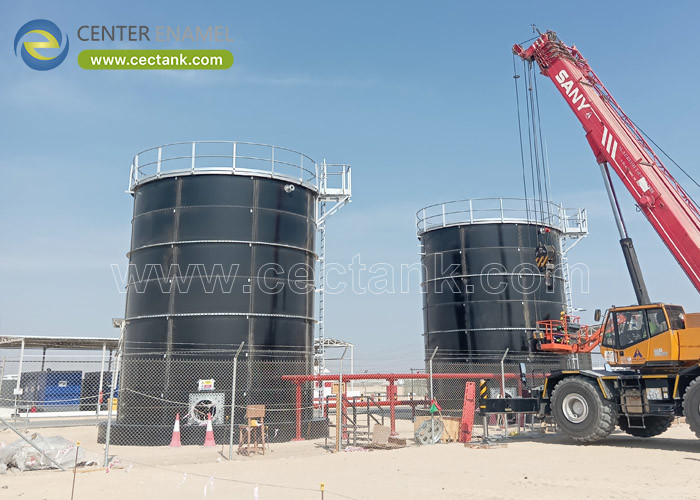
GFS Fire Water Storage Tank with NFPA-22 Certification: Superior Fire Protection for Every Facility
| Place of Origin: | CHINA |
| Brand Name: | CEC TANKS |
| Certification: | ISO 9001:2008, AWWA D103 , OSHA , BSCI |
| Model Number: | W20180508003 |
| Minimum Order Quantity: | 1 SET |
| Price: | $5000~$20000 one set |
| Packaging Details: | PE poly-foam between each two steel plates;wooden pallets and wooden box |
| Delivery Time: | 10-30 days after deposit received |
| Payment Terms: | L/C,T/T |
| Supply Ability: | 60 sets per month |
|
Detail Information |
|||
Product Description
A Glass-Fused-to-Steel (GFS) fire water storage tank is a highly engineered liquid containment system designed to provide a dedicated, reliable water supply for fire suppression systems. Manufactured by fusing glass enamel to high-tensile steel at 820°C–930°C, these bolted tanks offer unmatched corrosion resistance. When certified to NFPA-22 standards, they guarantee structural integrity, precise capacity sizing for fire flow durations (typically 30–120 minutes), and integration with commercial fire pumps and sprinkler systems, making them the superior choice over traditional welded steel or concrete tanks.
In industrial, commercial, and municipal facility design, a fire suppression system is only as reliable as its water supply. When municipal water flow is insufficient, a dedicated fire water storage tank becomes a mandatory life-safety asset.
Glass-Fused-to-Steel (GFS) is the premium technology in the bolted storage tank market. It combines the strength and flexibility of carbon steel with the chemical inertness of vitreous enamel.
The National Fire Protection Association (NFPA) 22 is the global benchmark standard governing the design, construction, installation, and maintenance of water tanks for private fire protection. A tank that boasts NFPA-22 compliance ensures that the facility meets strict insurance mandates (such as FM Global) and local authority having jurisdiction (AHJ) requirements, guaranteeing that the water reserve remains stagnant-free, sediment-free, and structurally secure during an emergency.
As an industry-leading solution for bolted storage tanks, GFS technology provides distinct engineering advantages specifically tailored to fire protection:
- Absolute Corrosion Resistance: The inert glass coating prevents the internal rust and scaling common in standard steel tanks. This is critical for fire protection, as corrosion flakes can enter suction piping, clog fire pump impellers, and block downstream sprinkler nozzles.
- Rapid, Modular Installation: Because the tank panels are pre-fabricated and coated in a controlled factory environment, they are simply bolted together on-site. A standard 15,000 to 200,000-gallon GFS tank can be erected in 2 to 4 weeks, drastically reducing downtime compared to field-welded alternatives.
- Zero Repainting Required: The resilient finish never needs sandblasting or repainting. It resists UV fading, chalking, and harsh environmental elements, resulting in a drastically lower total cost of ownership over a 30+ year lifespan.
- Seamless Expandability: Facility expansion often requires increased fire water capacity. The modular design of GFS bolted tanks allows them to be expanded or relocated easily by adding specialized rings of enamel steel.
To meet NFPA-22 and AWWA D103 standards, a GFS fire water tank must incorporate specific engineered components:
- Capacity Sizing: Must be sized to deliver the exact design fire flow for the required duration (e.g., 1,500 GPM for 90 minutes = 135,000 gallons minimum usable capacity).
- Anti-Vortex Plates: Suction connections must include vortex inhibitors to prevent cavitation and ensure fire pumps draw a smooth, uninterrupted flow of water.
- Thermal Regulation: In climates where ambient temperatures drop below 40°F (4°C), the tank must feature integrated freeze protection, such as immersion heaters or circulation systems, to prevent ice formation.
- Structural Resiliency: The tank must be engineered to withstand specific environmental loads, including high wind, heavy snow, and seismic forces (ASCE 7), to prevent structural buckling during natural disasters.
| Feature | Glass-Fused-to-Steel (GFS) | Field-Welded Steel | Concrete |
|---|---|---|---|
| Construction Time | 2-4 weeks (Factory standardized) | 2-3 months (Weather dependent) | 3-6 months (Extensive labor) |
| Corrosion Resistance | Excellent (Inert glass coating) | Moderate (Requires periodic recoating) | Vulnerable to cracking and leaching |
| Maintenance Costs | Very Low (No repainting needed) | High (Routine sandblasting/coating) | High (Crack sealing and waterproofing) |
| Future Expandability | High (Modular bolted panels) | None | None |
| Overall Lifespan | 30+ Years | 20-30 Years | 30+ Years |
Q: How is the required size of an NFPA-22 fire water tank determined?
A: Tank capacity is calculated by multiplying the required fire flow rate (in Gallons Per Minute) by the required duration (in minutes). For example, a commercial warehouse requiring 1,500 GPM for 120 minutes needs a minimum usable storage volume of 180,000 gallons. This is ultimately determined by a fire protection engineer and your insurance carrier.
Q: Does a GFS fire tank meet potable water standards?
A: Yes. High-quality Glass-Fused-to-Steel coatings are NSF/ANSI 61 certified for potable water contact. This is highly beneficial since fire water tanks are frequently connected to domestic municipal water supplies for makeup and refill purposes.
Q: How often does an NFPA-22 fire water tank need to be inspected?
A: Under NFPA 22 and NFPA 25 standards, dedicated fire protection tanks require a visual exterior inspection annually, and a comprehensive interior inspection every five years to ensure structural integrity and absence of debris.
Q: Can a GFS fire water tank survive in extreme winter climates?
A: Absolutely. When installed in regions where temperatures drop below freezing, GFS tanks are outfitted with NFPA-22 compliant thermal regulation systems, such as automated electric immersion heaters, insulation wraps, and circulation pumps to guarantee the water supply never freezes.
Q: Why is GFS better for the fire pumps than standard steel?
A: Standard steel tanks eventually rust, shedding abrasive iron flakes into the water. During a fire, the immense suction of the fire pumps pulls these flakes into the system, which can severely damage pump impellers or clog the small orifices of sprinkler heads. The inert glass coating of a GFS tank guarantees a clean, rust-free interior for the life of the system.