-
Glass Fused To Steel Tanks (596)
-
Stainless Steel Tanks (434)
-
Fusion Bonded Epoxy Tanks (592)
-
Galvanized Steel Tanks (321)
-
Aluminum Dome Roofs (1336)
-
Wastewater Storage Tanks (232)
-
Welded Steel Tanks (457)
-
Pressure Vessels (295)
-
Anaerobic Digester (201)
-
Industrial Water Tanks (349)
-
Glass Lined Steel Tanks (180)
-
Bolted Steel Tanks (389)
-
Sludge Storage Tank (115)
-
Biogas Storage Tank (173)
-
Leachate Storage Tanks (133)
-
Agricultural Water Storage Tanks (179)
-
Fire Water Tank (166)
-
Grain Storage Silos (146)
-
Biogas Projects (425)
-
Wastewater Treatment Projects (1028)
-
Double Membrane Roof (223)


|
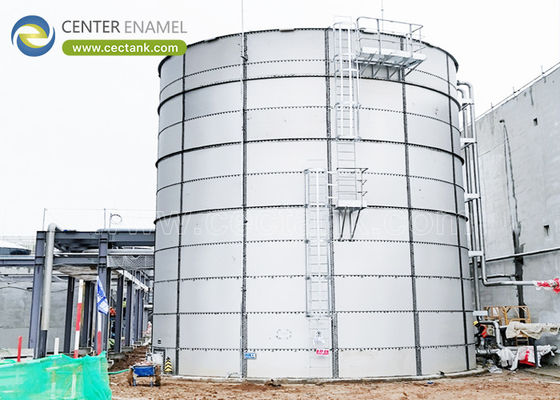
SS304/316L Stainless Steel Tanks for Biogas Digesters: Engineering Resilience in Anaerobic Environments
| Place of Origin: | China |
| Brand Name: | CEC TANKS |
| Certification: | ISO 9001:2008, AWWA D103 , OSHA , BSCI |
| Model Number: | W20171016013 |
| Minimum Order Quantity: | 1set |
| Price: | $5000~$20000 one set |
| Packaging Details: | PE poly-foam between each two steel plates ; wooden pallet and wooden box |
| Delivery Time: | 10-30 days after deposit received |
| Supply Ability: | 60 sets per month |
|
Detail Information |
|||
| Place of Origin | China | Brand Name | CEC TANKS |
|---|---|---|---|
| Certification | ISO 9001:2008, AWWA D103 , OSHA , BSCI | Model Number | W20171016013 |
| Coating Thickness: | 0.25mm~0.40mm & Double Coating | Capacity: | 20 M3 To 18,000 M3 |
| Foundation: | Concrete Or Glass Fused Steel | Size Of Panel: | 2.4M * 1.2M |
| Easy To Clean: | Smooth, Glossy, Inert, Anti-adhesion | Feature: | Eco-friendly, Durability |
| Highlight: | Biogas Digesters Stainless Steel Tanks,316L Stainless Steel Tanks,SS304 Stainless Steel Tanks |
||
Product Description
Stainless steel is the industry standard for modern biogas digesters because it is effectively immune to the chemical byproduct of anaerobic breakdown. During the digestion process, organic waste releases Hydrogen Sulfide (H₂S). In the presence of moisture, H₂S forms sulfuric acid, which rapidly destroys traditional epoxy-coated carbon steel and unprotected concrete surfaces.
Stainless steel tanks provide an inherent protective layer—the passive chromium oxide film—that remains stable even when exposed to the acidic and humid internal environment of a digester.
Direct Answer: While both are austenitic stainless steels, SS316L is widely considered the superior choice for biogas digesters. The inclusion of Molybdenum (Mo) in the 316L alloy significantly improves resistance to pitting and crevice corrosion, while the "L" (Low Carbon) designation ensures the tank remains corrosion-resistant even after the heat of welding or bolting installation.
| Feature | SS304 Stainless Steel | SS316L Stainless Steel |
|---|---|---|
| Pitting Resistance | Moderate | Excellent (Higher Molybdenum) |
| Carbon Content | Standard | Low (prevents sensitization) |
| Best Use Case | Dry storage, low-sulfur waste | High-sulfur, acidic organic waste |
| Welding Integrity | Risk of carbide precipitation | Highly resistant to weld corrosion |
| Cost | Baseline | Premium |
During the assembly of digester tanks, localized heating from welding (or friction during bolting) can cause carbon to precipitate at the grain boundaries, leading to "sensitization." This leaves the tank vulnerable to corrosion. By using the 316L grade (containing < 0.03% carbon), you eliminate this vulnerability entirely, ensuring the tank structure remains unified and leak-proof over decades of operation.
Direct Answer: Biogas digesters operate under varying thermal conditions, often requiring external or internal heating jackets to maintain the thermophilic (55°C) or mesophilic (35°C) temperatures needed for methanogen bacteria.
Stainless steel is an excellent material choice here for three reasons:
-
Thermal Expansion Stability: Stainless steel has predictable expansion coefficients, ensuring that connections and gaskets remain sealed during temperature cycling.
-
Structural Strength: Even in thinner gauges, stainless steel provides the structural rigidity to handle the hydrostatic pressure of semi-solid slurry (the "digestate") and the internal gas pressure of the stored methane.
-
Low Thermal Mass: Compared to massive concrete structures, stainless steel shells react more efficiently to heating systems, allowing for faster control of the internal temperature during colder seasons.
For commercial biogas facilities, the durability of the digester tank is tied to specific maintenance requirements:
-
Passivation: Ensure the stainless panels are passivated post-fabrication to remove surface iron particles and maximize the chromium oxide layer.
-
Gasket Compatibility: While the stainless steel is inert, the gaskets used at panel joints must be made of EPDM or Viton to resist degradation from the biogas and sludge.
-
Leak Detection: Because stainless steel is non-porous, modern modular systems allow for easy exterior monitoring, ensuring no methane gas escapes through the tank walls (which is common in deteriorating concrete).
It is strongly discouraged. Chlorides (salts) are the primary enemy of stainless steel, especially grade 304. If your feedstock includes food waste with high salinity, you must use SS316L to prevent pitting corrosion.
Yes. Modern bolted stainless steel tanks use specialized elastomeric gaskets and high-tensile hardware that meet or exceed the structural integrity of a welded tank. The modular approach is often superior because individual panels can be replaced if damaged, whereas a crack in a large welded digester can be catastrophic.
Coated carbon steel (e.g., epoxy-coated) is initially cheaper, but it creates a "ticking time bomb." Any microscopic scratch during installation or cleaning exposes the steel to the H₂S-rich environment. Once the coating fails, the underlying steel corrodes rapidly, leading to tank failure. Stainless steel is a "one-and-done" material that does not rely on a coating for protection.
No. Stainless steel is highly biocompatible. It is the same material used in pharmaceutical and food processing equipment. It does not leach toxic heavy metals into the slurry, ensuring the health of the microbial colonies performing the anaerobic digestion.
When properly engineered and maintained, an SS316L digester tank is designed to last 30 to 40 years. This is significantly longer than the typical 15-20 year service life of concrete digesters that suffer from acid-sulfate attack.