-
Glass Fused To Steel Tanks (596)
-
Stainless Steel Tanks (434)
-
Fusion Bonded Epoxy Tanks (592)
-
Galvanized Steel Tanks (321)
-
Aluminum Dome Roofs (1336)
-
Wastewater Storage Tanks (232)
-
Welded Steel Tanks (457)
-
Pressure Vessels (295)
-
Anaerobic Digester (202)
-
Industrial Water Tanks (349)
-
Glass Lined Steel Tanks (180)
-
Bolted Steel Tanks (389)
-
Sludge Storage Tank (115)
-
Biogas Storage Tank (173)
-
Leachate Storage Tanks (133)
-
Agricultural Water Storage Tanks (179)
-
Fire Water Tank (166)
-
Grain Storage Silos (146)
-
Biogas Projects (424)
-
Wastewater Treatment Projects (1138)
-
Double Membrane Roof (223)

|
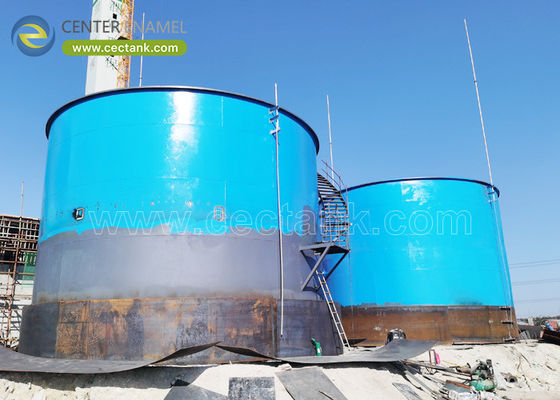
Custom Coating Thickness Welded Carbon Steel Tanks in Oil and Gas Storage Solutions
| Place of Origin: | China |
| Brand Name: | CEC TANKS |
| Certification: | ISO 9001:2008, AWWA D103 , OSHA , BSCI |
| Model Number: | W |
| Minimum Order Quantity: | 1set |
| Price: | $5000~$20000 one set |
| Packaging Details: | PE poly-foam between each two steel plates ; wooden pallet and wooden |
| Delivery Time: | 10-30 days after deposit received |
| Payment Terms: | L/C,T/T |
| Supply Ability: | 60 sets per month |
|
Detail Information |
|||
Product Description
In the global oil and gas sector—spanning upstream extraction fields, midstream pipeline terminals, and downstream refinery complexes—safe and reliable bulk liquid containment is critical. Petroleum products, refined fuels, drilling muds, and produced water present highly aggressive chemical profiles that can rapidly degrade standard industrial infrastructure.
While carbon steel provides the high tensile strength required for massive structural load-bearing capacity, it remains vulnerable to electrochemical corrosion without advanced protective barriers. To combat extreme environmental and chemical aggression, Shijiazhuang Zhengzhong Technology Co., Ltd. (Center Enamel) delivers engineered welded carbon steel tanks featuring custom coating thicknesses, tailor-made to meet the precise operational demands of modern oil and gas storage solutions.
No two oil and gas storage projects experience identical environmental or chemical exposure. Applying a generic, one-size-fits-all coating often results in premature film breakdown, pitting, and catastrophic asset failure.
Customizing the Dry Film Thickness (DFT) and multi-layer coating architecture provides distinct operational benefits:
Tailored Resistance to Sour Crude and Chemicals: Tanks storing sour crude oil containing hydrogen sulfide (H_2S), saltwater-heavy produced water, or refined petrochemicals require specialized barrier thicknesses to prevent chemical permeation and substrate oxidation.
Mitigation of Atmospheric and Marine Corrosion: Facilities located in offshore platforms or coastal terminal environments face high humidity, airborne chlorides, and UV degradation, necessitating robust exterior coating systems with enhanced barrier integrity.
Extended Maintenance Intervals: Optimizing coating thickness in accordance with ISO 12944 corrosivity categories significantly lengthens maintenance cycles, reducing costly facility downtime and interior recoating labor.
Center Enamel's welded carbon steel tanks are engineered in strict compliance with international codes such as API 650 (Welded Tanks for Oil Storage) and supported by rigorous surface preparation and application protocols:
Surface Preparation (SSPC/NACE): Steel plates undergo abrasive blast cleaning to SSPC-SP 10 / Sa 2.5 near-white metal cleanliness, establishing an optimal anchor profile for maximum mechanical adhesion.
Multi-Layer System Integration: Depending on fluid parameters, systems integrate specialized primers, high-build epoxy intermediate layers, and chemical-resistant topcoats applied to precise DFT specifications.
Quality Inspection: Comprehensive dry film thickness verification and high-voltage holiday spark testing ensure 100% pinhole-free coating continuity prior to commissioning.
| Performance Metric | Standard Single-Coat System | Heavy-Duty Multi-Layer Epoxy | Center Enamel Custom DFT Engineered Solution |
|---|---|---|---|
| Dry Film Thickness (DFT) | Thin (< 150 microns) | Moderate (250–400 microns) | Optimized & Custom-Engineered (Matched to specific chemical exposure) |
| Corrosion & Chemical Defense | Low (Prone to early blistering and chemical permeation) | Moderate (Suitable for standard atmospheric exposure) | Superior (Engineered multi-layer defense against crude, acids, and H_2S) |
| API 650 Compliance Alignment | Basic structural compliance | Standard industrial compliance | Fully Optimized for extreme oilfield and terminal service |
| Expected Maintenance Interval | Frequent (Requires premature touch-ups and recoating) | Moderate (Standard industrial inspection cycle) | Extended (Maximizes asset uptime and reduces lifecycle maintenance costs) |
Engineering Note: In oil and gas storage, tank bottom interiors and vapor headspace zones experience the highest rates of corrosive attack. Customizing coating thickness specifically for these high-stress zones prevents premature interior pitting and structural thinning.
A: Different petroleum products, chemicals, and operating environments impose varying degrees of stress on steel walls. Customizing the dry film thickness (DFT) ensures the protective barrier is thick enough to resist chemical permeation, abrasion, and aggressive corrosion without premature breakdown.
A: Yes. All welded carbon steel storage tanks are engineered, fabricated, and coated in strict compliance with international industry benchmarks, including API 650, ISO 12944, and rigorous NACE/SSPC surface preparation standards.
A: These tanks are engineered to safely store a wide variety of fluids, including crude oil, refined fuels, diesel, ethanol, drilling muds, produced water, and various industrial chemicals used across upstream and downstream energy sectors.
A: Quality control protocols include rigorous surface profile checks, precision dry film thickness (DFT) measurements, and 100% high-voltage holiday spark testing to detect and eliminate any microscopic pinholes or coating discontinuities.